

How Ontario demerit points affect car insurance
3 Minute Read
If you’ve ever received a ticket for a driving violation in Ontario from a uniformed officer or in the mail, you might wonder how it could impact your car insurance. Some tickets can have consequences that can affect your premium, so it’s important to know how the Ontario demerit system works.
What are demerit points?
Ontario uses a demerit point system for licensed drivers. A driver who has just received their licence starts with zero points (zero is good in this case). You gain demerit points if you’re convicted of breaking specific traffic laws.
Drivers travelling in other Canadian provinces and territories can still receive demerit points on their Ontario driver’s licence for violating driving laws. The same applies when driving in the states of New York or Michigan.
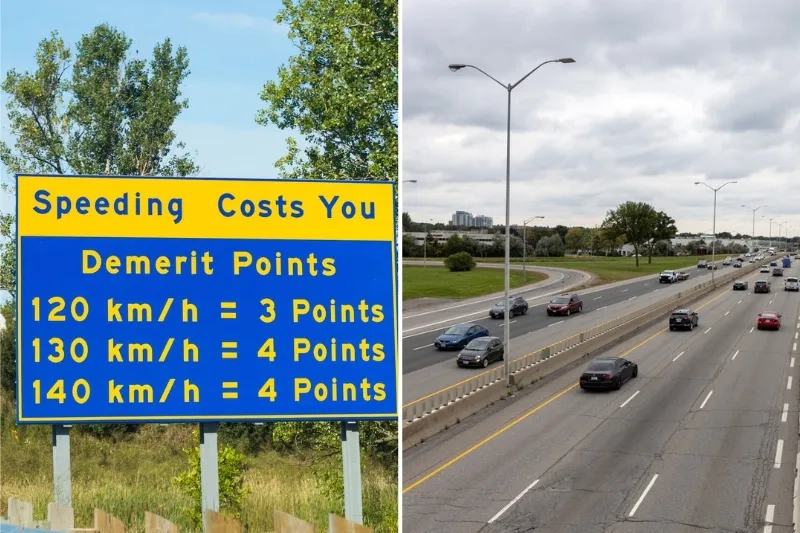
Do Ontario speeding tickets result in demerit points?
The quick answer is: It depends. If you are pulled over and issued an Ontario speeding ticket by an officer, demerit points will only be reflected on your record after you receive a guilty conviction or pay the fine.
However, if you receive a photo radar ticket for speeding in the mail, you will not receive any demerit points. This is because the infraction is registered to the vehicle rather than the individual driver at the time of the offence.
How do demerit points work in Ontario?
In the Ontario demerit point system, rules and points vary based on whether you are a new driver or have a full ‘G’ licence. Penalties increase as the number of demerit points rises. Here are a few examples of the demerit points associated with common driving offences:
2 demerit points for:
-
Failing to lower high-beam lights
-
Failing to signal
3 demerit points for:
-
Driving while using a hand-held device
-
Exceeding the speed limit by 16 to 29 km/h
4 demerit points for:
-
Exceeding the speed limit by 30 to 49 km/h
-
Following too closely
6 demerit points for:
-
Exceeding the speed limit by 40 km/h or more on roads with a speed limit of less than 80 km/h
-
Exceeding the speed limit by 50 km/h or more
7 demerit points for:
-
Committing a hit-and-run
-
Failing to remain at the scene of a collision
Demerit points stay on your record for two years from the offence date. You can lose your Ontario driver’s license if you collect enough points.
Can demerit points impact my Ontario car insurance premiums?
According to CAA Insurance, demerit points alone do not directly impact your car insurance premiums. However, your insurance premiums may be affected if demerit points are accompanied by a conviction when you pay the ticket or are found guilty of the offence in court.
When calculating your car insurance premiums in Ontario, CAA Insurance says the conviction's type and severity are considered. There are three categories of driving convictions:
-
Minor driving convictions, such as speeding or improper turns (0-3 demerit points)
-
Major driving convictions, such as distracted driving or failure to report an accident (six or more demerit points)
-
Criminal driving convictions, such as racing or failure to remain at the scene of an accident
If you accumulate convictions, your insurance company may not renew your policy. This could mean you’ll have to acquire high-risk auto insurance.
How can I prevent my car insurance premiums from increasing?
CAA insurance says that maintaining a clean driving record is the key to preventing unwanted hikes to your car insurance premiums. Maintaining a clean driving record can help lower your insurance premiums, as it signals a lower risk of accidents or convictions that may qualify you for discounts such as claims-free or conviction-free.
If you’re a shaky driver, consider taking a driving course to improve your skills and boost your confidence on the road. CAA Auto Insurance1provides discounts to drivers who have taken defensive driving courses.
Check your record
You can check your Ontario demerit points for a small fee by requesting a driver’s record from Service Ontario.
1 Auto Insurance is underwritten by CAA Insurance Company. ®
®CAA trademarks are owned by, and use is authorized by, the Canadian Automobile Association.
Certain conditions, limitations and underwriting guidelines apply.



