

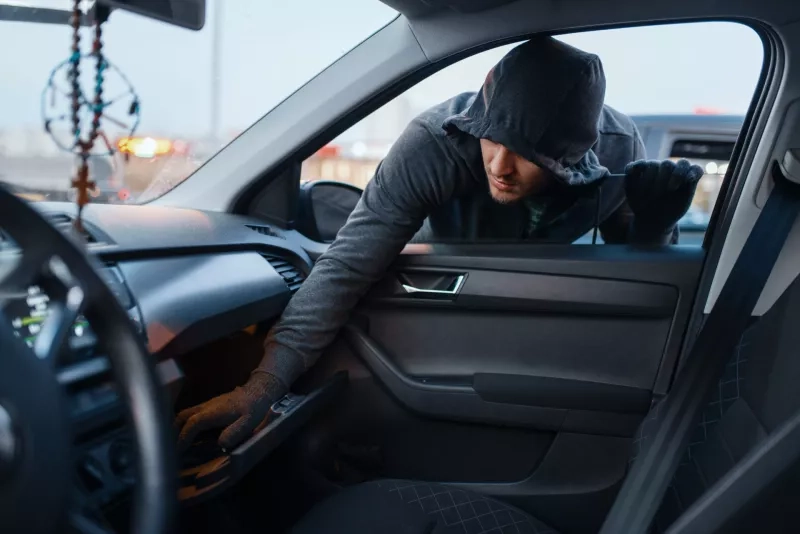
Stop, thief! How to protect your car from being stolen
2 Minute Read
Summary
- Vehicle theft rates have increased across Canada, affecting a wider range of car models and locations.
- Modern vehicles are vulnerable to relay and signal‑based theft, partly due to outdated security standards.
- Practical deterrents include physical locks, secure key fob storage, and aftermarket immobilizers that reduce theft risk.
If you drive a Honda CR-V, Ford F-Series, or Ram 1500 Series, your vehicle is among the most frequently stolen in Canada.
And if you live in Ottawa, Toronto, or Montreal, chances are you already know someone whose car vanished overnight — only to turn up weeks later overseas.
There is genuine progress to report. National auto theft fell 18 per cent in 2025, according to the Equite Association's 2025 Auto Theft Trend Report, a real turnaround after years of climbing numbers.
But the financial hit hasn't followed. Canadians absorbed roughly $900 million in claims costs in 2025.
Recovery rates tell a similar story. Only 59 per cent of stolen vehicles were recovered, barely up from 58 per cent the year before. That means nearly four in ten owners are left covering a deductible and financing a replacement, often at higher interest rates than their original loan.
The financial impact on Canadians goes beyond a stolen vehicle. Auto theft drives up insurance premiums and strains household budgets, at a time when vehicle prices and the cost of living are already high.
"We all know someone who has either had their car stolen, sometimes multiple times, or we have tried to take measures to protect our property," says Jeff Walker, President and CEO of CAA North & East Ontario.
"Car theft is a highly competitive, organized crime business in Canada that impacts families, businesses and industry."
Preventive measures and tips for consumers
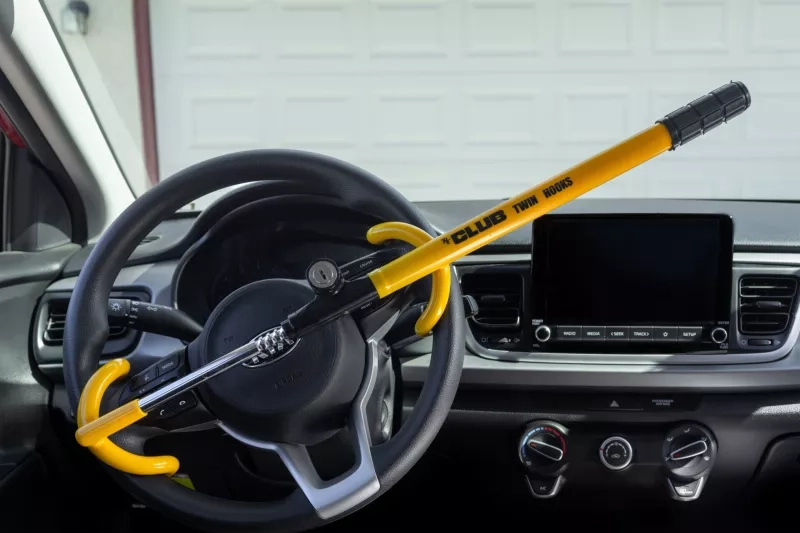
To help mitigate the risk of vehicle theft, drivers should take several practical precautions. Start with a visible physical deterrent. A steering wheel lock, brake pedal lock, or wheel lock like The Club is often enough to deter a thief and redirect them to an easier target. A port lock can help too. It blocks access to your vehicle's OBD diagnostic port, countering the tech-based methods increasingly used by organized criminal rings.
For stronger protection, consider a professionally fitted aftermarket immobilizer. It prevents the engine from starting without proper authorization, offering a meaningful defence against relay theft.
Key fob security is widely overlooked, and it is easy to fix. Store your fob in a Faraday box or RFID-blocking pouch when you're not using it. Keep it on your person, not near the front door, where someone can grab its signal from outside.
Everyday habits matter too. Always confirm your car is locked; don't just trust the chirp. Park in a garage when you can, and choose well-lit, high-traffic areas when you are away from home.
A motion sensor and driveway camera can stop a thief before they act, or catch them if they don't. Cover your VIN, keep valuables out of sight, and never leave your car running unattended.
Finally, consider tucking a GPS tracker like an AirTag somewhere discreet in your vehicle. It won't stop a theft, but it can make the difference in getting your car back.



