

Are you making these common driving errors? Here's how you can fix them
4 Minute Read
Summary
- Distracted driving remains a leading risk, with texts, controls and emotions impairing safe focus.
- Tailgating reduces stopping distance; experts recommend maintaining a safe two‑second following gap.
- Unsafe speeds in rain, fog or snow raise collision risks, even below posted limits.
A smooth drive is more than just getting from point A to B; it is also about arriving safely and looking out for each other on the road.
Most Ontarians view themselves as careful behind the wheel, but even the most experienced driver can fall into risky habits. Identifying these most common mistakes and how to fix them can lead to a safer trip for everyone.
Driving distracted
Whether you are checking a text, fiddling with dashboard controls, or even grabbing a quick bite, these distractions can have serious consequences. According to a 2021 CAA poll, 90 per cent of Canadians see phone use while driving as a serious threat to safety.
But it's not just about grabbing your phone; your emotional states, such as anger or distress, can cloud your judgment and slow your reaction time.
It's worth taking a minute before you hit the road to set up your map, queue your playlist, and stash anything that might roll around. That way, you're not fumbling mid-drive or glancing down to fix something and can focus on the road.
Following too closely
If you've ever felt a car pressing on your bumper, then you know just how stressful tailgating can be. It's also one of the most common issues on Ontario roads, often happening without any warning.
Tailgating reduces the space you need to stop safely and leaves little time to react if traffic suddenly slows down. The Ministry of Transportation (MTO) recommends keeping a two-second gap between your vehicle and the one ahead.
To check your distance, choose a fixed point on the road, such as a sign or a tree, and start counting when the car in front passes it. If you reach it before you hit two seconds, you're too close. It's a simple habit that can make a big difference and keep you from being too close to the car in front of you.
Not adjusting speed to conditions
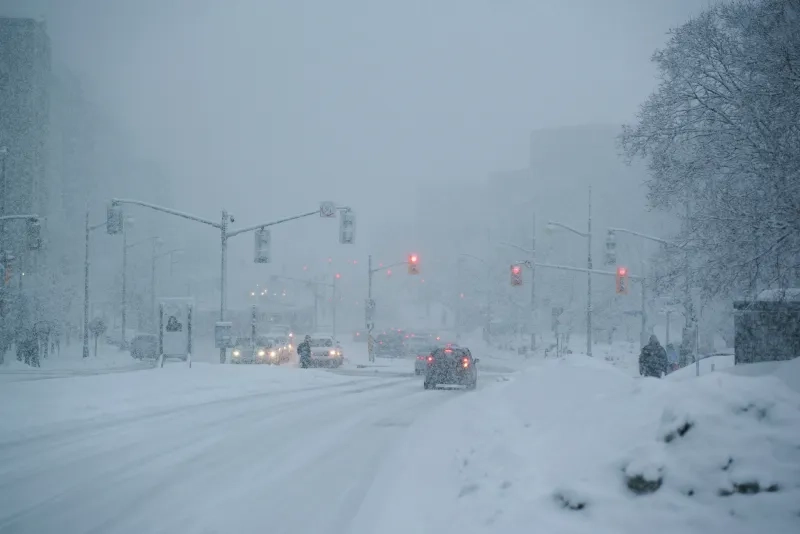
It's easy to think the speed limit guarantees safety, but that number is set for ideal road conditions, such as dry pavement or steady traffic. Conditions like heavy rain, fog, packed snow, or icy patches can quickly turn a regular drive into something far more dangerous if you don't adjust your speed.
And it's not just limited to weather, as a 2024 study by CAA found that driving just 10 km/h over the limit can raise the risk of a collision by 60 per cent.
Pay attention to road conditions and speed while driving, and ease off the gas to give yourself more time to react and increase your chances of avoiding what's ahead.
Poor merging practices
The most important thing while driving on a highway is to have good merging skills. Merging isn't just about joining the flow of traffic; it's about doing so smoothly, confidently, and safely.
Too often, problems arise when drivers hesitate at the end of the ramp, fail to accelerate to traffic speed, or try to force their way through abruptly. Drivers should instead enter the highway on the acceleration lane at the same speed of traffic, signal clearly, and look for a safe gap.
Those already on the highway can help by maintaining a steady pace and, when possible, creating space for vehicles to join. As the MTO suggests, being patient and attentive keeps highway entrances and exits worry-free for everyone.
Overlooking blind spots
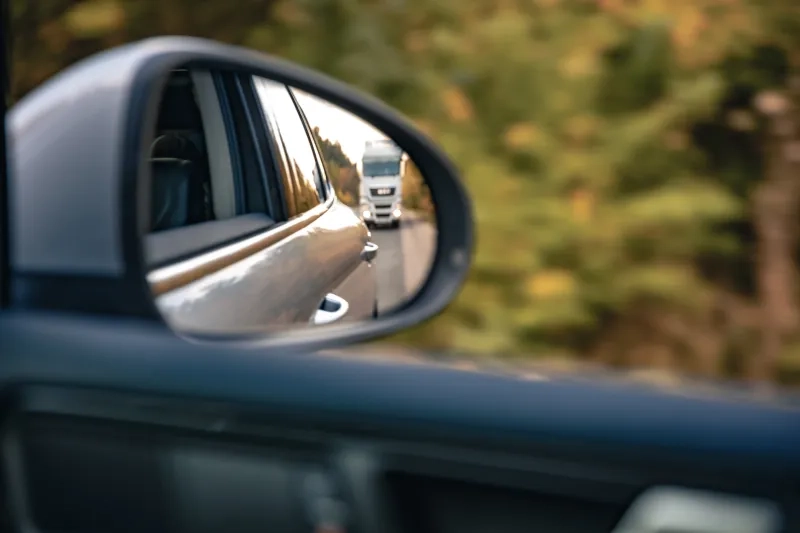
Nowadays, it's common to use blind-spot indicators and cameras to merge without a second look. Modern vehicles have made it easier to do so with technology designed to help check out blind spots, but technology can't replace a driver's own awareness.
The safest approach is to combine these tools with manual checks. Before changing lanes, glance in your mirror, then quickly check over your shoulder to confirm the space is clear, and then you can merge.
This ensures you don't miss a cyclist, motorcyclist, or another car that might be hidden from view.
Ignoring four-way stop rules
The four-way stop, designed to help keep traffic flowing in residential areas or low-traffic areas, is all about knowing who goes first. However, they can quickly become confusing if drivers don't follow the established order.
The general rule is that the first vehicle to come to a complete stop should proceed first. If two cars arrive together, the one on the right has priority. And if you're turning left, you need to wait until oncoming traffic has passed before completing your turn.
Confusion occurs when drivers move too quickly, ultimately stalling the intersection and frustrating everyone waiting. Instead, be clear about when it's your turn and follow the order step by step. This way, you can help keep intersections safe and traffic moving smoothly.
Skipping the signal
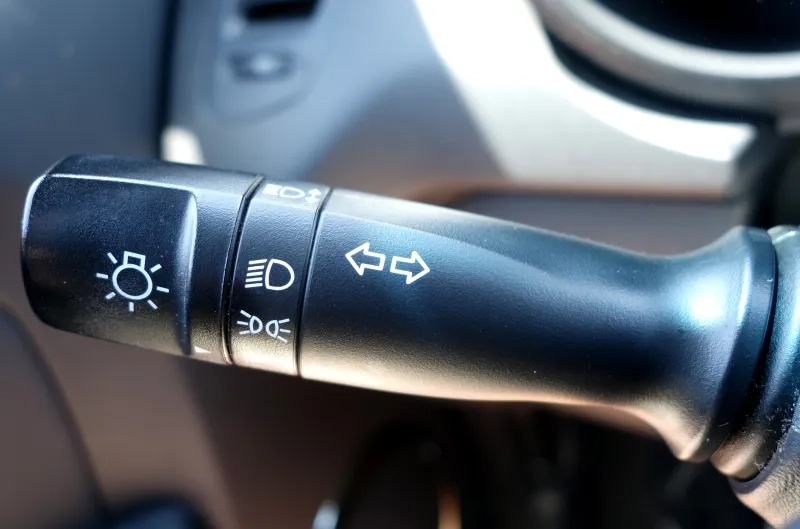
It sounds simple, but the turn of the signal can actually save one's life. Signals are one of the simplest ways to let other cars on the road know your intention, giving everyone the time and space to move safely, and it's the law in Ontario.
Failing to do so leaves other drivers guessing and can lead to sudden stops or unsafe maneuvers. Always signal well in advance before turning or changing lanes, and remember to switch it off when the move is complete, not just after a second.
To make sure your signal is on, listen for a ticking sound or look down at the dashboard and see. This quick step helps keep everyone on the road informed of your next move.
Practice safe driving
Brushing up on these habits and following the MTO standard driving practices can help keep you and everyone else on the road safe.
For more tips and resources on safe driving, visit our advocacy for safe driving page.

