

Breaking down the cost of poor roads
1 Minute Read
Running a car costs money. Lots of money. Between insurance, eye-popping gas prices and maintenance, that $35,000 you paid is probably costing you annually a lot more than your down payment.
How much more? That’s easy enough to calculate.
Using the CAA Car Costs Calculator (find it here), a 2017 Mini Cooper using premium gas sets you back about $9,287 a year to operate, if you’re tooling around the city about 20,000 km a year. That’s $2706 for fuel, $1,166 for maintenance, $120 for license and registration and $1,783 for insurance.
Let’s look at another example: a brand spanking new 2022 GMC Canyon 4WD fully loaded crew cab truck. It’s a sweet ride, but if it is driven 20,000km a year – 55% on highways – and uses regular gas, operating costs are still pretty high, at around $9674 annually.
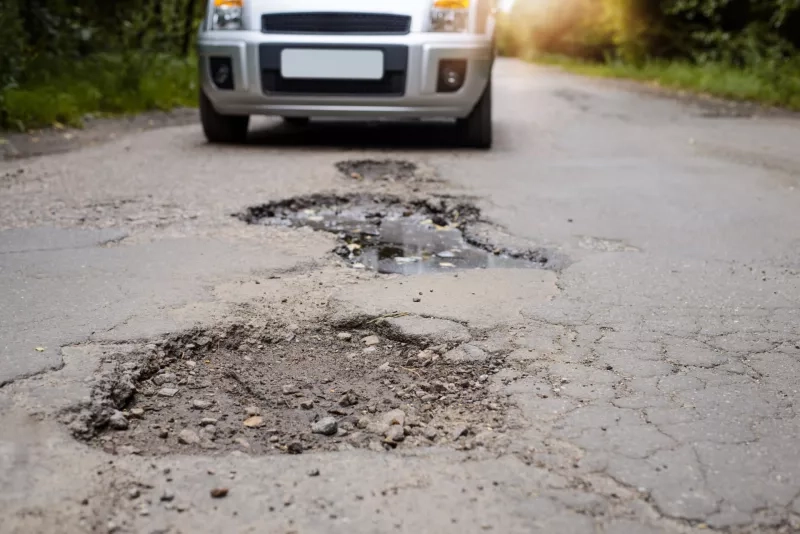
It’s a lot of money, but there are other hidden costs that take $3 billion out of car and truck owners’ pockets every year: poor quality roads.
According to a 2021 Canadian Poor Roads Study prepared for CAA, there are 156,000 km of poor and very poor roads in Canada. In Ontario, we have 1,068 km of poor and very poor highways and 31,366 km of non-highways. That’s a grand total of 32,434 km of roads in pretty bad condition.
That amounts to about $88 in extra costs for motorists, including additional fuel from rough roads, tire and rim wear, and additional bodywork and repairs.
And that’s not even taking into account the other road users, who also need well-maintained byways to get around, like cyclists, motorcyclists, runners, e-scooter riders and even runners. For them, the costs of poorly maintained roads are less about financial costs and more about personal collateral damage in the form of injuries.
Road maintenance is a government job, but keeping an eye on which roads need TLC or a major facelift is up to all of us, which is why CAA does the Worst Roads survey every year.
The results are used in a report that CAA uses to advocate on behalf of all Ontario’s road users. It’s part of how we ensure road safety issues are identified and that governments are held accountable for road maintenance. It’s important work.
