

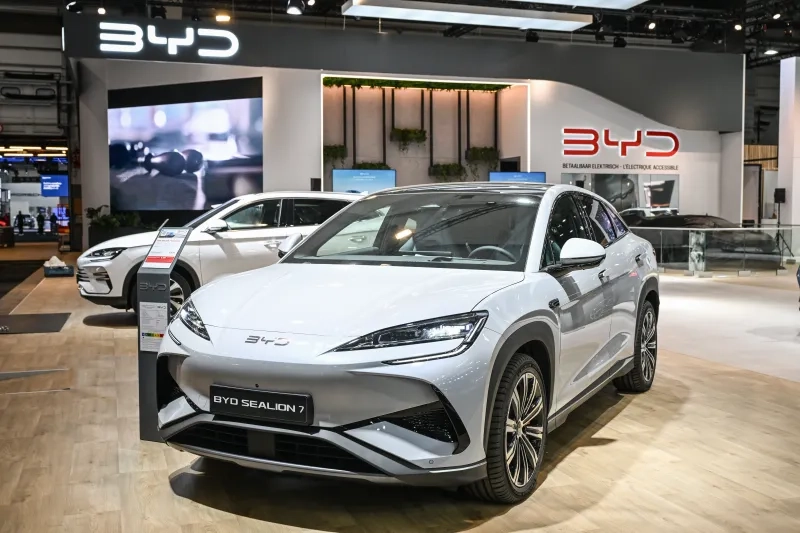
Chinese EV brands coming to Canada: from BYD to NIO
5 Minute Read
Summary
- Up to 49,000 Chinese‑built EVs could enter Canada under new tariff‑quota rules.
- Brands like BYD and NIO outperform rivals in extreme cold‑weather range testing.
- Advances in battery efficiency and fast‑charging position Chinese EVs as serious market disruptors.
At Norway’s annual El Prix Winter Range Drive, the biggest concern for EV-curious Canadians is put to the test. Criticized for their underperformance and range in cold weather, the Norwegian event stacks top EV models to determine real-world metrics for winter driving, and at the 2026 edition, one story became clear: Chinese-made EVs are on top in performance.
It is part of a broader trend that has been building for years and has come to define the EV industry. “Car manufacturers from China are really starting to get the hang of electric car technology.” Remarks Andreas Halland-Carlsen, editor at the Norges Automobil-Forbund (NAF).
With up to 49,000 Chinese EVs set to flow through Canada’s ports as early as spring, these results carry real weight for Canadian consumers. What was once a conversation about whether Chinese vehicles would even be seen in Canada has shifted dramatically to one about how they perform and how quickly we can get them.
As these vehicles stand poised to reshape the Canadian EV market, it’s worth taking a closer look at the brands leading the charge.
Cold weather is the real EV test
In a country where temperatures can drop to negative forties, the impact of frigid conditions on EV battery life and performance is a serious concern. While EV proponents have long argued that effective trip efficiency makes this a non-issue for most commuters, recent breakthroughs by Chinese manufacturers are reshaping the conversation.
“What is important in cold conditions is that the cars can balance the use of energy,” Haaland-Carlsen explains. “There is a lot of evidence that the Chinese brands that participated have solved this.”
EV range is typically measured using the Worldwide Harmonised Light Vehicles Test Procedure (WLTP), a standardized metric used by most manufacturers. However, WLTP tests are conducted in a 23°C lab environment, which hardly reflects the on-road realities Canadians face. Due to this, the El Prix range test, which sees temperatures drop to the negative thirties, provides a more realistic benchmark - measuring distance travelled against posted range.
Charging speed is outpacing infrastructure
Winter range isn’t the only factor reshaping the EV landscape; rapid advancements in fast-charging technology are pushing the conversation. Several manufacturers have begun adopting 800-volt architecture, allowing some EVs to charge in under 20 minutes.
“For now, this is mostly in the more expensive cars,” Haalend-Carlsen notes, “but there is reason to believe that it will trickle down to the less expensive ones in the future.”
These improvements in fast charging and winter range stand to completely shift the practicality of EV ownership in Canada but the impact may take some time to materialize. Although the technology exists, Canada’s charging infrastructure lags behind, with approximately 6,300 Level 3 (800 V) chargers across 2,000 locations nationwide. Compared to approximately 12,000 gas stations across the country, it is fair to say that, for the time being, the real convenience of EVs may trail behind.
The top exporters: Chinese vs Korean EV breakdown
As many experts will tell you, Korean brands like Hyundai and Kia have emerged as a gold standard for EV design and performance in recent years. Chinese EVs, on the other hand, have experienced a more rapid rise, going from fringe exporters to global competitors in a handful of years. Now, they are beginning to dominate in performance.
“The Korean brands have gradually gained a lot of experience with electric cars, and now deliver some of the very best.” Haalend-Carlsen appraises. “When it comes to the Chinese brands, there is a lot of variation… The development of the Chinese brands is actually frighteningly fast.”
The results of the 2026 winter range test seem to confirm this shift. Of the top ten performers, six were Chinese, and three were Korean, with the Korean-made Hyundai Inster and China’s MG S6 neck and neck for the top spot.
Chinese brands most likely to come to Canada
With Chinese imports expected to arrive as early as spring, EV-curious Canadians may be wondering which brands to keep an eye on. Although no official model list has been shared, experts like William Skorupinski, CAA NEO’s vice-president of Automotive and Mobility Services, have some ideas.
NIO: Solving the battery range anxiety problem
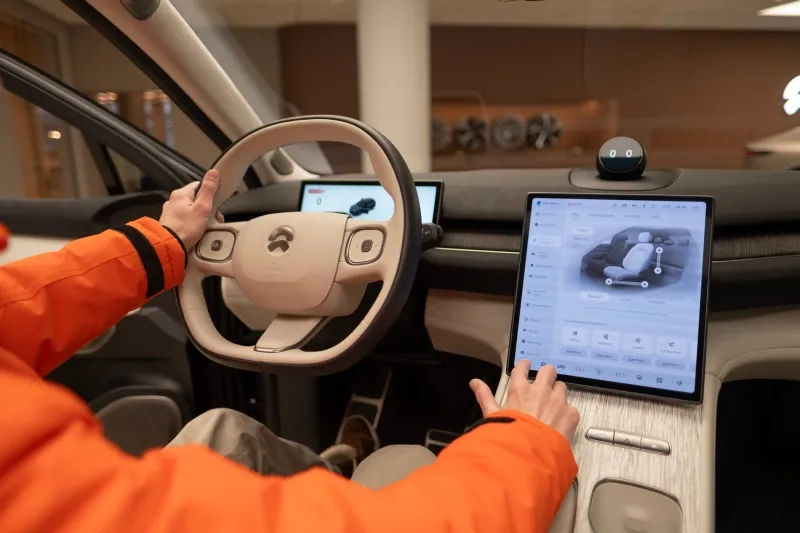
Considered one of the top six most likely brands to enter Canada, NIO has made waves both for their smart catalogue and uniquely flexible approach to battery charging and vehicle ownership.
“You don’t have to worry about your battery with NIO.” Skorupinski claims. “You have an option, depending on the model, where you can buy the battery and car, lease the battery and car or buy the car and lease the battery. You can schedule a battery charge… in China, they do 20,000 a day.”
Although a Canadian branch is unlikely to have the same infrastructure or scale, NIO’s unique business model may address the concerns of battery-anxious Canadians.
BYD: the global giant with Canadian appeal
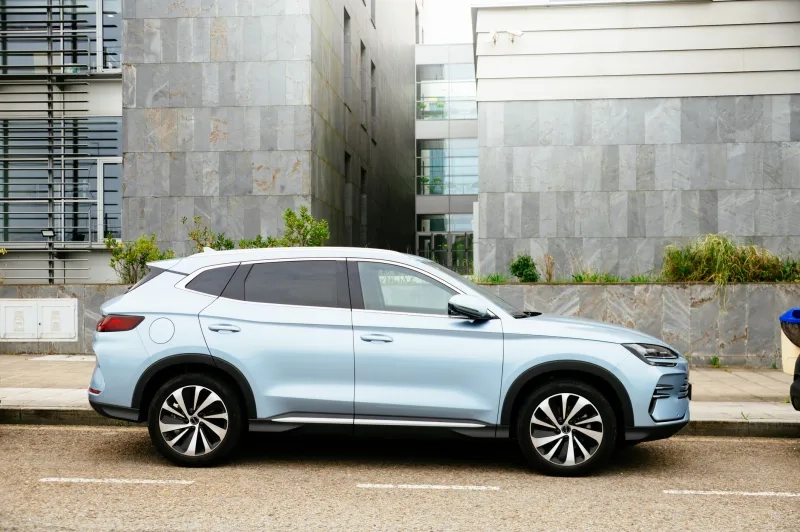
Perhaps the most well-known of Chinese manufacturers, with sales in over 100 jurisdictions, BYD has earned their place in the market with innovations like the Blade Battery - one of the safest and most efficient. The brand also offers a wide range of vehicles, from commuter fleets to luxury sedans and a variety of hybrid cars.
“They’re well known, they’ve been delivering at a high level and even have hybrid models which may appeal to Canadians who drive longer distances and don’t want to worry about range.”
Although absent from the 2026 winter range test, BYD models have consistently ranked among the top performers in previous editions.
Xpeng: Pushing the limits of efficiency and charging
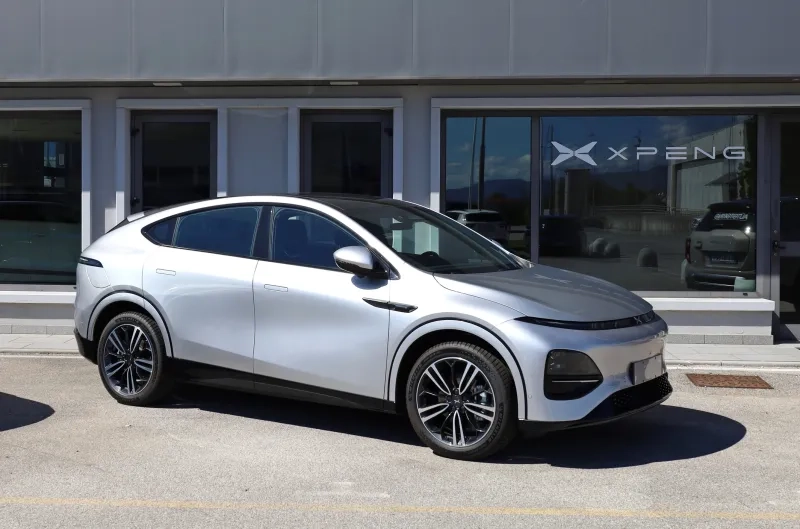
One of the top performers at the 2026 range test and one of the most technology-forward Chinese brands, Xpeng has seen rapid growth in recent years thanks to its battery efficiency, modern sensibilities, and commitment to environmental responsibility, for which it is an industry leader.
“It went zero to 400kwH during the charging test and stayed at that level.” Skorupinski recalls. “You compare that to the Tesla, which consumes a lot of energy in the winter. It didn’t come close to the Xpeng.”
Tesla: a shrinking lead
Although American-owned, trade experts have speculated that Tesla may export vehicles from their Shanghai factory as part of the Chinese deal. An early innovator in EV technology, Tesla now finds itself outpaced by competitors, especially on winter performance and charging efficiency.
“Tesla is not as innovative as they once were.” Skorupinski remarks. “[They] came out with an EV that could charge fast, but fast charging and energy consumption have been redefined by the Chinese and Koreans… the rest of the EV market is catching up and surpassing Tesla."
What Canadian drivers should watch for
For Canadian drivers, the 2026 El Prix results are a reminder that winter performance matters more than headline range figures.
As rapid improvements in charging speed and efficiency soften the landing for China’s EV exports, Canadian consumers would do well to remember that these vehicles come in a wide range of builds and quality. Even as Canada stands on the brink of an unprecedented expansion of EV choice, it will ultimately be consumer demand that shapes the next chapter of adoption.



