

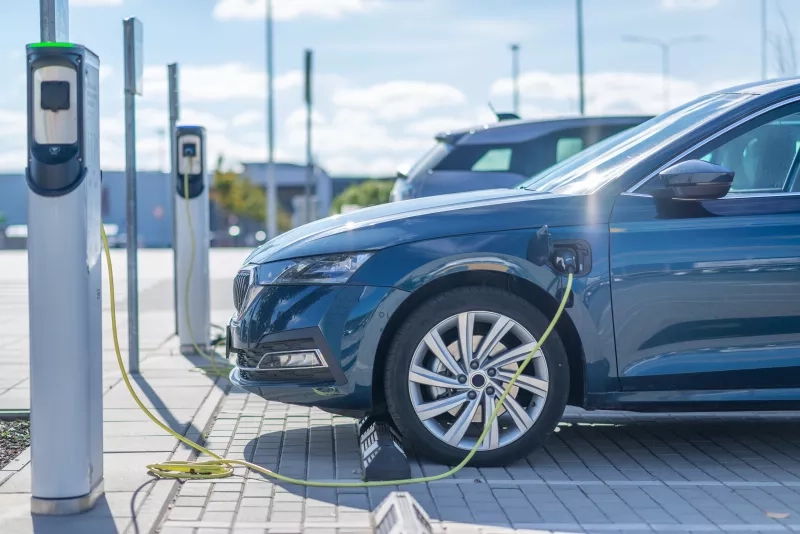
Everything you need to know about electric vehicle charging in Ontario
3 Minute Read
Summary
- Electric vehicle charging in Ontario includes home, workplace, and public charging options.
- Charging speed depends on charger level, vehicle capability, and available electrical capacity.
- Understanding costs, connectors, and network access helps drivers plan charging at home and on the road.
Electric vehicles (EVs) are no longer a rarity on Canadian roads. With Ontario predicting that one in three cars will be electric by 2030, it's clear that EVs are becoming mainstream. With the province predicting that one in three cars will be electric by 2030, EV ownership is set to become the norm rather than the exception. Even if you don’t drive an electric car yet, chances are you’ll soon be riding in one.
That makes understanding how EV charging works more important than ever. From charging times and equipment to costs and compatibility, navigating Ontario’s charging landscape doesn’t have to be complicated.
Charging levels explained
Not all EV chargers are created equal. Chargers are categorized into three levels based on how quickly they deliver power and where they’re typically used. While all electric vehicles can use Level 1 and Level 2 charging, not every EV is compatible with Level 3 chargers, and Tesla vehicles use their own proprietary system.
Level 1 Charging
This is the simplest and slowest way to charge an electric vehicle — and for many drivers, it’s enough. Level 1 chargers plug directly into a standard household outlet and require no special installation.
These chargers provide approximately eight kilometres of range per hour, making them ideal for overnight charging at home. Level 1 charging works best for drivers with short daily commutes or those who have plenty of time to top up their battery between trips.
Level 2 Charging
Level 2 chargers serve both commercial and faster residential charging needs. They require professional installation by an electrician and deliver a charging speed of about 35 kilometres of range per hour. In many cases, they can fully charge a vehicle in as little as two hours. This makes Level 2 chargers an excellent choice for those seeking a quicker charging solution, whether at public stations or in homes with higher usage demands.
Level 3 Charging
For faster, more practical everyday charging, Level 2 is the sweet spot. These chargers require professional installation and are commonly found in homes, workplaces, and public parking areas.
Delivering about 35 kilometres of range per hour, Level 2 chargers can fully charge many EVs in just a couple of hours. They’re a popular option for drivers looking for convenience without relying on public fast chargers.
How much does charging cost?
When time is tight, Level 3 chargers deliver speed above all else. Often referred to as rapid chargers, these stations are designed for public and highway use.
Capable of adding around 250 kilometres of range in just 20 minutes, Level 3 chargers are particularly valuable for road trips and quick refuelling stops. Not all vehicles can use them, however, including many plug‑in hybrids.
Range
According to William Skorupinski, CAA North & East Ontario's Vice President of Automotive and Mobility Services, several factors impact how far you can go. "Depending on the car, the range is 200 to 600 kilometres on one charge. The colder it gets, or the faster you drive, the more diminished the range becomes. Consistent driving speed also plays a role," he says.
Ontario's EV charging network
Of the 8.7 million vehicles in Ontario, just 75,000 are electric. Even so, the province predicts that by 2030, one in three cars will be electric. To meet demand, the Ontario government plans to install 69 fast chargers at all 23 ON Route stations along major highways. In total, the province has 1700 public charging stations with 5000 ports. The City of Ottawa has 24 on-street charging stations.
If your driving range is 200 kilometres, you probably use your EV for city driving, but it is possible to take a road trip past Level 3 fast-charging stations. Make sure you're fully charged before you set out, plan your route to hit fast chargers and keep your CAA Membership handy if anything goes awry, William says, adding that in Northern Ontario, Level 3 chargers can be located within 300 kilometres of each other, making travelling with an EV very feasible.
Where to find charging stations
To make your EV road trip stress-free, use sites like chargehub.com or www.energyhub.org. These platforms will locate charging stations along your route and show important information such as availability, pricing, and charging speed.
Why it matters
As the shift toward electric vehicles accelerates, understanding charging stations isn’t just for EV owners—it’s for everyone sharing the roads. Whether you're considering switching or you’re already driving an EV, having a handle on these details will keep you ahead.
With Ontario’s expanding EV charging network and accessible route-planning tools, driving electric has never been more convenient.
Know before you buy: CAA North & East Ontario content aims to be neutral and informative. Whether you’re new to EVs or looking for a replacement vehicle, it’s important to ask questions, talk to experts and do a test drive with a dealership so you can make an informed decision.



