

How to prevent keyless car theft
2 Minute Read
Summary
- Ottawa car thefts rose 27% in 2022; keyless entry vehicles, including mainstream models, face a higher risk.
- Thieves use relay hacks to boost fob signals, enabling remote unlocking and starting without physical keys.
- Store key fobs in Faraday pouches and use steering wheel locks or OBD port blockers for protection.
The new car is locked in the garage. The keyless fob is locked in the house. What could possibly go wrong?
Unless you’ve taken all the precautions to stop keyless car theft, police say you could become part of an alarming uptick in the number of car thefts across the province.
In 2022, car thefts jumped by 27 per cent in Ottawa compared to last year, while in Toronto, they increased by 45 per cent over 2021. Between 2020 and 2022, car thefts in Ottawa went from 951 to 1502.
The reason? The post-pandemic influx of vehicles consumers ordered back in 2020, which are only now hitting the market, is due to supply chain holdups. As a result, police say organized crime syndicates are mobilizing to steal new vehicles to ship overseas. The one exception is electric vehicles, since EVs can be tracked and even turned off remotely by the owner, making them unattractive to thieves.
For regular cars, it’s not just high-end Lexus and Mercedes catching their attention, notes William Skorupinski, CAA North & East Ontario’s Vice President of Automotive and Mobility Services.
“We are seeing more mainstream brands being stolen, like Honda CR-Vs and Toyota Corollas. Once the car has left your laneway, most of these vehicles end up in shipping containers and are sent overseas for profit in very short order. For our part, our dispatch teams do a review of the tow destination to ensure that we are delivering that vehicle to a garage for repair,” he says.
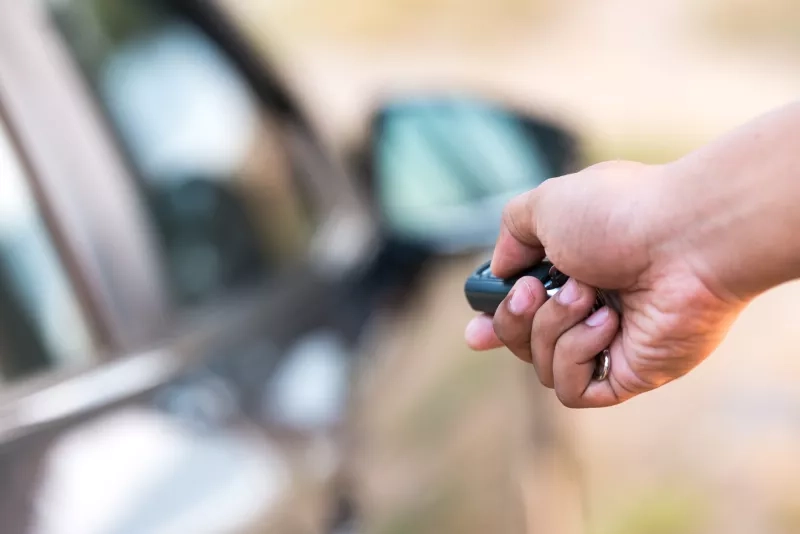
How keyless fob theft works
Your vehicle and keyless fob communicate via low-power radio signals that are effective only when the fob is within approximately a metre of the car door or ignition start/stop button. Thieves use special equipment to amplify the communication signals – known as a relay hack – between vehicles and smart fobs, significantly extending the system’s effective range. This can trick the car into thinking the keyless fob is next to the car door or trunk, even if it is elsewhere, allowing the vehicle to be unlocked and started.
How do I protect my property?
Store your key fobs away from windows or doors in a metal container. The metal provides a barrier that interrupts radio signals to and from the smart fob. Any metal box will do—a leftover Christmas cookie tin or chocolate box is perfect and acts as what’s called a “faraday cage,” which blocks transmissions to and from the unit. Alternatively, consider purchasing an inexpensive RFID pouch. These have metal mesh linings that can shield a key fob from sending or receiving radio signals.
If you must park on the street, turn the wheels towards the curb to make towing more difficult. For front-wheel-drive cars, park nose-in; for rear-wheel-drive vehicles, park nose-out.
Consider installing an ignition kill switch that stops your car from starting. You could also invest in an onboard diagnostic port (OBD) block. The OBD is what car manufacturers install to allow garages and owners to access diagnostic information easily, but a blocker stops thieves from reprogramming your keyless fob.
Block your vehicle between your garage and a second, less sought-after vehicle. Use a steering wheel lock, also known as a club, to deter thieves.
Install motion detection lights and exterior surveillance cameras at home as visual deterrents. Keep in mind that thieves have sometimes returned to steal a replacement vehicle after the first one has been taken, so continue to follow these prevention tips.
Finally, never place key fobs in a freezer or microwave oven. These methods may damage the fobs, which can cost hundreds of dollars to replace and program.


