

Stop the creep of rust on your car this winter with these tips
2 Minute Read
Summary
- Road salt, moisture, and winter conditions accelerate rust formation and compromise vehicle integrity.
- Regular winter washing and annual rustproofing help slow corrosion on the undercarriage and body.
- Petroleum‑based rust inhibitors protect seams, welds, and components from salt‑driven damage.
It creeps silently and unseen in hidden nooks and crannies on your car, but rust on the body and undercarriage is more than just an eyesore.
Also known as iron oxide, car rust forms when an iron-containing metal, like your car's body, is exposed to oxygen and moisture. Add in road salt that cakes as it dries, and rust can shorten a vehicle's lifespan and damage its structural integrity.
For most Canadian drivers, winter means dealing with icy conditions. While snow tires are a must-have, road salt is an important way to keep motorists safe.
The Government of Canada reports that five million tons of road salt are used in Canada every year. Unfortunately, in the cooler months, all that extra salt on wet roads accelerates metal corrosion. The problem is that once rust starts, it can quickly spread. Your best form of protection is to book your annual rustproofing appointment.
There are a few strategies that can help keep the creep under control.
Why Ontario winters are so tough on your car
Road salt is essential for winter safety, but it’s also one of the biggest contributors to rust. Salt sticks to wet metal surfaces, settles into tight spaces, and continues to corrode even when temperatures rise above freezing. In Ontario, fluctuating winter temperatures create ideal conditions for corrosion, as melting snow and slush repeatedly reintroduce moisture to your vehicle’s undercarriage and body panels.
Make regular winter washing a habit
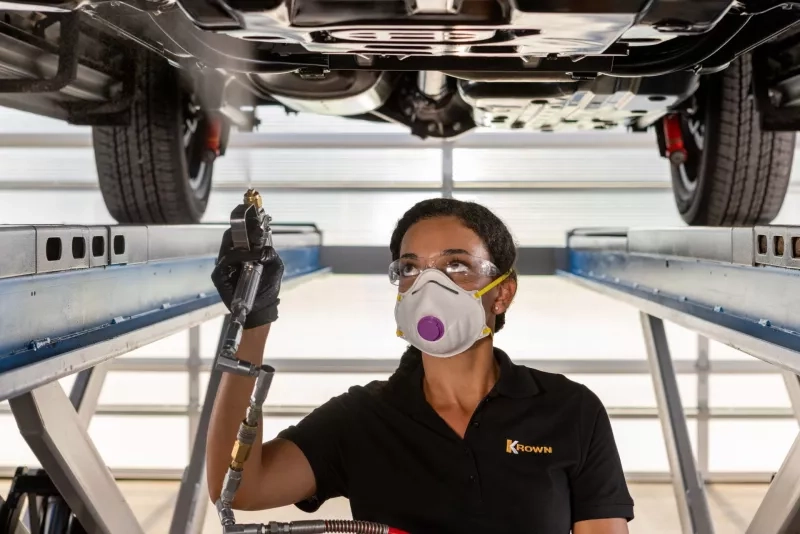
Rustproofing: your best line of defence
Your best protection against corrosion is annual rustproofing. Rust control treatments reach seams, welds, and components that cannot be protected through washing alone. In Ontario, where vehicles are exposed to salt more frequently and for longer periods, yearly rustproofing is especially important, even for newer cars.
Rustproofing helps protect your vehicle’s structural integrity and reduces the risk of important components deteriorating over time. In the event of a collision, corroded sections may fail in ways the manufacturer did not plan for, increasing the risk of injury. Preventing rust can also extend the life of brake lines, suspension parts, and electronic components, all of which are costly to repair once corrosion takes hold. A rust‑free vehicle is also more appealing at resale, as buyers often inspect wheel wells, door panels, and the undercarriage for signs of damage.
CAA Members save $10 off a Krown® Rust Control application, making it easier to defend your vehicle against Ontario’s harsh winter conditions.


