

What Norway’s deep‑freeze EV test reveals about Chinese electric cars
4 Minute Read
Summary
- Norway’s annual El Prix winter EV test assesses real-world electric vehicle range and charging performance in extreme cold (down to –27 °C), under conditions comparable to those in Canadian winters.
- Chinese electric vehicles performed strongly, ranking among the top ten models for cold-weather efficiency and fast charging due to improved battery preconditioning and thermal management.
- Results challenge assumptions about Chinese EVs, showing rapid gains in build quality and winter reliability, while leaving long-term ownership experience as the remaining open question.
If you want to understand the future of electric vehicles, Norway is a good place to look. Over the past decade, the country has gone from virtually no electric vehicles on the road to a market where EVs now account for 93 per cent of new car sales—and make up a growing share of the total vehicle fleet.
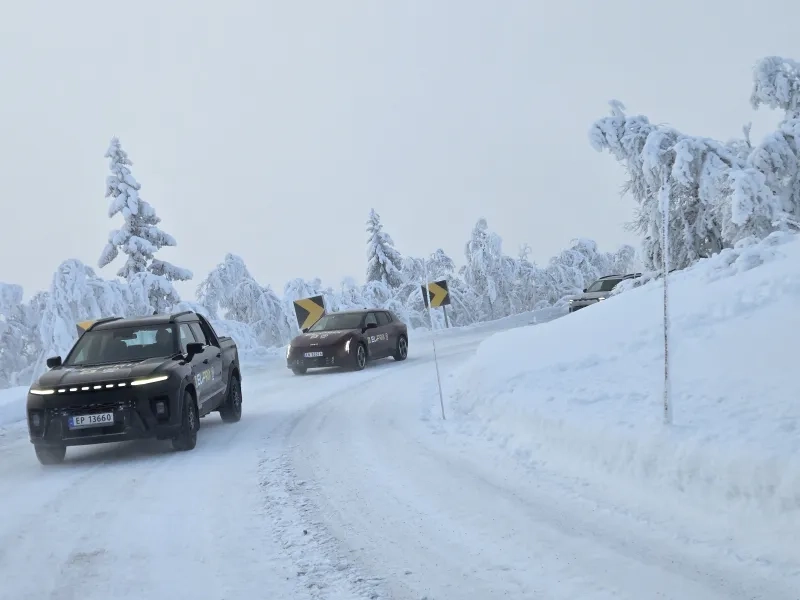
For Canadian drivers, Norway’s experience is especially relevant. The country’s cold winters, mountainous terrain and long driving distances closely mirror conditions faced by motorists across much of Canada. And, in 2026, Norway’s El Prix EV drive, created and run by Norges Automobil-Forbund (NAF is Norway's version of CAA), tested EVs from China, South Korea, Europe and the United States in the coldest conditions ever recorded at the event since it began in 2020.
This year’s test carries particular significance for Canadians as Chinese‑manufactured EVs prepare to enter the market for the first time. Performance, reliability and trust are all headline issues—and the El Prix offers something rare in the EV conversation: evidence based on real driving, not laboratory conditions.
What is the El Prix EV winter test?
As the world’s largest and most comprehensive EV range and battery charging test, the El Prix answers a straightforward consumer question: how far can electric vehicles really go in real-world conditions?
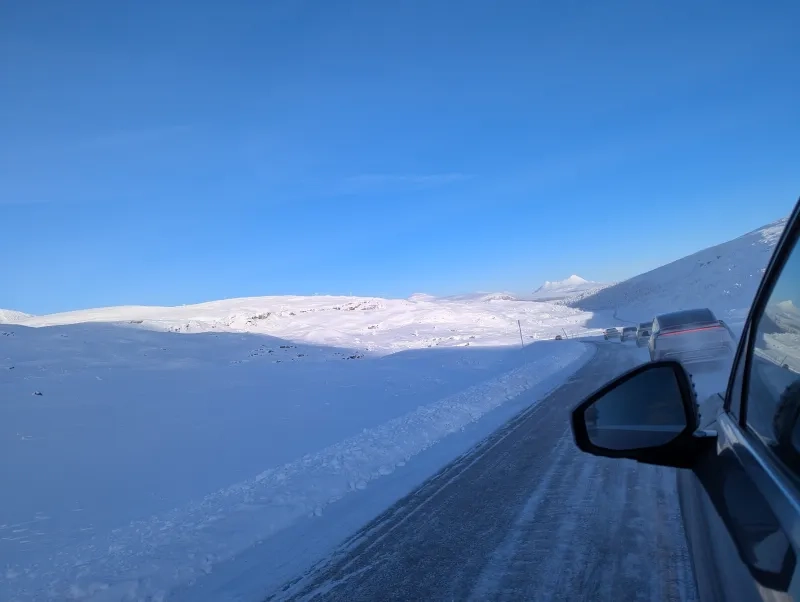
Held twice a year, in winter and summer, the test follows a carefully designed, 400 km route intended to replicate real‑world driving. Vehicles travel from sea level near Oslo to elevations of 1000 m in the mountains and valleys around Otta and Fåvang, combining city driving, highways, long climbs, and descents.
Teams of drivers and copilots from CAA and auto clubs from Denmark, Austria, Belgium and Iceland took part, with some ‘shadow cars’ unofficially driven by journalists and manufacturer product specialists. This year’s test took place in some of the harshest conditions yet, with temperatures dropping as low as –27°C, whereas posted ranges by manufacturers are based on tests conducted in 23°C.
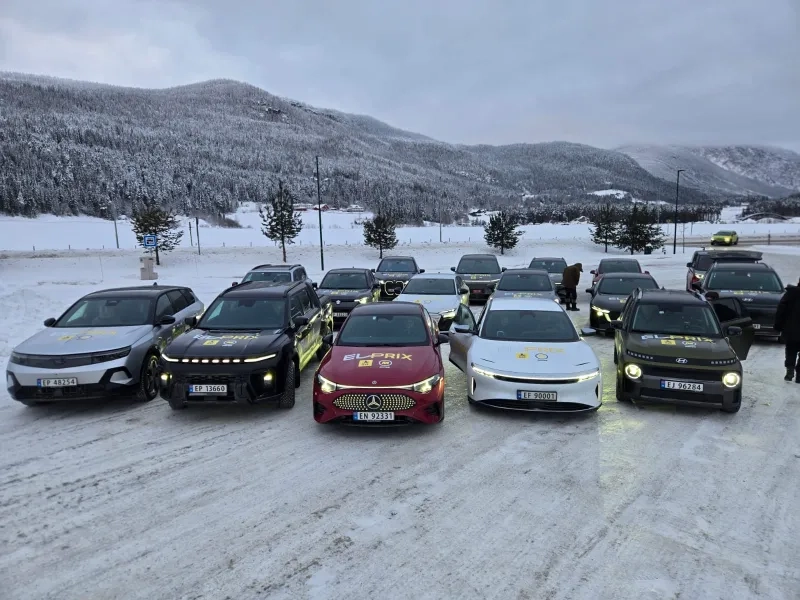
More than two dozen vehicles participated, representing manufacturers from Europe, North America and Asia. Rather than naming winners or losers, the goal is to provide practical benchmarks. Cars are driven until they reach 10 per cent battery charge—or fail—before being tested for fast‑charging performance from 10 to 80 per cent at high‑power charging stations.
Manufacturers observe the test closely, says Andreas Haaland-Carlsen, editor of NAF’s Motor Magazine.
“We’ve had their engineers attend in person, and feedback from previous El Prix events has led automakers to adjust battery pre‑conditioning systems, charging software and thermal management strategies,” he says.
The headline story: Chinese EVs in the cold
One of the most striking outcomes of this year’s El Prix was the strong performance of Chinese‑manufactured electric vehicles.
Several Chinese and Korean models ranked among the top performers in real‑world range and fast‑charging capability—two of the most important factors for consumers, particularly in winter. In cold conditions where many vehicles struggle, these cars delivered efficient energy use and consistent charging speeds.
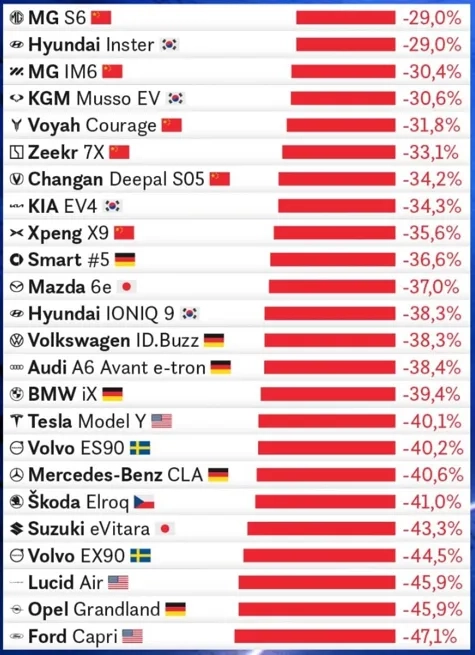
Top of the list and tied equally for performance were the Chinese-made MG S6 and Hyundai’s commuter car, the Inster. When calculating distance travelled versus posted range, they both lost just 29 per cent of range in the extreme cold. The third spot went to the MG IM6 (-30.4 per cent), with Korean-made KGM Musso coming in fourth with 30.6 per cent loss of range. After that, the next five vehicles were all Chinese or Korean, with range degradation ranging from -31.8 per cent (Voyah Courage) and Zeekr 7X (-33.1 per cent) to the KIA EV4 (-34.3 per cent) and the much-lauded Chinese-owned Xpeng X9 (-35.6 per cent).
While Chinese EV giant BYD didn’t enter a vehicle this year, other manufacturers included German manufacturers Smart, the Volkswagen ID.Buzz, Audi’s A6, Mercedes-Benz CLA and the Opel. Volvo, Skoda and Tesla also took part: Telsa lost 40.1 per cent of range, and the US-made Ford Capri posted a 47.1 per cent loss of range.
According to NAF’s El Prix test manager, Kjersti Stuesøl, the biggest difference in this year’s test was how the Chinese vehicles came through in the extreme cold.
“The top performers have always been the Chinese and Korean cars. But we’re also seeing the Chinese lead the development of fast charging and overall charging speed. We’ve seen development in quality over the past five years in things like interior finishes, battery performance and charging speed,” she says.
Improved battery systems mean pre-conditioning before charging allows vehicles to reach higher charging speeds more quickly—even in extreme cold. Some smaller, lower‑priced commuter vehicles also delivered unexpectedly strong range results, challenging the assumption that only large or premium EVs perform well in winter.
For consumers, the takeaway is clear: winter performance is no longer a reason to dismiss Chinese electric vehicles.
Perception versus reality
Despite the results, skepticism remains. Longstanding assumptions about Chinese manufacturing quality persist, even as real‑world testing increasingly contradicts them.
At the same time, the El Prix has shown that performance alone does not tell the full story. While Chinese EVs have proven they can handle extreme cold, questions about ownership experience remain—questions that matter just as much as range or charging speed.
Those issues come into sharper focus when looking beyond performance data and into what long‑term ownership actually looks like.



