

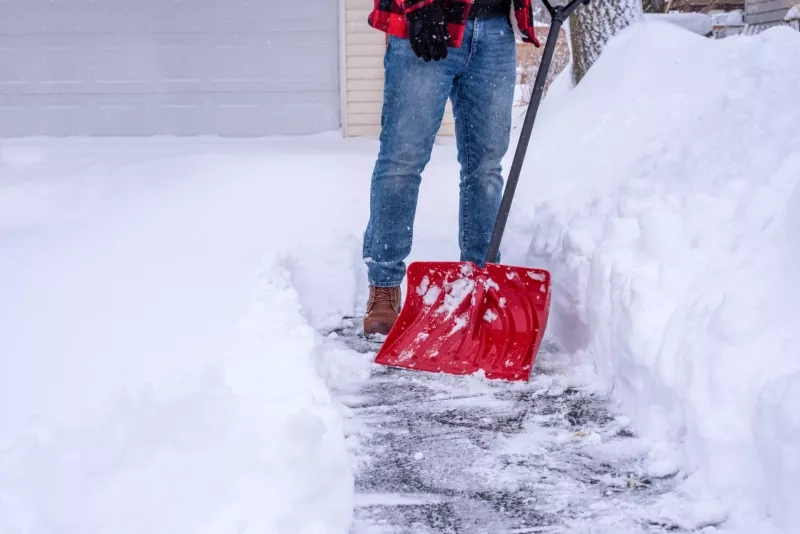
How to avoid injury when shovelling your driveway and sidewalk
3 Minute Read
Summary
- Snow shovelling safety guidance stresses proper technique, pacing, and preparation to reduce the risk of injury.
- Advice covers clothing, warm‑ups, shovel selection, posture, lifting methods and managing heavy snow.
- Practical steps help prevent back strain, falls, dehydration and property damage during winter clearing.
Snow during a Canadian winter is one of life’s certainties. A fresh blanket can make neighbourhoods look postcard‑perfect, but it also turns everyday walking surfaces into potential hazards.
In most municipalities, homeowners and occupants are required to clear snow and ice from sidewalks, paths and driveways on or near their property after a snowfall.
For many people, that means heading outside before work or at the end of a long day. Shovelling may feel routine, but it is one of the most common winter chores linked to strains, sprains and falls. Using the right equipment and techniques can make the job safer and more manageable.
Dress for warmth and movement
Staying warm is important, but so is being able to move freely. Wear layers that keep you dry without restricting your range of motion, and avoid heavy outerwear that makes bending and lifting awkward. A hat, padded gloves to prevent blisters and sturdy boots with good tread can help you stay comfortable and steady on snow‑covered surfaces.
Warm up and prepare your space
Shovelling is physical work, especially in cold weather when muscles are tight. Before you start, take a short walk to get your blood moving, then spend a few minutes stretching your arms, legs, and back. A quick warm‑up can reduce stiffness and help prevent injury.
It is also worth taking a moment to look at where you will be standing and walking. Fresh snow often hides ice underneath. Spreading salt or sand on slippery areas you need to cross or stand on can improve traction and lower the risk of a fall.
Choose the right shovel
The shovel you use can make a noticeable difference. An ergonomically curved handle that allows you to stand more upright can reduce strain on your back, while a smaller blade helps prevent you from lifting overly heavy loads. Pushing and lifting lighter amounts of snow is easier on your body. For added ease, spraying the blade with a silicone lubricant can help keep snow from sticking as you work.
Use your body properly
Good body mechanics are the most important factor in avoiding injury. When possible, push snow to the edge of the driveway before piling it, keeping your back straight as you work. Periodically switching between shovelling right‑ and left‑handed can help distribute the workload more evenly and reduce fatigue.
When lifting snow, let your legs do the work. Stand with your feet shoulder‑width apart, bend at the knees and scoop small to medium amounts at a time. Keep the shovel close to your body to minimize back strain, and avoid twisting while lifting or throwing snow. Turning your whole body, rather than just your torso, helps protect your spine.
Pace yourself
Cold temperatures can be deceptive. Even if you do not feel sweaty, your body is losing moisture. Build short breaks into the job to rest and rehydrate with water or a warm drink.
Deep snow, especially when it is wet, is much heavier. Instead of clearing everything at once, remove the top layer first, then come back to the rest. If space allows, throw snow farther away from your driveway at the beginning of the job and progressively closer as you go. As fatigue sets in, having a shorter distance to move snow can make the final stretch easier.
Protect your home and surroundings
Shovelling safely is not only about protecting your body. Direct snow away from your home’s foundation to help reduce the risk of water seepage during the spring thaw. Keep furnace and dryer vents clear, as blocked vents can pose a fire hazard and lead to carbon monoxide buildup.
If possible, clear snow at least a metre from the edge of your roof to reduce the risk of ice dams and leaks. Take care not to damage shingles or flashing, and always use a spotter when working with a ladder.
To de‑ice vehicle windows, mix two parts isopropyl rubbing alcohol with one part water. Spray it on, wait a minute for the ice to melt, then wipe it away with an old towel.
Finally, check your community’s bylaws for specific snow‑clearing requirements.


