

The sweet life of bees above the Château Laurier
4 Minute Read
Summary
- Rooftop hives at the Fairmont Château Laurier support thousands of bees while producing seasonal honey.
- The honey reflects Ottawa’s blooms, is unpasteurized, and is used in dishes and sold locally.
- Sustainability underpins both beekeeping and kitchen practices, linking urban pollination and farm-inspired culinary values.
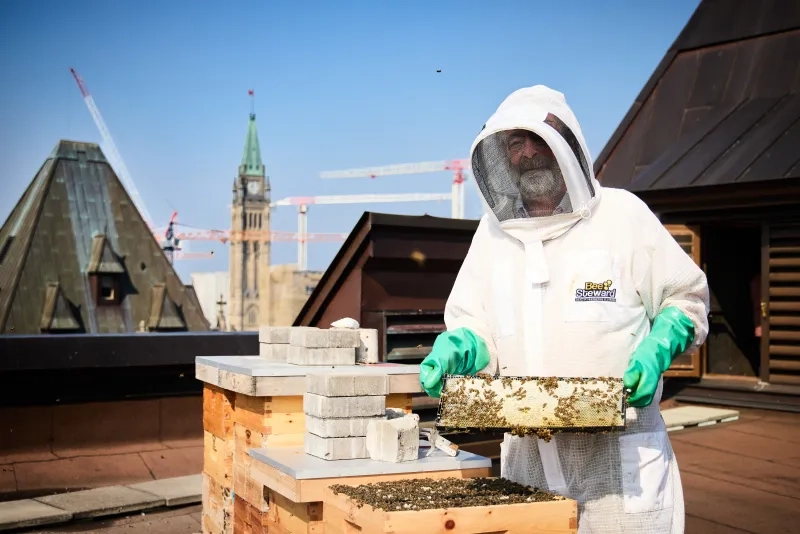
Bruno Lair eases a wooden spoon into a honeycomb, lifts it into the hot afternoon sun and offers it around. The honey is warm, floral and startlingly fresh. Before anyone has finished tasting, bees crowd into the small hollow left behind, already repairing the comb.
This is honey at its source—and the source happens to be the roof of Ottawa’s Fairmont Château Laurier. Four boxes, each home to thousands of bees and its own queen, sit high above the city with a remarkable view overlooking the Ottawa River and the downtown core. On the day CAA visits, the colonies are unusually quiet, possibly because of smoke drifting in from distant wildfires.
Reaching this hidden apiary is an adventure in itself. Visitors climb a back staircase, pass through the abandoned CBC studio—a once-busy hive of newsrooms, radio booths and television equipment—then cross an industrial space and scale a ladder to the roof. Only then do the beekeeper’s suit, veil and gloves go on. Until CAA’s visit, this tucked-away corner had been seen by few beyond Lair and a handful of hotel staff.
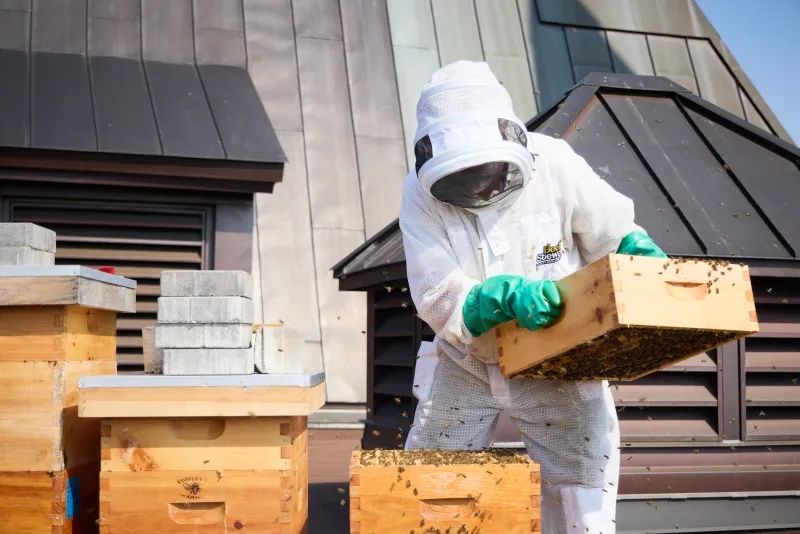
An assistant director of engineering at the hotel and a licensed beekeeper, Lair took over care of the colonies after the pandemic. His inspections can take two and a half hours as he checks the brood, larvae and health of each hive. Occasionally, he gets to see a baby bee emerge for the first time.
“I dream about bees, especially at the start of the season,” he says. “Bees can tell their beekeepers from other people. They see the pattern of features and scent, and can associate the behaviours of the carer. I’m happy to be their beekeeper.”
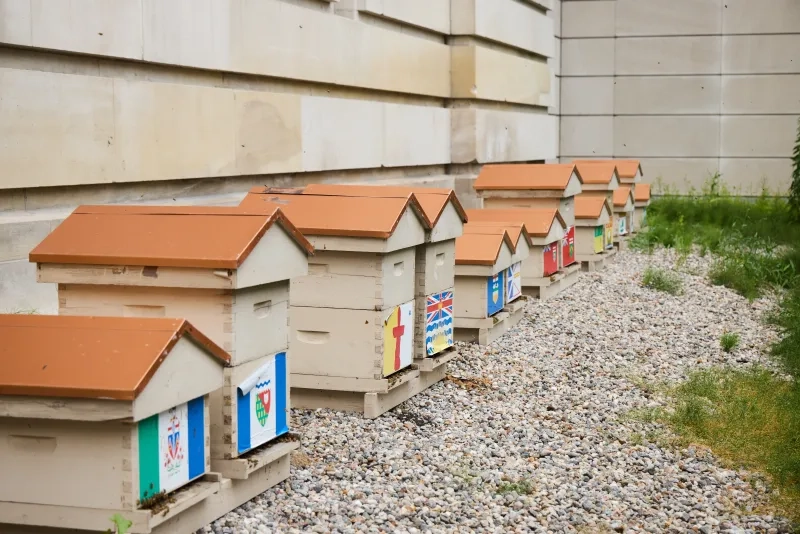
The Fairmont Château Laurier’s bee program also extends beyond the hotel roof. Behind the temporary Senate of Canada building across Rideau Street, 13 hives—one for every province and territory—are maintained through a partnership with the Fairmont Château Laurier, which is also a AAA/CAA Four Diamond Hotel. Each is painted with a provincial or territorial flag, and interpretive plaques outside their enclosure give passersby insight into the importance of pollinators in an urban habitat.
How the Fairmont Château Laurier’s rooftop hives support bees and produce local honey
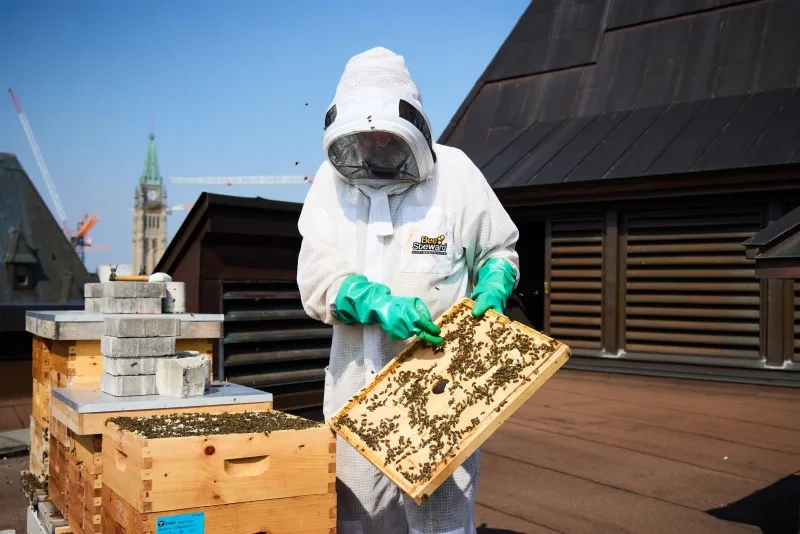
The bees range up to five kilometres in search of pollen, making each harvest a snapshot of what is blooming across the capital. One year they found a large patch of mint and produced distinctly minty honey. This year, the flavour leans toward wildflowers.
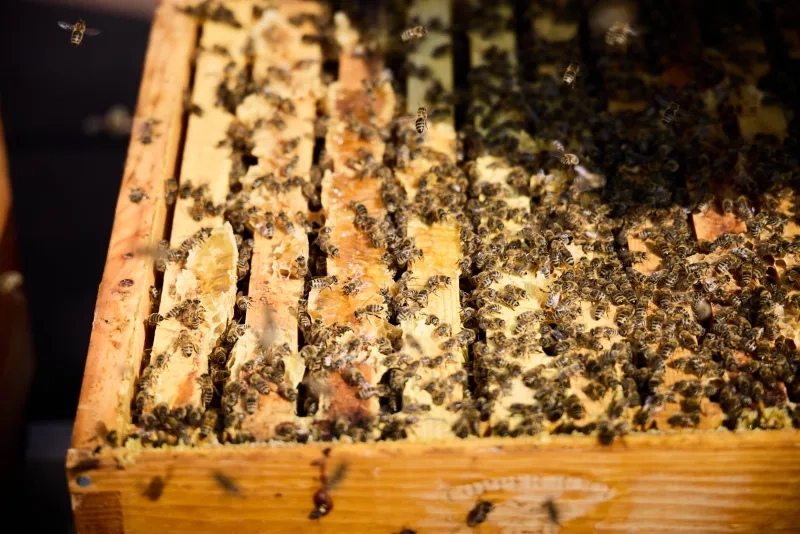
The honey is unpasteurized and its character changes from season to season. A full hive can yield roughly 80 litres, or about 200 pounds, in a year—but not all of it is taken. Lair leaves the colonies what they need to survive, especially through winter, when the hives are wrapped against the cold.
“I’m most passionate about making sure they survive,” he says. “We also have to leave them some honey because it’s their work.” One bee produces less than a spoonful of honey in its lifetime, he adds, while also making wax, gathering pollen and helping feed the colony.
How the honey travels from beehives to restaurant tables
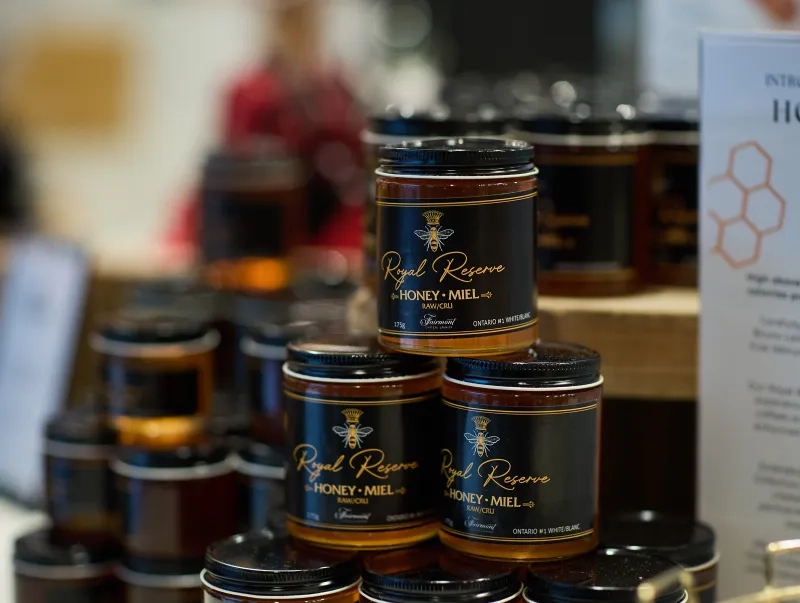
Some of the harvest is bottled as the Fairmont Château Laurier’s Royal Reserve Rooftop Honey and sold at Café Laurier. Small jars are also given to wedding guests. In the hotel’s kitchens, Executive Chef David De Bernardi finds uses for it in drinks and dishes, including hot honey paired with summer calabrese salami and halloumi at Émilie’s Terrace.
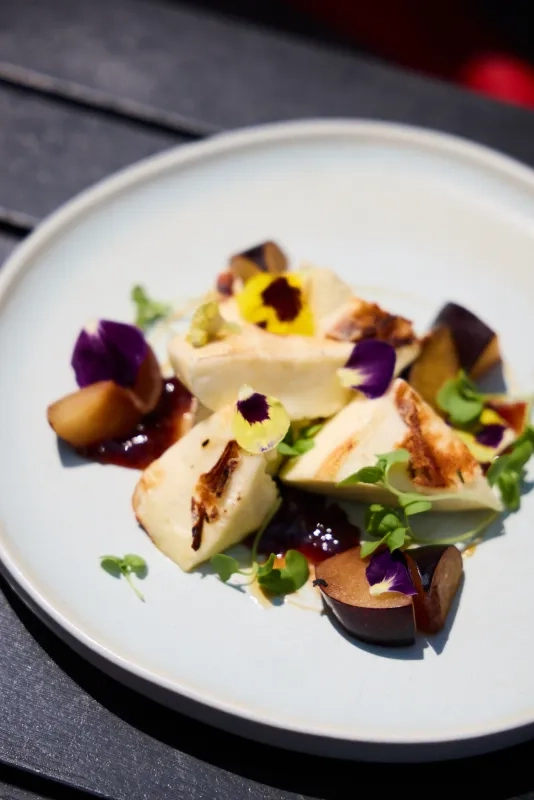
De Bernardi remembers one harvest with the colour and intensity of black molasses. “It was very strong, but I used it with whipped cream and berries,” he says. He is careful with heat because cooking unpasteurized honey too aggressively can flatten its character. Better to let its shifting floral notes guide the dish.
How farm-grown values shape Fairmont Château Laurier’s kitchens
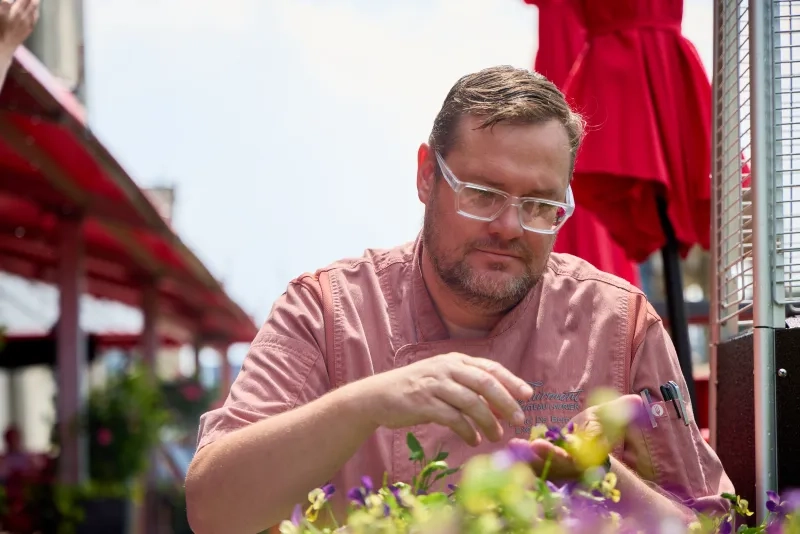
For De Bernardi, rooftop agriculture feels familiar. He grew up on a 1,000-acre farm, where growing and picking food was part of daily life. Even now, the snap and scent of a fresh green bean can bring those memories rushing back. His grandmother taught him to cook, and when she died, he kept her recipe books and cast-iron skillets, which he still uses.
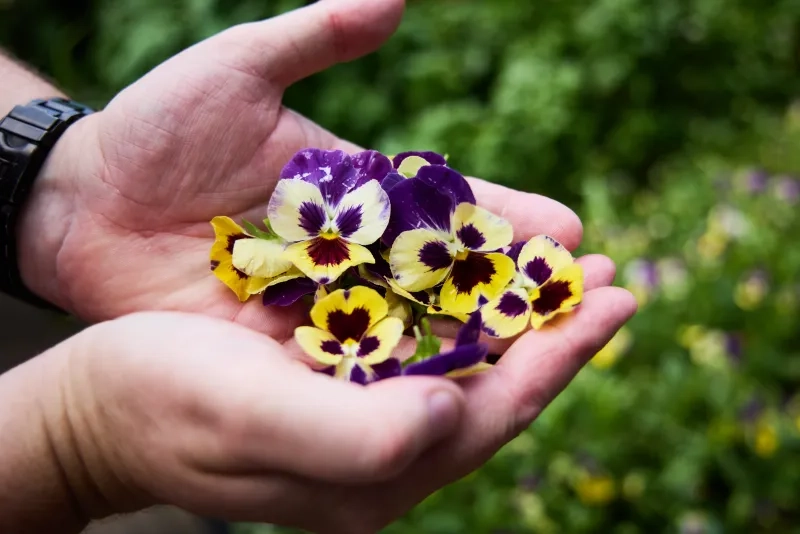
Today, as Executive Chef of Fairmont Château Laurier, he oversees the hotel’s culinary program, from Zoe’s, Akira Back Ottawa and Émilie’s Terrace to in-room dining and the hotel’s extensive banquet operation. He also grows herbs and vegetables on the terrace at Émilie’s. The scale may be a microcosm of his childhood farm, but the instinct is the same: understand where food comes from and respect the work behind it.
Another hive lives beneath the roof, too: a network of 17 sous-chefs and about 150 staff who keep the hotel’s kitchens moving. De Bernardi rejects the swagger sometimes associated with professional kitchens. “You need to take the ego out of the kitchen,” he says. “You need to trust your team.”
He makes a point of greeting everyone morning and night because, as he puts it, “the dishwasher is as important as the cook.” The philosophy extends to mentoring the next generation, including a program that gives young people with special needs work experience and a pathway forward.
That sense of shared purpose mirrors the bees above. Each member has work to do, each contributes to the whole, and none is expendable. For both chef and beekeeper, sustainability is less a slogan than a chain of connected choices—from supplier to kitchen, flower to hive, rooftop to plate.
Learn more about how CAA Members can take advantage of a special offer with the Fairmont Château Laurier.



