

What I learned from running my first 10-kilometre race
4 Minute Read
Summary
- Completing a first 10‑kilometre race required gradual training and overcoming early motivation challenges.
- Preparation focused on pacing, gear, and mental resilience during outdoor runs and race day.
- The experience emphasized persistence and support, making the challenge as mental as it was physical.
No one tells you how emotional your first race can be.
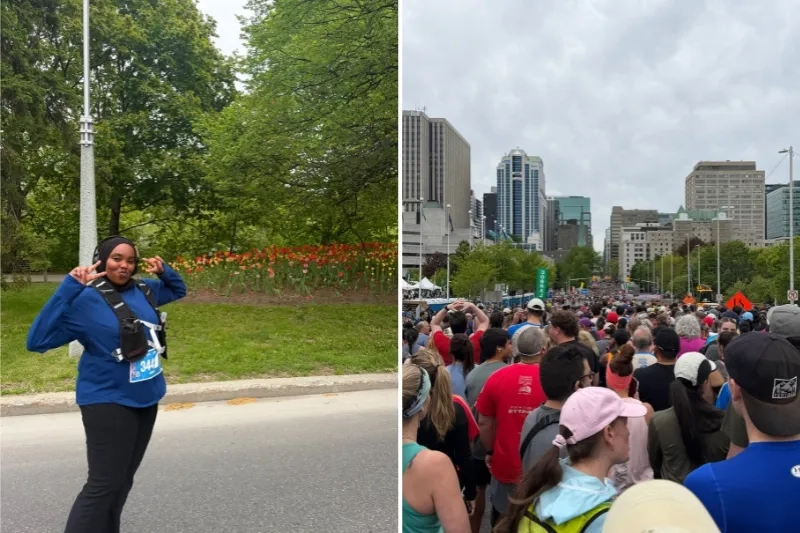
Running the 10-kilometre race at Tamarack Ottawa Race Weekend started as a personal challenge. I wanted to push myself and try something new, but I did not expect the experience to stay with me long after I crossed the finish line.
Not long before race day, running was not part of my routine. I did not train regularly or consider myself particularly athletic, and committing to a 10-kilometre race felt like a stretch. Still, it was something I had always wanted to do, and this time, I decided to try.
From training to race day, here’s what it took to reach the finish line.
From signing up to starting out
The race was booked in November, with the expectation that signing up would be enough to kickstart training. Instead, weeks passed, then months, and the motivation I expected didn’t come right away.
Nearly three months went by before the training began, and my approach was simple. I started with shorter runs, between two and five kilometres, three times a week, while focusing on consistency and gradually building endurance.
My first real run outside didn’t go as planned. The goal was to run five kilometres in an hour, but it was spent walking, with only about 30 seconds of actual running. Even so, the routine continued, and I kept pushing myself to run more, despite how hard it was.
Some days meant using the treadmill, especially when the weather made being outside difficult. In hindsight, the biggest challenge wasn’t the training itself, but rather getting started.
The first 10 minutes
After the first week of running, one pattern became clear. The first 10 minutes of each run were the most difficult. It took time to settle into a rhythm, and it was easy to question whether it was worth continuing.
With time, that feeling didn’t disappear, but it became easier to manage. Settling into the run took a few minutes, and once that point was reached, the pace felt more consistent and longer distances became easier to reach.
A few weeks before the run, the weather warmed up, and it was finally time to start training outside. This felt like the best way to understand how everything would come together. Running through neighbourhoods, especially in my area with uphill and downhill routes, helped test both endurance and pacing.
As the date got closer, it also became clear how small details could really affect a run. Clothing, in particular, made a noticeable difference, as breathable, well-fitting pieces helped keep the focus on running rather than on constant adjustment.
Good shoes are key to a run, and without the right pair, it becomes harder to build distance comfortably. Lightweight, well-cushioned shoes felt easier on my feet, especially as distances increased.
For me, finding a hijab that stayed in place and remained comfortable throughout longer runs was also important. I looked for a material that didn’t move or feel extremely hot and ultimately chose a jersey-style hijab that worked well.
Other items, like a runner’s vest with pockets for small fuel options such as gels or dates, a natural sweetener that helps maintain energy, also became part of the routine.
Reaching the finish line
The crowd was louder than expected. Hundreds of runners shifted in place, adjusting their watches and stretching, while they tried to stay calm and settle their nerves.
As the run began, it felt slightly unreal that the moment had finally arrived, especially with my limited training. As I moved along the course, I kept asking myself whether I could do this and whether I would make it to the finish line.
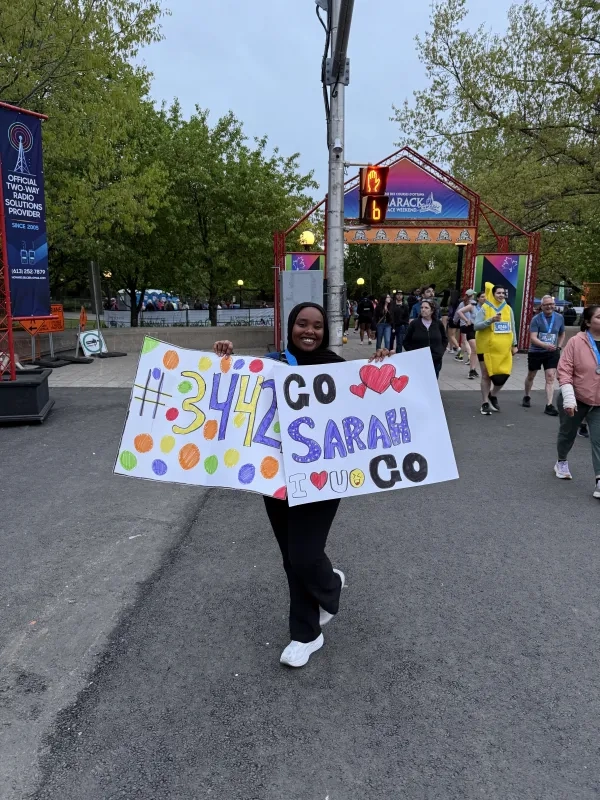
My headphones helped pass the time with high-tempo music, and every so often, messages from friends and family would come through. Hearing their encouragement midway through the race gave me an extra push when I needed it most.
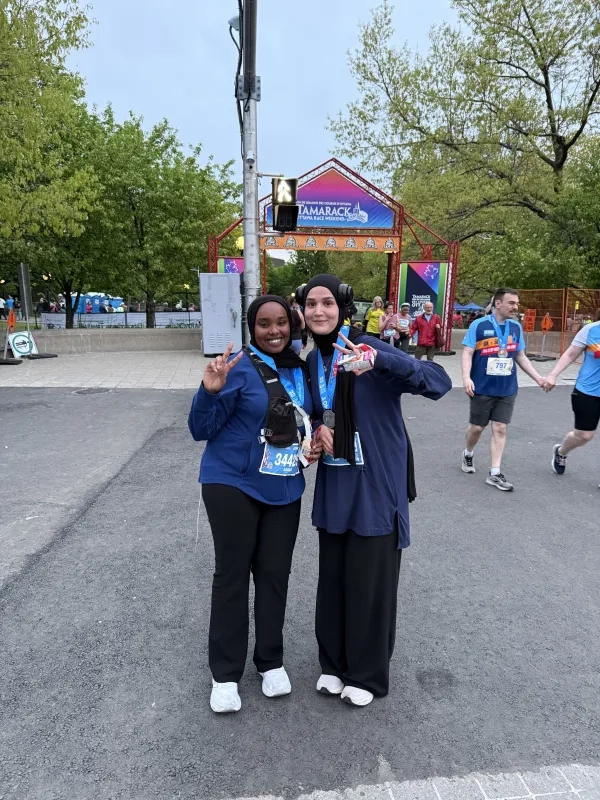
My friend, Roua Aweiwi, was running the race alongside me and kept reminding me, “You can do it, you can do hard things.” Those words stayed with me as the kilometres passed.
As I kept running, it became more challenging, my legs grew heavier, and doubt started to creep in again. Instead of overthinking it, I decided to focus on one step at a time and continue forward. This challenge felt just as mental as it was physical.
About an hour and 30 minutes later, the finish line came into view. Crossing it brought a mix of relief, excitement, and a strong sense of pride after pushing through uncertainty.
It also made one thing clear… this wouldn’t be my last run.
Thinking about your own race?
If you are thinking about preparing for your own race, having the right gear and support can make a difference.
With a CAA Membership, Members can save on athletic wear and essentials from partners such as Athleta, Columbia, and Altitude Sports. For running-specific gear, a Running Room gift card offers Members five per cent back in CAA Dollars when purchased through the CAA Gift Card Store.



