

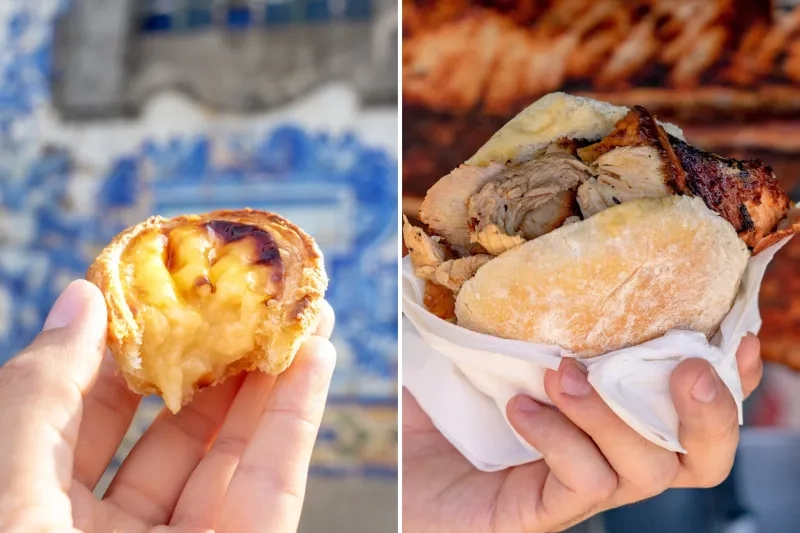
6 Iconic foods you must try in Portugal
3 Minute Read
Summary
- Six traditional dishes best represent Portugal’s national cuisine and regional food culture.
- From Lisbon’s pastéis de nata to Porto’s francesinha, each food reflects local identity.
- These dishes reveal why Portuguese food remains simple, affordable, and deeply cultural.
There’s no denying that Portugal is having a moment. Frequently ranked as Europe’s top destination due to its affordability, safety and diverse attractions, Portugal reportedly attracted about 30 million visitors in 2025 alone.
With easy access to fresh, Atlantic seafood and an emphasis on comforting, Mediterranean-style dishes, your biggest challenge may be choosing what to eat in Portugal. From salted cod dishes galore to tender pork sandwiches and the country’s beloved custard tarts, here’s a quick overview of some of the mouth-watering, traditional foods you won’t want to miss on your next trip to Portugal.
Arroz de marisco
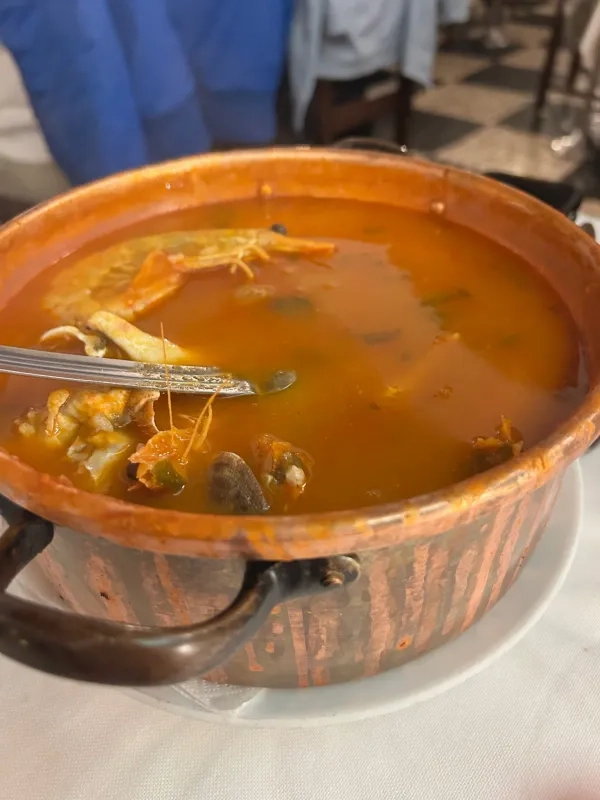
Often described as a cross between soup and risotto, arroz de marisco translates to seafood rice. Originating from the coastal fishing regions (notably Praia de Vieira), the dish is rich, savoury, and comforting. A short-grain variety of rice, such as Carolino or Arborio, is traditionally used as the base.
The mix of seafood often includes clams, mussels, prawns (often with heads on for added flavour) and squid, unlike Spanish paella (which is dry). Arroz de marisco is intended to be malandro, or soupy. Since eating arroz de marisco is often a messy, hands-on experience, many restaurants will offer patrons a bib to save them from splatters while extracting meat from shells.
Bacalhau
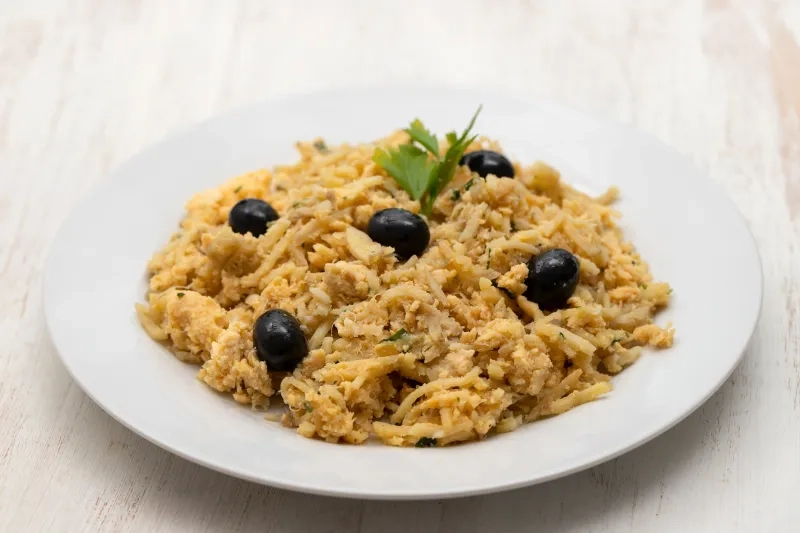
With the Atlantic Ocean to the south and west, seafood is synonymous with Portugal. In fact, salted cod – known as bacalhau – is the national ingredient, appearing on menus across the country. Often served as an appetizer, bolinhos de bacalhau or pastéis de bacalhau are a dish typically made from a mixture of potatoes, codfish, eggs, parsley, onion (and sometimes a hint of nutmeg).
On English menus, they are commonly referred to as “salt cod croquettes.” Cod is also used in hundreds of other recipes, such as bacalhau à brás (shredded with eggs and potatoes) and bacalhau com natas (baked with cream).
Bifanas
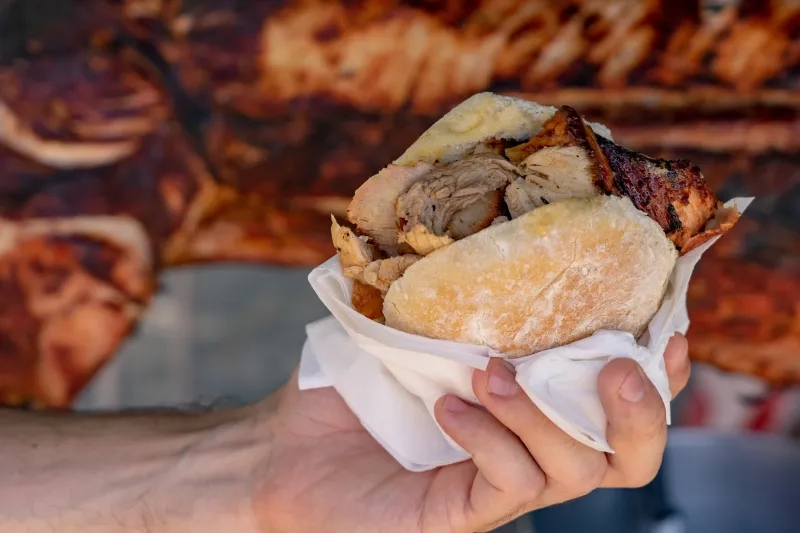
If you’re looking for a quick, casual lunch, look no further than a bifana. These traditional, Portuguese sandwiches are made with thin slices of pork – marinated and simmered in a tasty mixture of white wine, garlic and paprika. One of the key elements to a good bifana is a fresh papo seco, or soft roll.
Typically, the sandwiches are served with a side of mustard or piri-piri sauce for drizzling. A popular and cheap food in Portugal, bifanas vary between the garlicky, stewed style in the north and the lighter, grilled version in the south.
Caldo verde
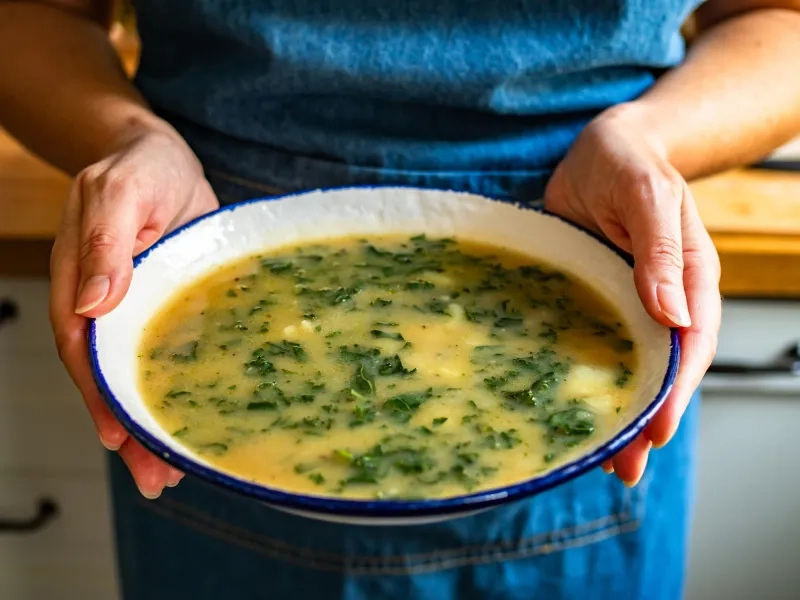
Often referred to as the national soup of Portugal, caldo verde means “green broth soup.” True to its name, the broth is green because it’s made from tender vegetables. Couve-galega is a Portuguese leafy green, often referred to as Galacian kale or Portuguese cabbage in English. These greens offer a balance to the rich flavours of potatoes and garlic, and sausage is frequently added to the soup as well. Caldo verde reflects the green countryside of the Minho province in northern Portugal, where it originated, and it remains appreciated as a hearty, economical dish to this day.
Pastel de nata
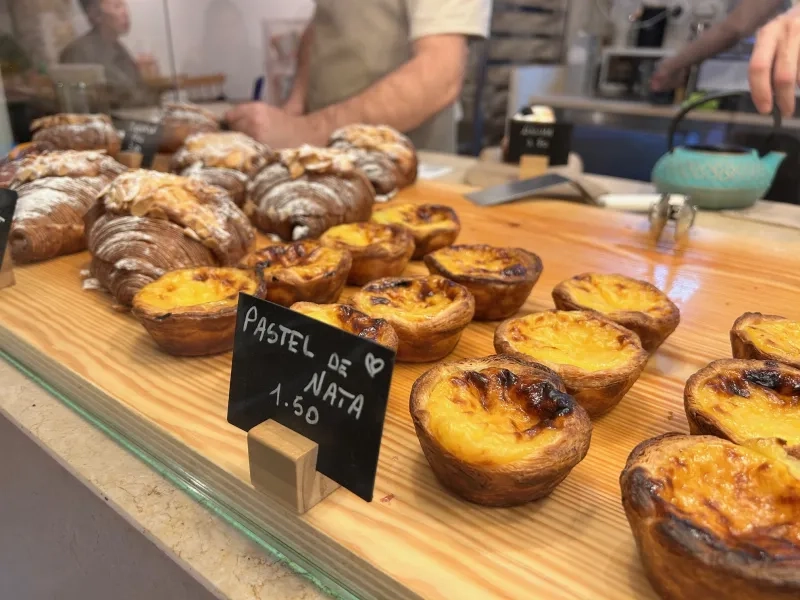
Chances are you’ve seen pastel de nata before, even if you don’t know them by their Portuguese name. Now popular around the globe, these iconic egg custard tarts originated from Lisbon's Jerónimos Monastery before 1834 and are an absolute staple among Portuguese sweets.
Pastel de nata has a crispy, flaky pastry shell filled with creamy custard, which is traditionally scorched on top in a very hot oven and served warm, often with cinnamon and powdered sugar. Even if you don’t consider yourself a huge fan of custard, these perfectly prepared tarts may have the power to change your mind.
Sardinhas assadas
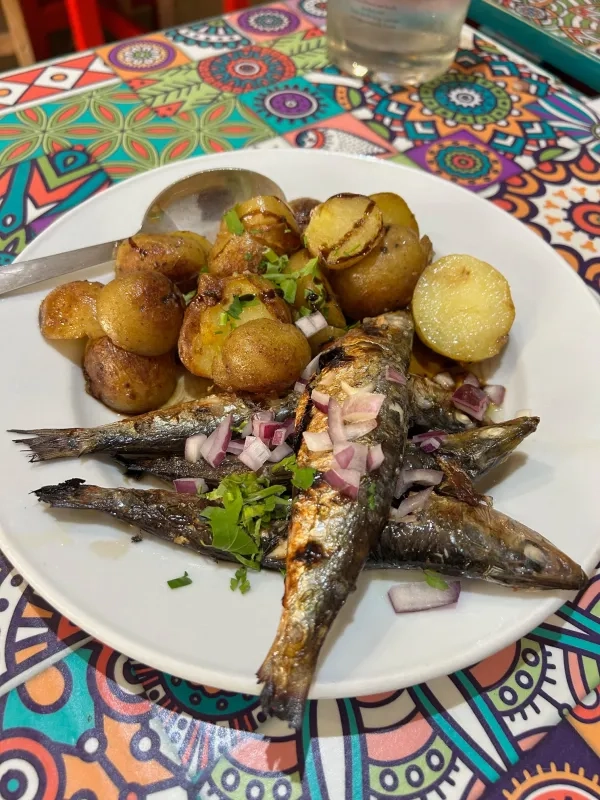
You won’t get far on Portugal’s cobblestoned streets without passing a restaurant (or five) offering sardinhas assadas, or grilled sardines. In fact, sardinhas have become somewhat synonymous with the country’s love affair with seafood. With roots that can be traced back to the Lisbon and Vale do Tejo regions, sardinhas assadas are even celebrated at sardine festivals – particularly in the first 10 days of August.
The small, silvery fish are cleaned (or sometimes left uncleaned for a more intense flavour), seasoned with coarse sea salt, then cooked over charcoal or a very hot grill until the skin is charred – while the flesh remains tender. They are often eaten with a slice of bread (to soak up the oils.
Ready to eat your way through Portugal?
If you’re ready to dine your way through Portugal, CAA can help! To start planning your trip, book an appointment with a CAA Travel Consultant today.



