

Are we there yet? How to keep your toddler happy on a road trip
8 Minute Read
Summary
- Plan active stops every two hours and consider splitting long drives into multiple days.
- Schedule drives around naps or bedtime and keep familiar routines to support sleep.
- Pack a variety of toys and ample snacks, and prepare essentials ahead to reduce stress.
Planning a road trip with a baby or toddler? Gone are the days when you can just hit the road with only the destination in mind.
The drive will likely not go exactly as you imagined it, but the sweet memories you make along the way are worth the journey.
As a parent who completed seven days in the car with her one-year-old son this past summer, I know there is more to it than just hitting the road at a certain time and having some toys handy. To help you have a smooth drive, it’s important to schedule active breaks, align car time with sleep, and pack engaging toys and a variety of snacks for a (hopefully) stress-free journey.
Here are my top tips for going on a road trip with a young toddler, from a mom who recently drove across Ontario with her 15-month-old.
How to stop on a road trip with a toddler
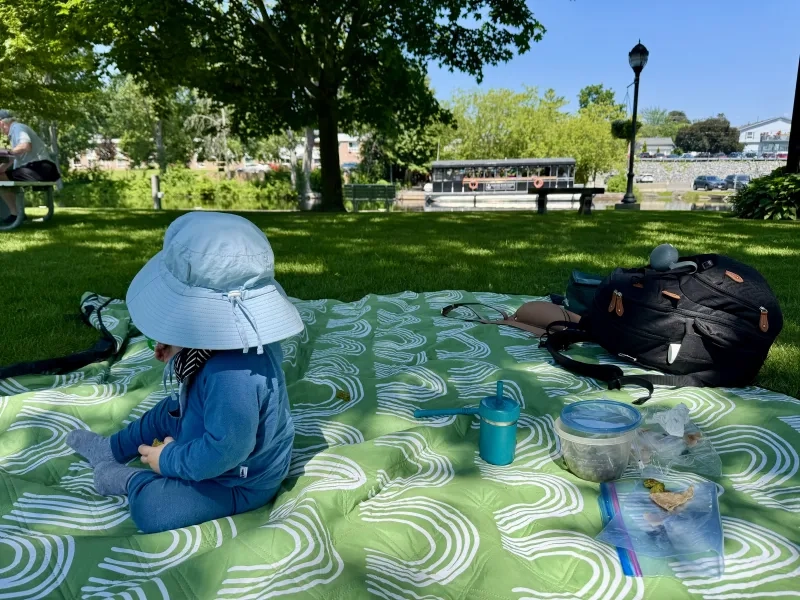
You’ll want to pre-plan active stops every 1.5 to two hours and consider where you can do diaper changes. If you can, split up long drives into multiple days.
For a one-to two-year-old child, the maximum recommended continuous time in a car seat is two hours. Plan to stop every couple of hours, so your little one can stretch and enjoy some active time.
Check your travel route ahead of time for potential stops with a park, or at least a place for your toddler to burn off some energy. On the way to Toronto, we stopped at Napanee Conservation Park in Napanee, about two hours from Ottawa and just a few minutes off Highway 401. It has a spacious grass area by the river, ideal for a picnic, with a giant play structure for kids.
Set your expectations low, because there may be additional stops if your child starts having a meltdown or a dreaded blow-out.
Consider diaper changes and where those will happen on your route. Summer is easier (if it’s not raining) because picnic-style or back seat diaper changes are possible. Chain brand restaurants, like Tim Hortons or McDonald’s, are typically the most reliable when it comes to having a change table located in the public washroom. It doesn’t hurt to call an establishment beforehand if you have a fun, local stop in mind.
It’s also helpful to split up a long drive into multiple days if you can afford to. En route from Ottawa to Windsor, we stayed overnight with extended family in Hamilton. A five-hour drive is significantly less daunting than eight-plus hours, and then the sub-three hours remaining on the second driving day felt like a breeze.
Best time to start a road trip with a baby or toddler
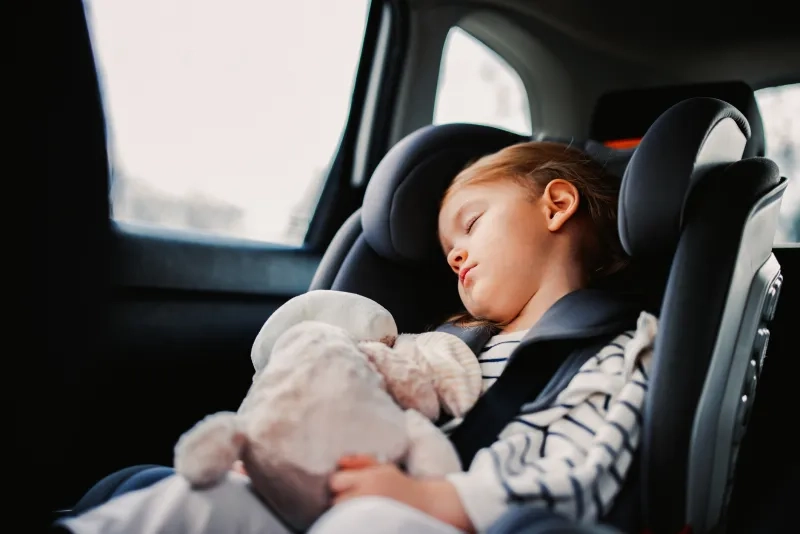
Plan road trips around your baby's or toddler's sleep schedule. You’ll want to maintain your at-home routine as much as possible and consider what may distract your child from sleeping.
Ideally, your little one is ready for sleep, whether that’s a nap or bedtime during the drive. If an evening drive works for your family and you’re a night owl, or can swap drivers, leaving just before the kiddo’s bedtime can be a great idea. The fatigue from the day and darkening skies mean they hopefully sleep throughout the drive.
Daytime drives worked better for my family, so we planned for a nap as well as time entertaining our little one. Within the month between two Ontario road trips, my young toddler transitioned from two naps a day to one. At two naps, we left just before his first nap time, planning to stop shortly after he woke, spend time playing at a park and having lunch, then get back in the car just before his second nap. It was a good reminder to let go of your expectations when travelling with kids. Our son had one very short nap, and we learned that having a parent in the backseat was a distraction.
A month later, my son looked sleepy as we got in the car, so I sat in the front seat, put on the noise machine, and he fell asleep within 15 minutes of hitting the road. My travel philosophy quickly became that getting some sleep matters more than his typical schedule. On road trip days when he seemed more alert, or when we left a bit earlier in the day, I sat in the back seat to keep him entertained, then moved to the front for his nap after a rest stop.
Maintain your normal bedtime routine as much as possible. Have the sound machine ready, comfortable clothes on them, a soother nearby if they use one, their favourite stuffie close by, a bottle prepped, etc.
Recommended road trip toys for a toddler
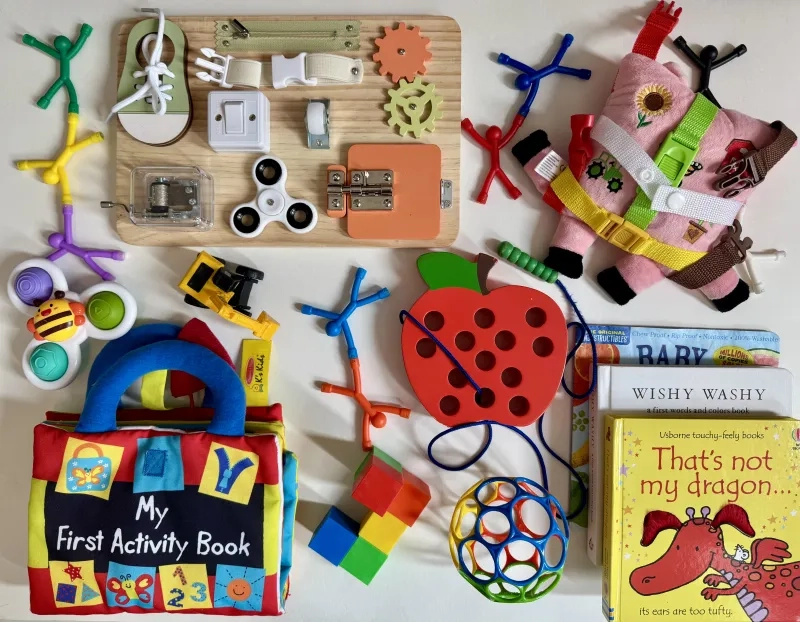
Before you leave, pack a bag full of toys, both new and favourites, and keep it accessible in the car.
A pre-downloaded music playlist can also help entertain them. Have a tablet with low-stimulation shows as a backup option.
If your child is anything like mine, they want to be exploring, so packing not only enough toys but the right toys for a road trip is key. If possible, try to pack a mix of their favourite toys from home and exciting new ones. We have some travel-specific toys now, so he only sees them in the car, which keeps it exciting too.
Activity books, Montessori boards, buckle toys and magic water colouring books are all great ideas and the top suggestions for toddler car travel toys. In the car, my child surprisingly loved a wooden apple lacing toy (a hole-filled apple with a worm attached to a string) that he focused on for a while, looping in and out. Other top toys we pack are magnetic blocks and magnetic men, his favourite ball, a wooden spoon (for the kitchen utensils obsession phase), touch-and-feel books, and Little People characters, based on what he likes to play with at home. Have a kid-specific playlist of their favourite songs downloaded in case you hit a period of spotty service.
Don’t feel guilty about having a tablet ready with episodes downloaded as a backup. Slower-moving, low-stimulation kids' shows that we had prepared were Trash Truck, Puffin Rock, Sea of Love, Llama Llama, Daniel Tiger, Bluey and The Many Adventures of Winnie the Pooh. Our first road trip taught me that my son isn’t as entertained by cartoons as by music or reading, so I made sure to pack his latest go-to books to read to him during the long drive.
What snacks to pack for the road trip
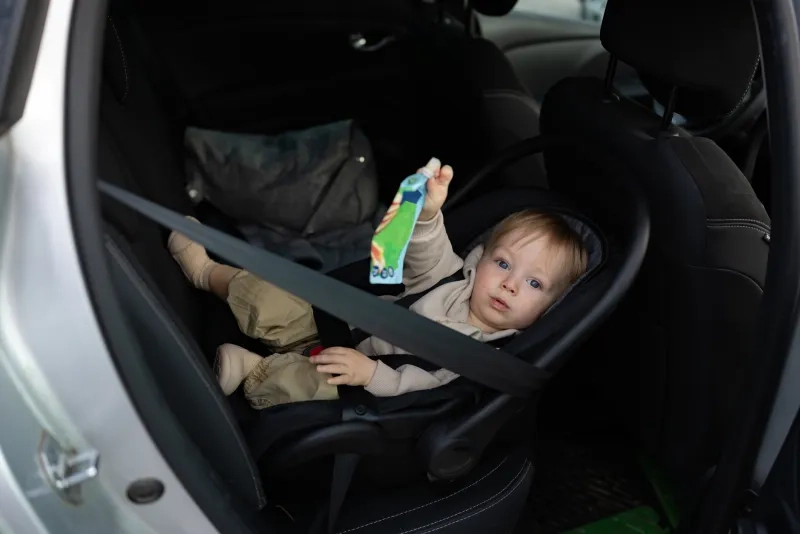
You’ll want to bring snacks, snacks and more snacks. A variety of fun, small treats is one of the best ways to keep your toddler engaged, along with some healthier options packed in a cooler.
The same principle that applies to packed toys applies: bring a mix of new and favourite snacks. Pack way more than you think you’ll need. We packed a few types of baby puffs, paws and biscuits, arrowroot cookies, fruit melts, and adult crackers. We also had a cooler ready with blueberries, grapes, cheese, toast, mini muffins, and lunch meat (all pre-cut if required); think toddler charcuterie, but the least-messy options.
Reminder to consider choking hazards and prep your kid’s car meals accordingly, whether that means avoiding some things or cutting certain foods before packing. There are different types of snack containers to help with portion control, or if you’re sitting in the backseat, then it’s easier to act as the snack dispenser.
The importance of packing for your road trip the day before
Being as packed as possible beforehand, meaning all clothes and adult personal items in suitcases, travel toy bag full, large items like the pack n’ play crib already in the trunk, snacks prepped together and fuel tank full, is a game changer.
Pro tip: Get ready for your road trip by filling your tank at participating Shell Canada locations and save 3 cents per litre with your CAA Membership.
If the morning is more focused on the child – feeding and some play time – without rushing around them, it makes for a better drive right off the bat. It’s not often possible, but going outside for some fresh air and movement is also helpful.
Lists are a lifesaver. Don’t rely on your memory; if it’s anything like mine, it’s not what it once was before having a baby. Whatever you can’t pre-pack, have written down on a clear list (favourite stuffie, baby monitor, sleep sack, and cooler with fresh snacks, for example).
Why it’s important to do a practice trip first
Try a shorter ‘test trip’ with your baby or toddler, to see what keeps them calm and engaged during a road trip.
Babies and young toddlers develop and change rapidly. When was the last time you took them on a long drive? A shorter road trip as a practice run can help you discover what works for your child now, and what doesn’t.
Weeks before embarking on a two-week road trip from Ottawa to Windsor, to Sauble Beach, and back to Ottawa, we took my 14-month-old on a four-hour drive to Huntsville, Ontario. It had been six months since my son had been in the car for more than an hour at a time. I assumed he would easily fall asleep in the car seat when he was tired, as he did at eight months old. Boy, was I wrong. He had one of the biggest meltdowns I’d ever seen from him and only slept for 25 minutes all day.
This had me rethinking my upcoming road trip plan and researching how to get your toddler to sleep in the car. When it was time for the big road trip, I rotated between sitting beside my child in the back seat and sitting in the front when he seemed tired; turns out I’m a distraction, and he sleeps more easily when I’m not beside him. I also had the travel noise machine handy to signal it was time for a nap, packed a wider range of snacks, and switched up the toy rotation based on what worked the prior drive.



