

The dos and don’ts of flying with pets
6 Minute Read
Summary
- Each airline has different pet‑travel requirements, so reviewing their policies is essential.
- Small pets may travel in‑cabin if weight, crate size and ventilation requirements are met.
- Experienced travellers recommend early crate training to reduce stress and ensure smoother flights.
We’ve all been there. The bags are packed, the tickets are booked, and despite weeks of anticipation, the moment comes when you suddenly can’t bear stepping away from your pet.
Fortunately, you may not have to because travelling with a pet is more feasible than many expect. It not only avoids the cost and uncertainty of pet-sitting but also allows your pet to experience new sights and sounds right by your side.
Whether you’re headed on holiday, relocating, or simply unwilling to part with your furry friend, flying with animals has become increasingly common in recent years.
So next time you pack your bags, you’ll also have to remember to pack the treats. Here’s everything you need to know about travelling with your pet.
Airline rules
Unlike carry-ons or liquids, where standards are relatively universal, policies around animal travel vary between airlines. Some carriers offer pet-specific check-in and handling, while others enforce a strict ‘no-pets’ policy. It is important to review your airline’s rules in advance and select your flights accordingly.
Large pets are often restricted to the cargo hold, while smaller animals are generally permitted in the cabin as a carry-on, provided certain conditions are met. The combined weight of the pet and carrier must typically be under 20 lbs, and the dimensions must be 46 cm x 28 cm x 28 cm. Carriers must be leakproof, ventilated, and secure. The pet must remain inside for the duration of the flight.
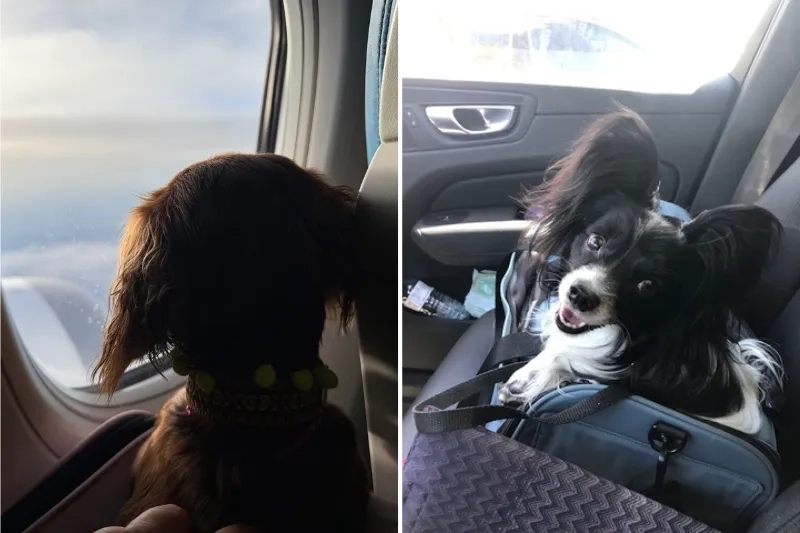
Dog lover Ragui Kamel, a senior global executive and CAA North & East Ontario board member, has become an expert in navigating pet travel with his dog, Luigi. Before he turned two, Ragui’s globe-trotting Papillon had visited nine countries and crossed the Atlantic six times. His number one piece of advice? “Make sure your pet carrier is soft enough to squeeze under the seat right in front of you…get your dog used to the travel bag as early as possible.”
Mandy Gosewich, a CAA Member and owner of a long-haired Dachshund named Alyce, agrees. She adopted Alyce in May 2025 and almost immediately began preparing her pet for Mandy’s annual month-long stay in Mexico planned for January.
“I learned very early on about Alyce eating the soft-side crate out of anxiety. So I did a few test runs with her sleeping away with friends to get her better acquainted with the soft-sided crate,” she says.
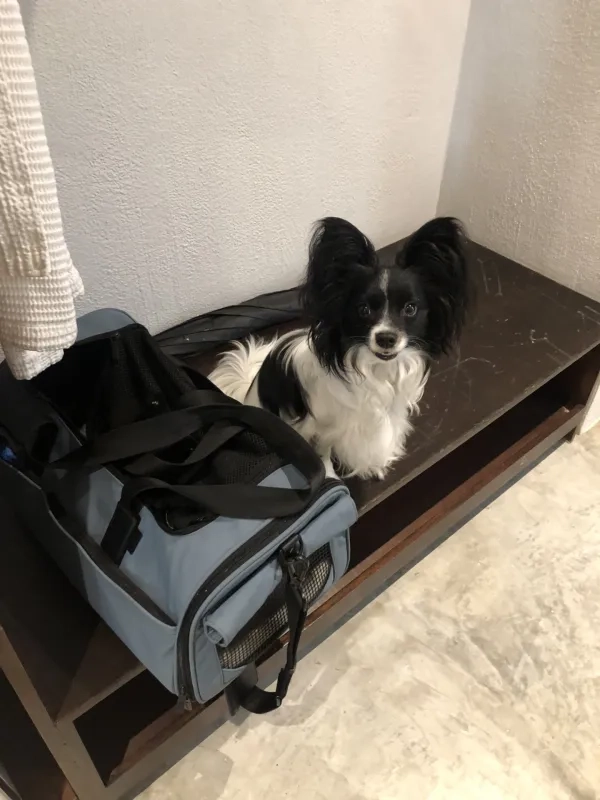
Beyond size requirements, airlines also impose restrictions based on an animal’s age or breed. Puppies must generally be at least eight weeks old for domestic flights and sixteen weeks to travel internationally. At the same time, short-nosed breeds like pugs and bulldogs are sometimes prohibited altogether, as their respiratory systems put them at high risk during air travel.
Costs of travel
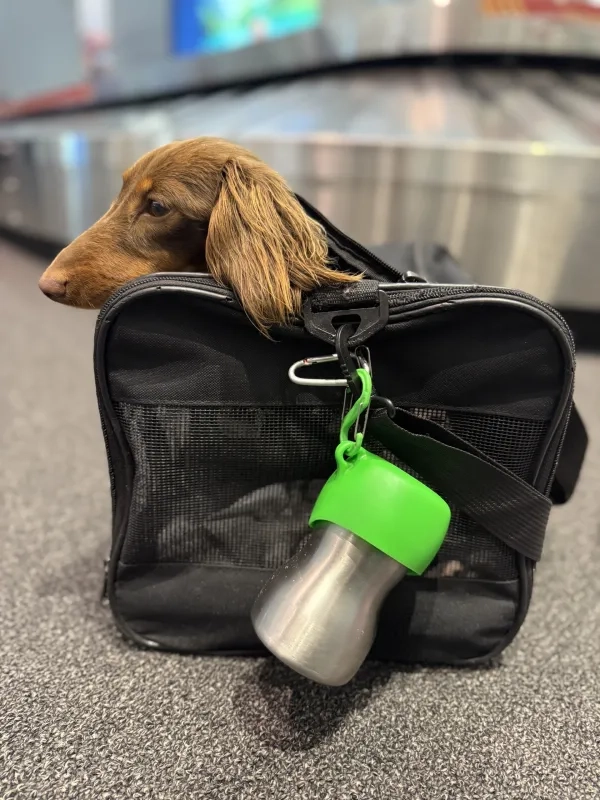
Because small pets take up half the space of a passenger, pet airfare is typically easier on the wallet. In-cabin pet fees generally range from $95 to $125 per flight, though costs can vary by airline and route. Larger dogs can incur higher fees, often upwards of $300.
In-cabin pets are usually considered a carry-on item, so travelling with an animal may also mean paying additional baggage fees if you’re not packing light.
Pet health
Before booking anything, consult your veterinarian to ensure that your animal is fit to fly, especially if they have any existing heart, respiratory or anxiety-related issues. Many airlines require a health certificate and proof of vaccinations, so be sure to gather all necessary documentation in advance.
Stress level is another factor, as air travel can make even the calmest animals agitated. Packing a blanket, choosing quieter transit options, and booking direct flights can help make the voyage smoother. Mandy, who owns the popular Stunning Boutique in Ottawa’s ByWard Market, recalls that “our first few times, I spent most of the trip with my head between my legs curled over in my seat, comforting her, as she was not thrilled.” She says she also had to rely on calmatives for Alyce to get her used to flying.
“Depending on the medication, ask friends and your vet about their experiences,” she adds. “Each dog is different, but I did learn that Alyce required more of the travelling pill than recommended and more frequently.”
On longer flights and across time zones, animals can also experience a form of jet lag because their usual sleep and feeding cycle is disrupted. Mandy says that even when flying to their sun destination in Mexico, her dog is groggy and needs a few days to get back to a normal appetite.
What to watch out for
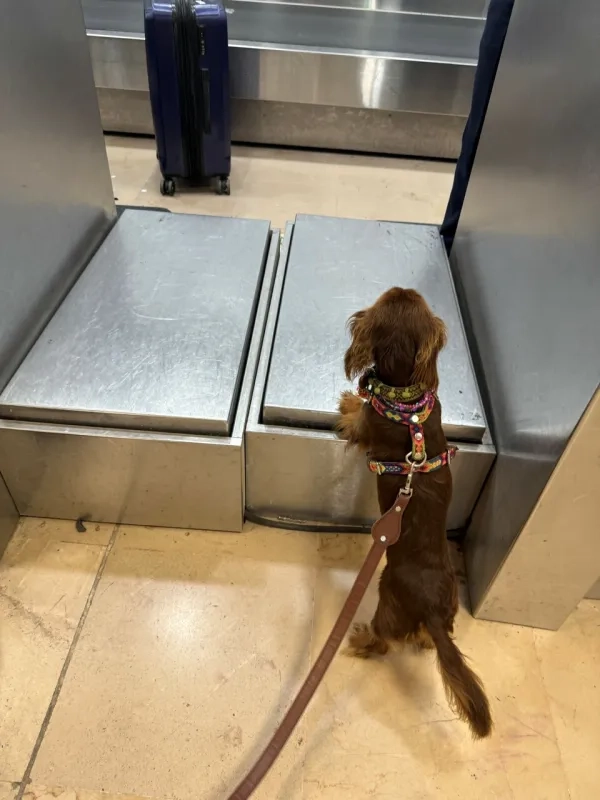
“When it comes to international travel with a pet, it is essential to know the entry and exit requirements,” Ragui emphasizes. “[Entry] can be complicated, expensive and downright impossible… do your homework before you plan.”
On top of airline rules and health requirements, country-specific customs procedures can be another major hurdle, making it essential to keep all paperwork in order before arriving at the gate. Vaccinations, microchipping, and even quarantine periods aren’t standardized across countries. Airlines should also be notified as early as possible, as most flights limit the number of animals permitted on board.
Your pet’s behaviour is another important factor. Signs of aggression may be grounds for denied boarding, even if all else is in order. Owners of larger dogs may also want to keep an eye on the weather, as travel in the cargo hold can be dangerous in extreme heat or cold.
One way of managing behaviour and potential complications with airline policy is to show up much earlier for a flight than normal, says Mandy.
“We had issues with her paperwork the first time. I’m not one for arriving on time, but I'm very grateful I did that time and every time after that. Makes the day longer, but it was worth it because we didn’t miss her flight,” she notes.
Lastly, don’t overlook your pet’s bathroom needs. Although many airports offer dedicated pet bio-break areas, not every dog will use them. As Ragui recalls, “we had one embarrassing incident where Luigi squatted in the middle of the gleaming white floor of Charles de Gaulle… so make sure you’re carrying poop bags and baby wipes.”
Don’t forget pet insurance
Of course, even with the best preparation, unexpected issues can arise. Pet insurance can aid in covering unexpected vet bills if your dog gets sick or injured and in providing financial support when you need it most.
As a CAA Member, you can save 13.5% on a pet insurance plan*. Get your online quote or call 1-833-232-2356 today.
*Members receive a discount of 13.5% off. Non-members receive a discount of 9% off.
All pet insurance plans have limitations and exclusions. Specific products, features, rates, and discounts may vary by province and territory, eligibility, and are subject to change. Medical Conditions that are noted, symptomatic or diagnosed prior to enrollment, or during a waiting period are pre-existing to Coverage and not eligible for reimbursement. Waiting periods, annual deductible, co-insurance, benefit limits and exclusions may apply. This advertisement is an outline only; policy terms and conditions 'User Guide' will prevail. For all terms and conditions visit: https://www.petsplusus.com/service-claims/brochures-guides
Pets Plus Us Pet Insurance policies are underwritten by Northbridge Insurance, distributed by PTZ Insurance Services Ltd. & Société d'Assurances Collectives (Sodaco) Inc. in Quebec.Sodaco is registered with Autorité des marches financiers as a Damage insurance broker firm, in the following disciplines: Insurance Damage (Broker) and Personal Insurance (Reg#603622) https://lautorite.qc.ca/en/general-public/registers/register-of-firms-and-individuals-authorized-to-practice Pets Plus Us Pet Insurance is available in all provinces and territories. Pets Plus Us®, Pets Plus Us & Design and related words and logos are trademarks and the property of PTZ Insurance Services Ltd.
® CAA trademarks are owned by, and use is authorized by, the Canadian Automobile Association.
