

How to jump-start a car
3 Minute Read
Summary
- Learn the safe, step-by-step way to jump-start a dead car battery.
- Find out why EVs and hybrids need different handling before you boost them.
- Compare portable jump starters and know when to call a professional instead.
You know how frustrating it can be to find yourself stranded with a car that won't start. One cause of a vehicle not starting is a dead battery. Fortunately, you can often jump-start a dead battery and get your car running again.
You'll need another car with a healthy battery or a battery jump starter. You can call CAA North & East Ontario for roadside assistance if you don't have access to either. Emergency Roadside Assistance is a Member-exclusive benefit, so have your Membership number ready when you call.
Before we get into the step-by-step process, it's important to note that jumping a battery can be dangerous if not done correctly. Follow all safety precautions, such as wearing protective eyewear and gloves, and carefully read your vehicle's battery jump starter instructions.
Be sure to avoid common mistakes such as touching the metal clamps together while they are connected to a battery, connecting the cables in the wrong order, or allowing the clamps to touch any metal part of the car except at the recommended connection points. These errors can cause sparks, short circuits, or even injury. Always double-check your connections before proceeding.
Jump-starting an EV or hybrid
The steps below are for jump-starting a standard gas-powered vehicle. If your car is an electric vehicle (EV) or hybrid, don't follow these same steps: an EV should never be used to boost another vehicle, and on a hybrid, only the standard 12-volt battery is safe to jump, never the high-voltage traction battery, which is usually marked with orange wiring.
If you drive an EV or hybrid, CAA North & East Ontario recommends calling a professional technician for battery service instead of jump-starting it yourself.
How to jump-start a dead battery
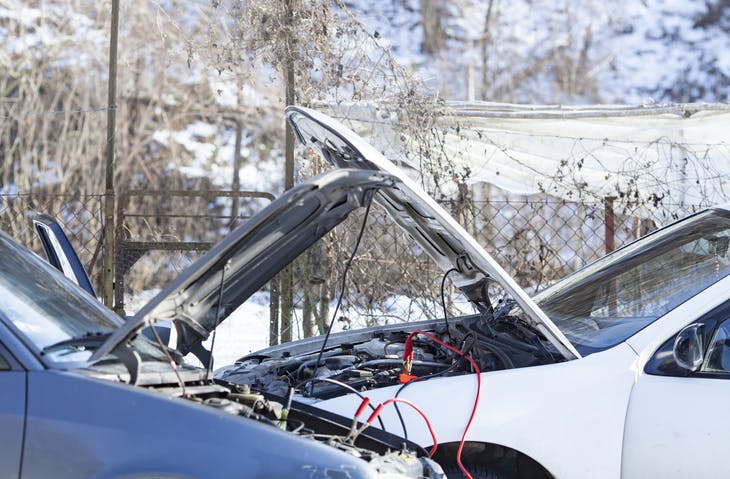
- Position the two cars so they face each other, with the hoods open.
- Locate the batteries in both cars. In most cases, the battery is under the hood, near the front of the vehicle.
- If using another car to jump-start your battery, ensure that the assisting vehicle's engine is off and the transmission is in park.
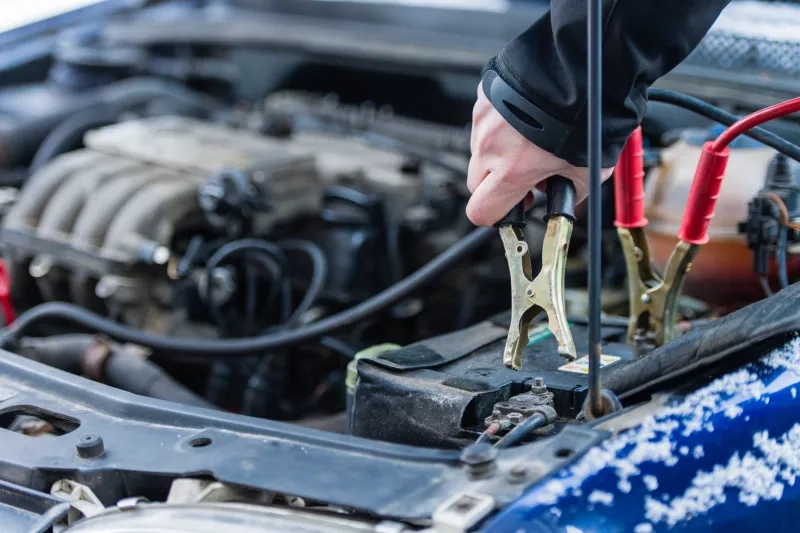
- Connect the positive (red) jump leads to the positive terminals of the dead and assisting batteries. Then, connect the negative (black) jump leads to the negative terminal of the assisting battery and a metal surface on the car with the dead battery (such as a bolt on the engine block).
- Start the assisting car and let it run for a few minutes.
- Try starting the car with the dead battery. If it starts, remove the jump leads in the reverse order that you attached them (first the negative, then the positive).
- If the car with the dead battery won't start, another issue could be at play. In this case, it's best to consult a mechanic or a jump-start car service for further assistance.
Choosing a portable jump starter
Now that we've covered the basics of jump-starting a dead battery, here are a few key features to consider when choosing a portable jump starter: Look for the right peak amperage for your vehicle size (most cars need at least 400 amps, while trucks and SUVs may need 1000 amps or more), safety features like reverse polarity and spark protection, and extras such as built-in flashlights or USB charging ports. Also check the jump starter's size, weight, and whether it includes cables and a storage case, so it meets your needs and is easy to use. With these factors in mind, let's look at some of the best portable jump starters on the market.
One popular option is the NOCO Genius Boost Plus GB40 1000 Amp 12V UltraSafe Lithium Jump Starter. This compact, lightweight jump starter can jump-start a dead battery in seconds and features safety features to protect against faulty connections. It also has a built-in LED flashlight and USB charging ports.
Another top pick is the Anker PowerCore Jump Starter. This portable jump starter has a peak current of 1000 amps and can jump-start many vehicles, including cars, trucks, and SUVs. It's equipped with a built-in LED flashlight and a USB port for charging devices.
The JUMTOP 3000A Peak Car Jump Starter is another excellent choice. This portable jump starter delivers a peak current of 3000 amps and can jump-start cars, trucks, boats, and motorcycles. It also has a built-in LED flashlight and USB charging ports.
When to call a professional instead
Whether you use another car or a portable jump starter, follow safety precautions and read the instructions carefully. If you cannot jump-start the battery or suspect another issue with your car, it's best to request roadside assistance through CAA to have a qualified Member technician help you further.
Does your battery need a boost or a full replacement? See our battery boost vs. replacement guide to tell the difference.


