

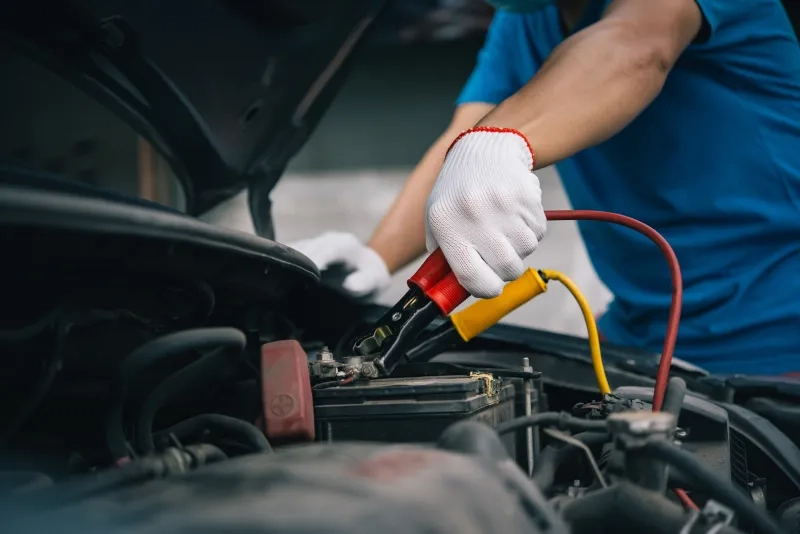
Battery boost, or battery replacement? Here's when to call for help if your car dies
4 Minute Read
Summary
- Know when a dead battery needs a boost or a full replacement.
- Learn safe jump-start steps for gas, hybrid and electric vehicles.
- CAA North & East Ontario's technicians can test, replace and install batteries wherever you are.
There's nothing worse than getting ready to drive to work or run errands, only to find your car dead in the driveway. A drained battery can disrupt your day and cause serious frustration. Luckily, getting your vehicle running again is usually a quick fix, and all you need is another vehicle and a set of jumper cables.
But what if it’s not an easy solution? If you’re not sure whether your car needs a jump or a brand-new battery, here’s how to decide whether to do it yourself or call a professional.
What causes a car battery to die?

Car batteries can quit for several reasons. Sometimes user error is a factor; leaving the lights on while the car isn’t running or taking too many short trips that don’t allow the alternator to charge the battery can contribute.
Extremely hot or extremely cold weather may drain your power. Loose or corroded battery connections and natural ageing can also cause your battery to die.
Can I boost my car battery myself?
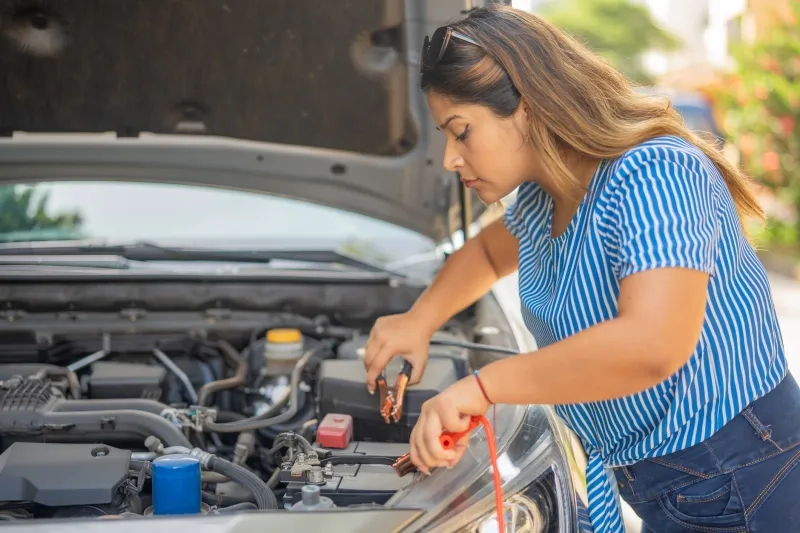
Boosting your battery is easy once you know how. You'll need jumper cables and a second, non-electric vehicle. You can also use a booster pack, which doesn't require a second vehicle. Make sure you have eye protection as well.
Want the full step-by-step walkthrough? See our complete jump-start guide.
To jump-start another car's battery, ensure both vehicles are in park with the engines off. Your jumper cables will be colour-coded: red for positive (+) electrical charge, black for negative (-) charge.
Hook one positive red clamp to the dead battery's positive lead and the other to the positive lead of the good battery. Hook one of the negative black clamps to the negative battery terminal on the live battery. On the vehicle with the dead battery, hook the second black negative clamp to a clean, unpainted metal part of the engine block.
Turn on the car with the live battery and let it run for a few minutes. Then turn on the vehicle's ignition with the dead battery. It should turn on and allow your car to run as normal.
After boosting your battery, don't turn your car off straight away; drive for 20 to 30 minutes to charge it.
CAA North & East Ontario recommends boosting a car battery only when it occasionally fails to hold a charge; a battery that needs boosting more than once in a short period is likely failing and should be replaced rather than boosted again.
Is a car battery boost safe for all vehicles?
Most vehicles can be boosted safely. The main consideration if your electric vehicle (EV) or hybrid needs a boost is the type of vehicle providing it; an EV or hybrid can't boost another vehicle without risking damage to one or both. So, if your EV dies and another EV owner offers assistance, do not attempt to boost your car with their battery.
Unlike most gas-powered cars, which typically store the battery under the hood, the battery in an EV or hybrid vehicle may be harder to find. Check your car's manual if you're unsure.
Hybrids require special consideration. They typically have two batteries, and only one can be safely boosted. Most hybrids have a standard 12-volt battery, just like a gas car. This is the battery you want to jump. Do not boost the high-voltage traction battery, which will likely be marked with orange wiring.
Electric and hybrid vehicles require different battery-boost handling than gas vehicles. An EV cannot safely boost another car, and a hybrid's high-voltage traction battery, marked with orange wiring, should never be jumped; only its standard 12-volt battery is safe to boost.
Will a battery boost fix a bad battery?
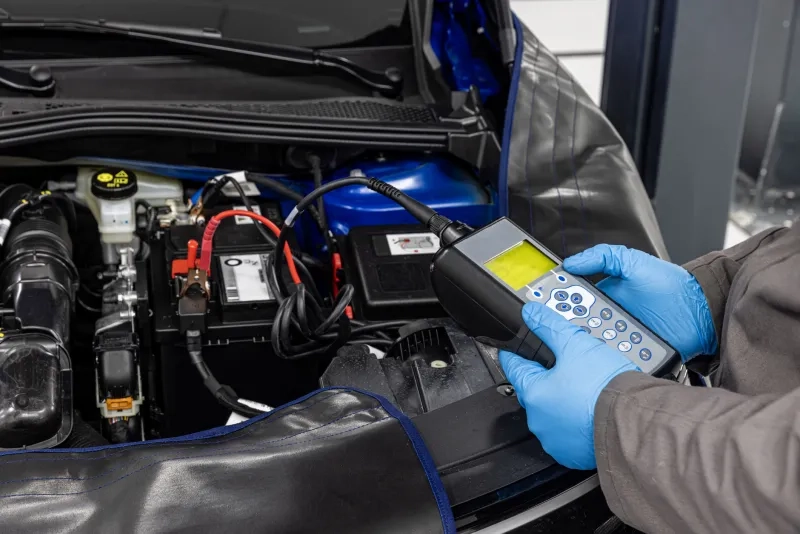
Generally, car batteries last between three and five years—but usage, climate and driving habits can make a big difference. Once your battery reaches the three-year mark, you should have it tested annually to assess its health.
If your car dies and you open the hood to find the battery is misshapen, cracked, leaking battery acid or has an acrid or burning smell, you should get a professional to look at it. The battery is likely malfunctioning and will need to be swapped.
While there’s no specific number of times you can safely boost a battery, performing too many boosts in a short period of time can put significant strain on your car’s alternator. If your battery needs frequent boosting, consult a professional to determine the cause. They may determine that a bad battery is the culprit, which means you should swap it out sooner rather than later. Otherwise, you may find yourself needing a new alternator, too.
When do I need a professional car battery boost?
If you aren't comfortable boosting your own battery, a professional can help. Whether you're not confident about how it works, there's no one around, or you feel nervous or unsafe about asking a stranger, there's no shame in calling a trusted expert.
It's also a good idea to leave it to a professional if you're not sure whether the battery is safe to boost or if you've tried boosting it yourself, but it still won't charge. It may be unable to hold a charge for several reasons, including being completely dead, faulty cable connections, alternator issues, or corrosion.
You can also intervene before a dead battery catches you off guard. If you suspect a battery issue, have it tested and replaced before you get stuck. CAA North & East Ontario's 24/7 emergency roadside assistance is there if you're ever caught out.
Call CAA North & East Ontario when it's time to swap your battery
CAA's Mobile Battery Service will come to you and includes testing your charging system, installing a new battery and replacing your old one. Don't wait until a dead battery stalls your plans; book a Pit Crew Appointment today. Track your technician's arrival right from the CAA Mobile App.
Not yet a Member? Compare CAA Membership plans to access this service and more.


