

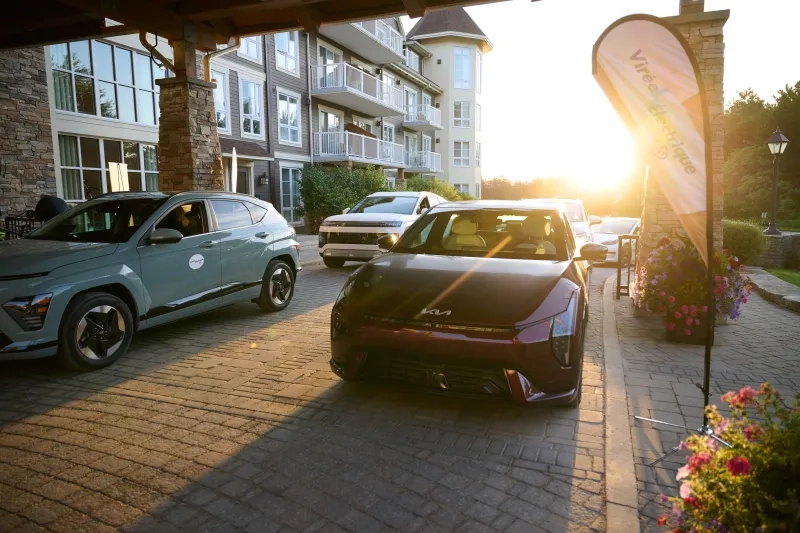
What does it really cost to drive an EV in Canada? CAA's 2026 EV Circuit finds out
3 Minute Read
Summary
- CAA’s 2026 EV Circuit tested 22 EVs for cost, charging and real-world performance.
- EVs completed a 230-km route using energy equal to about 2 L/100 km.
- Fast charging added 110 km on average, costing $13.50 per 100 km.
Which EV is right for you—and how can you tell? As electric vehicle (EV) technology continues to advance, consumers are asking about cost, convenience and the road-trip experience.
That's why CAA's EV Circuit—a real-world road test for EVs popular with Canadians—tested which of 22 models deliver the strongest overall experience across different price points.
In winter of 2025, CAA conducted its first-ever EV winter test drive, but the EV Circuit—held on September 16, 2026, was the largest. The route began in Blue Mountain, ON, and ended in Vaughan, ON, and included highways, rural roads, and city streets. All cars completed the 230-kilometre route on a single charge.
“Range anxiety has long dominated the conversation about electric vehicles, but these results suggest the discussion can shift to more personalized considerations for drivers,” says Ian Jack, VP of public affairs at CAA National. “For many of today’s EVs, the question is becoming less about whether you can complete a trip and more about how efficiently you can make it, where you will charge, how long charging will take, and what it will cost.”
How did the cars perform?
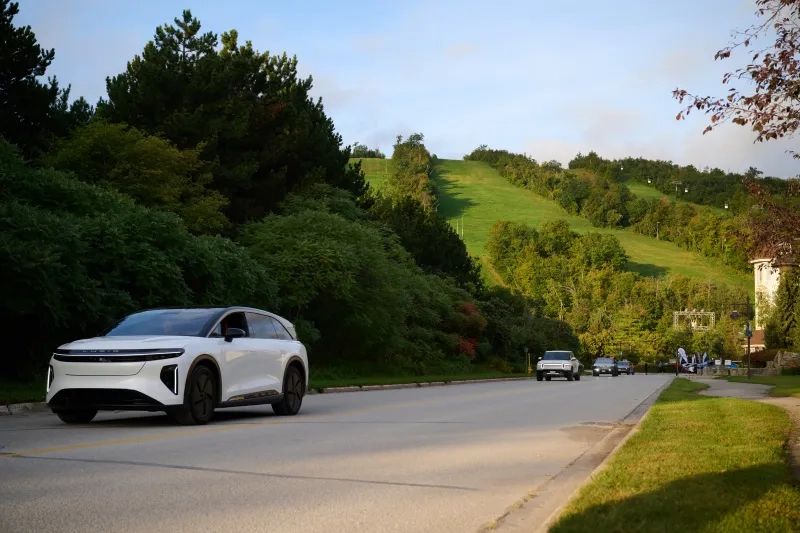
The electric vehicles in the EV Circuit showed significantly higher fuel efficiency than gasoline cars. On average, the EV Circuit drained only about 40 percent of each EV's battery charge. The vehicles tested used the energy equivalent of approximately two litres of gasoline per 100 kilometres. By comparison, the average Canadian passenger vehicle consumes roughly eight to 10 litres of gasoline per 100 kilometres.
However, energy consumption ranged widely, from 11.43 kilowatt-hours per 100 kilometres to 28.91 kilowatt-hours per 100 kilometres. The size, weight and design of an EV can contribute to its energy efficiency.
“Just as Canadians compare fuel economy when buying a gasoline-powered vehicle, they should compare energy efficiency and charging performance when considering an EV,” says Jack.
Temperature also significantly impacts performance. The vehicles consumed 40 per cent less energy during this test than during the 2025 EV Winter Test Drive, meaning EV drivers should consider driving conditions as much as manufacturers’ guidelines.
How much does it cost to charge an EV?
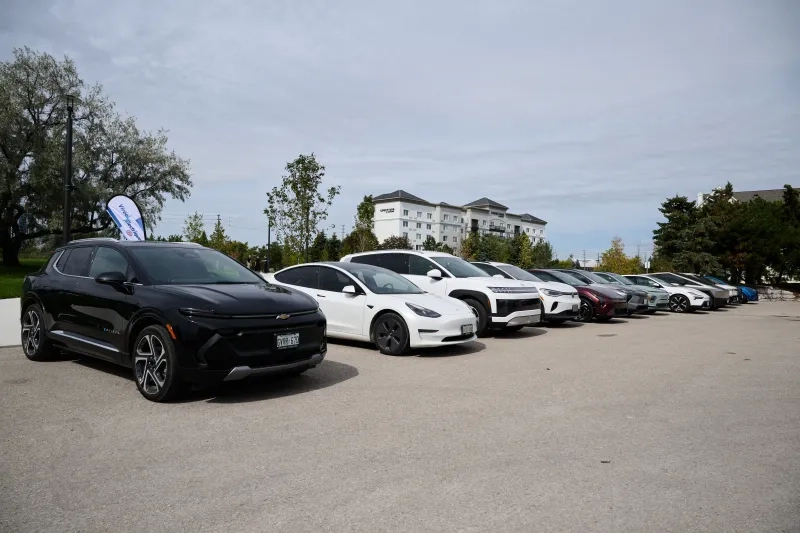
The vehicles all received a charging boost as part of the data collection. As it turns out, just 15 minutes of fast charging added a lot of distance, averaging 110 kilometres, but varying from 58 to 178, depending on the vehicle.
“For Canadians planning longer drives, knowing a vehicle’s total range is only part of the equation,” continues Jack. “Drivers should also understand how their vehicle charges and recognize that the number of kilometres added during a stop can change depending on the vehicle and the charging conditions.”
The average price for fast charging, which was conducted at a Tesla station, was $13.50 per 100 kilometres. Some EVs can be charged for as little as $7.28, while others cost as much as $24.39 for the 100 kilometres added. Though these prices vary by vehicle, it's important to note that most of a vehicle's charging—more than 80 per cent—will occur at home.
Why does CAA care about EV performance?
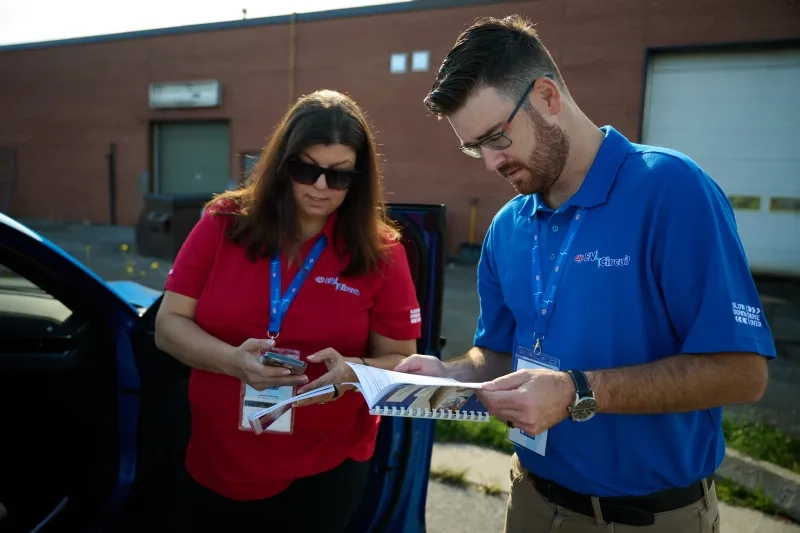
Electric vehicles have changed considerably since they first appeared on Canadian roads, and are changing consumer expectations for driving, says William Skorupinski, vice president of automotive and mobility services at CAA North & East Ontario. In addition to being a long-time EV owner, Skorupinski has taken part in two EV circuits in Canada as well as the highly respected El-Prix winter test drive in Norway. He describes the pace of EV evolution as astonishing.
“The technology in them now is crazy. One of the cars had a massage chair. They’re 100% connected to data. I look forward to seeing the Chinese vehicles when they arrive,” he says, adding that the Hummer he drove in the circuit had so much data, he couldn’t absorb it all.
Although no Chinese-manufactured vehicles were available to test, brands like BYD and Xpeng will bring even more rapid-fire advances when they arrive, Skorupinski says.
New models from Mercedes, Kia, Lucid and Tesla arrive each year with longer range, faster charging and features that were uncommon even a few years ago. For many drivers, keeping up with the latest innovations in today's EVs has become a challenge in itself.
Prospective buyers can explore the complete 2026 EV Circuit findings here.


