


What Canadians need to know before driving in Europe
3 Minute Read
Summary
- Canadians need an International Driving Permit for most EU countries, obtained through CAA.
- Drivers must understand Europe’s traffic rules, including restricted city centres and widespread low‑emission zones.
- Manual transmissions remain common in rental fleets, and driving customs vary across regions.
Europe’s winding streets, historic towns, and sprawling pavilions are legendary, but for Canadians eager to explore them by car, there’s a lot to know before hitting the road.
From Scandinavia’s innovative cities to France’s baroque grandeur and the sun-soaked Mediterranean, Europe offers Canadians an unparalleled driving adventure, if you’re prepared for what’s ahead. There are countless rules and regulations to be aware of, such as environmental zones, unfamiliar signage, quirky traffic laws, and endless roundabouts, which can leave even the most seasoned drivers feeling unprepared.
Fortunately, a bit of insider knowledge can help you sidestep most of these challenges. Here is what to know before you drive in Europe on your next vacation.
The basics

An International Driving Permit (IDP) is required for Canadians to drive in most EU countries, which is available exclusively from CAA stores or by mail.
Once you have your licence, driving won’t be too difficult for Canadians, as all of continental Europe drives on the right side of the road. Only the United Kingdom and its dependencies, Ireland, Malta and Cyprus drive on the left. You may also want to brush up on driving a manual car. While automatic cars are becoming increasingly common across Europe, many rental fleets still favour manual shift, and choosing an automatic may limit your options.
Traffic restrictions in city centres
For history lovers, Europe’s many time-worn urban cores are a delight, but for drivers, they can be nothing short of a headache. To reduce congestion and protect urban heritage, many municipalities have limited traffic in their historic centres.
The reasons vary, be it Venice’s preservation of fragile Renaissance infrastructure or Zermatt’s mission to maintain its picturesque views. Even cities like Barcelona, Madrid and Brussels have introduced significant restrictions.
If you’re planning a day in one of these urban cores, you may want to opt for public transportation.
Low-emission zones
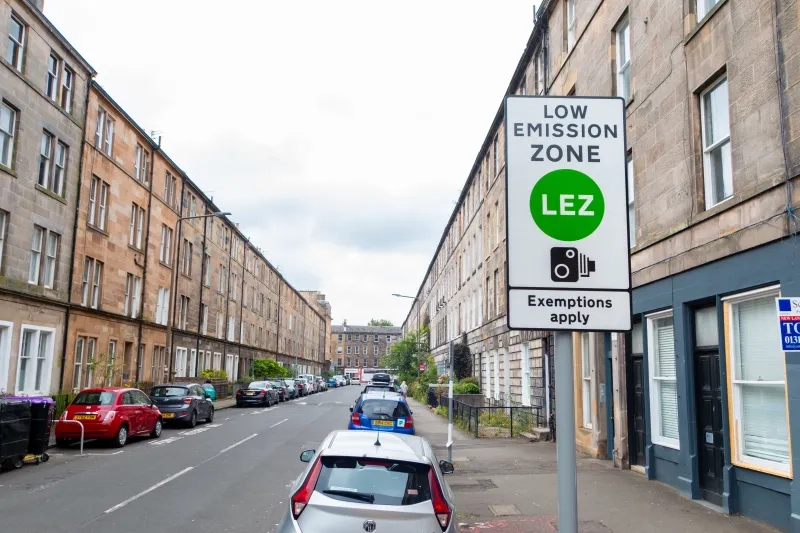
European zoning isn’t only concerned with preserving historic infrastructure, but also with the quality of the air itself. Across most of Western and Central Europe, low-emission zones (LEZs) have been rolled out to keep districts green, breathable and pedestrian-friendly.
In France, the Crit’Air system classifies all vehicles on a scale of one to five based on their emissions. A hybrid car may be rated with a class one sticker, while a diesel truck might fall into class five. All vehicles must display their stickers, and access to specific zones may be restricted at various times for certain classes.
While most rental cars meet the requirements for most zones, you may be limiting yourself by the vehicle you choose, so it's necessary to brush up on the local regulations.
Dynamic and unrestricted speed limits
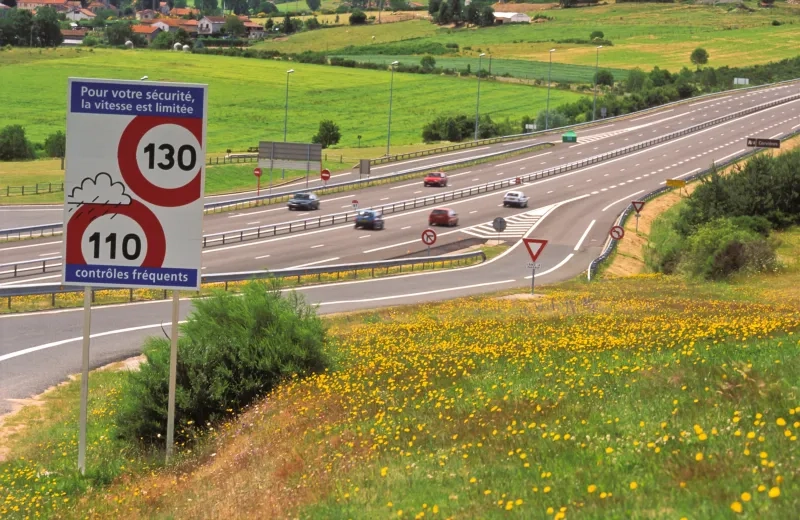
Measured in kilometres, European speed limits may be easy for Canadian travellers to interpret, but there are a few caveats before you press the gas.
A handful of EU countries use dynamic speed limits, caps that change depending on adverse weather or road conditions. In France, rain or snow reduces motorway and rural road limits by 20 km/h and 10 km/h, respectively. Fog with visibility under 50 metres imposes a blanket limit of 50 km/h on all road types, whereas extreme heat can trigger general reductions of about 20 km/h.
Finland and Sweden both lower their speed limits by 20 km/h during the winter months on all road types, while Lithuania has introduced a new program that dynamically adjusts limits based on real-time weather data.
As speedsters internationally already know, about 70 per cent of Germany’s Autobahn network has no official speed limit. There is, however, an implied cap of about 130 km/h. Faster speeds are permitted but carry inherent safety risks and can result in liability if a crash occurs. Whether you’re eager to push the pedal to the metal or are simply trying to get from Frankfurt to Munich in one piece, look out for posted speed limits in urban areas, construction zones and high congestion stretches, as exceeding stated limits will result in fines.
Toll roads
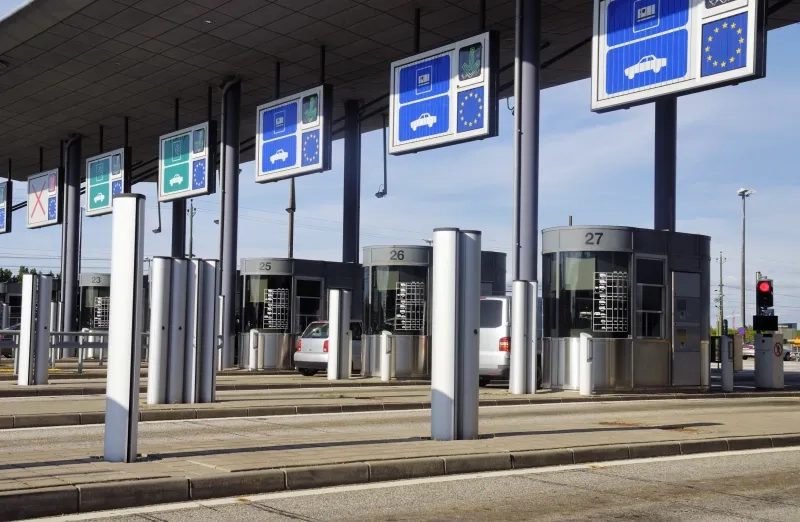
From Iberia to the Alps, toll roads are an unavoidable part of driving through Europe. Spain, Italy, and France use traditional pay-as-you-go booths, while drivers in Austria and Switzerland are required to purchase a prepaid ‘vignette’ to access tolled highways. For renters, many fleets already offer coverage on toll charges. If you plan to cover long distances, it can be worthwhile to ensure your agreement covers tolls.
Don’t forget your CAA Membership
As a CAA Member, you can also save up to 20% on car rentals, with our preferred Car Rental partners, Enterprise, National and Alamo.



