


Why it's important to get non-medical travel insurance?
3 Minute Read
Snowbirds, are you counting down the days until you can escape the cold? As you plan your sunny getaway, don't forget one crucial detail: travel insurance.
Flight delays and cancellations are common during the busy winter season. In fact, 33 per cent of Canadian travellers worry their next trip won't go as planned, citing flight disruptions and refund issues as their top concerns*.
To help you prepare, our travel experts are sharing their top vacation tips and explaining why non-medical travel insurance is a must-have for any winter escape.
Tips for navigating the airport during the busy winter season

As snowbirds often travel during the busy winter season, flight delays and cancellations can be a concern. CAA advises travellers trying to navigate the chaos to use digital check-in and boarding passes so they can head straight to security when they arrive at the airport. You’ll want to be ready for security ahead of time. Make sure your laptop and other electronics are in an easy-to-access place so you don’t have to dig through your bags to find them. Also, pack liquids separately in a plastic bag and have them handy to pull out at security.
Getting CAA trip cancellation and interruption insurance is also a good idea. It offers protection if you miss a connecting flight or must return home to handle an emergency.
What to do to help prevent lost luggage

Aside from flight cancellations and delays, some travellers experienced lost or delayed baggage upon arrival at their destination or upon returning home. To help prevent this, pack smarter and smaller. When possible, use a carry-on only to help prevent your luggage from getting lost.
When bringing a checked bag, add a GPS tracker. A tracker will help you locate your bag if it doesn’t arrive on the baggage belt. Also, make sure your travel insurance policy has baggage loss insurance coverage. Baggage insurance covers loss, damage, or delay of your baggage, personal items, and other essentials (such as passports) due to theft or transportation hazards.
Difference between trip cancellation and interruption insurance
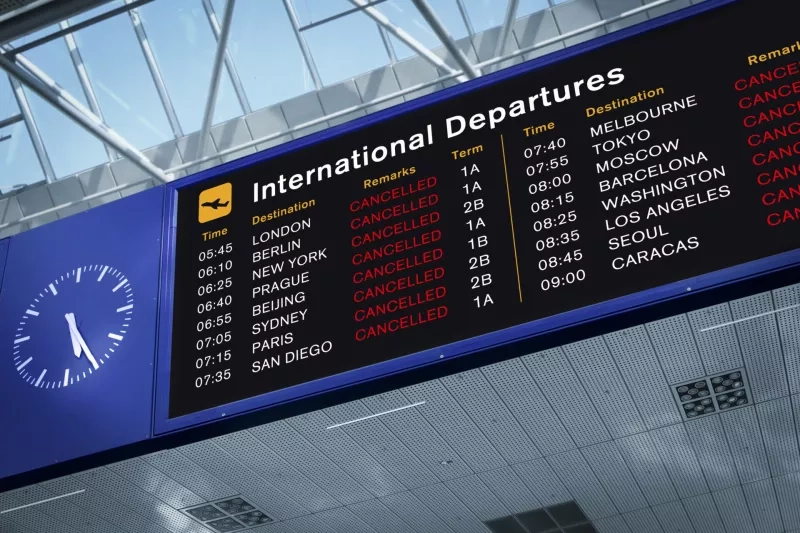
The difference is that trip cancellation insurance covers before you leave. It protects you if your flight is cancelled, you or your travelling companion becomes ill, or there’s inclement weather.
Trip interruption insurance protects you after you’ve already left for your vacation. If you miss a connecting flight or need to return home to address an emergency, this coverage will help you complete your trip or return home.
For the best coverage, you can bundle these two insurance plans with emergency medical, travel accident, and baggage loss insurance with a CAA Vacation Package plan.
Can you cancel my trip if I no longer want to go?
What happens if you don't want to go on the day you're set to depart? Some travel insurance companies offer broader cancellation policies. For example, CAA Travel Insurance has "Cancel for Any Other Reason" coverage. With it, you can get up to 50% back if you cancel for any reason that's not covered under trip cancellation insurance. But if you book your trip with CAA Travel, that benefit increases to 75% back. With CAA's "Cancel for Any Other Reason," you can book your trip now and change your mind up to three hours before departure.
Get non-medical travel insurance
Make sure you travel protected with CAA Travel Insurance, contact a CAA Travel Consultant or get a quote online.
CAA Travel Insurance is underwritten by Orion Travel Insurance Company, a CAA Company. Certain exclusions, limitations and restrictions apply. Subject to change without notice. A Medical Questionnaire is required if you are 60 years of age and older. Quotes are valid for 30 days.
®CAA trademarks are owned by, and use is authorized by, the Canadian Automobile Association.
*Online survey of 2,021 Canadian travellers aged 25 to 64 who have travelled outside their province of residence in the past three years and plan to travel again in the next five years, out of which 807 travellers were from Ontario.
(Note for Margin of Error: Based on the sample size of n=2,021 and with a confidence level of 95%, the margin of error for this research is +/- 2%.)



