

Why you’ll want to experience Oktoberfest for yourself
3 Minute Read
Summary
- Oktoberfest is an over two-week festival held annually in Munich, Germany.
- It typically runs from late September into early October at the Theresienwiese fairgrounds.
- Visitors can enjoy parades, traditional dress, music, rides and classic foods inside festival tents.
Each autumn, Munich fills with music, colour and movement as Oktoberfest takes over the Theresienwiese fairgrounds, known locally as the Wiesn. Running from September into early October, the festival draws visitors from around the world for a large‑scale celebration rooted in Bavarian tradition.
Oktoberfest began in 1810 as a public event marking the wedding of Crown Prince Ludwig and Princess Therese, ending with a horse race on the fields outside the city. More than two centuries later, it remains anchored to the same grounds and traditions.
Bavarian traditions on display
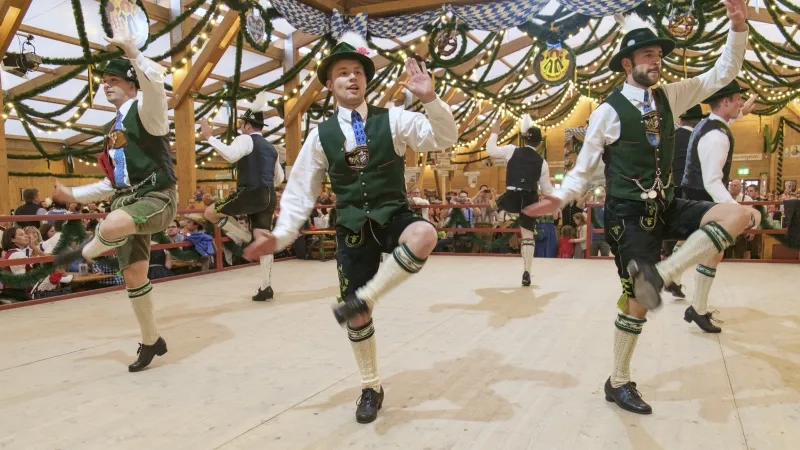
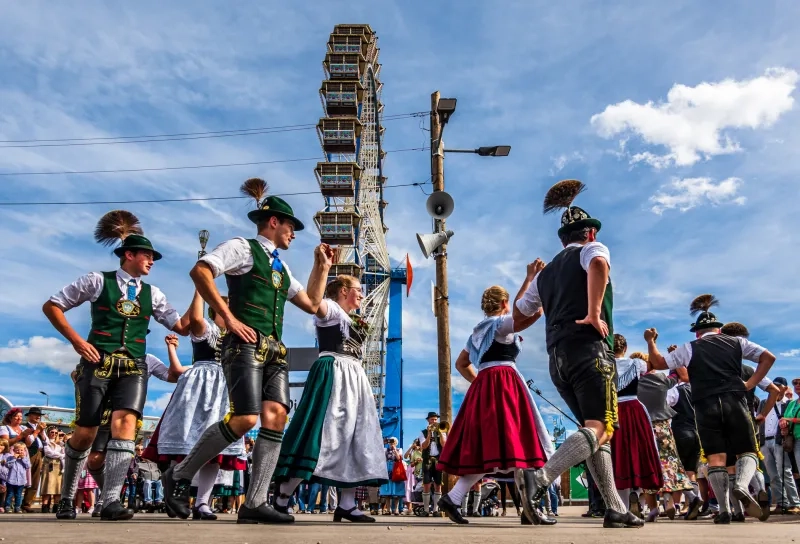
Oktoberfest offers an introduction to Bavarian traditions. Across the grounds, you will see people wearing dirndls and lederhosen, hear brass bands throughout the day, and notice customs that guide the festival's unfolding. Locals attend with friends, families and colleagues, and visitors take part in the same spaces, sitting at shared tables and moving through the grounds together.
Some of Oktoberfest’s most cherished rituals still shape the festival today. The mayor taps the first beer barrel in the Schottenhamel tent at noon on opening day, a tradition since 1950, and shouts “O’zapft is!” to signal the start. This is followed by a 12-gun salute and lively music. Many tents maintain their own traditions, such as serving drinks from wooden barrels or parading brewery horses. These details root the festival in its 19th-century origins and offer visitors a glimpse of authentic Bavarian tradition that’s alive and well.
Traditional parades and public celebrations
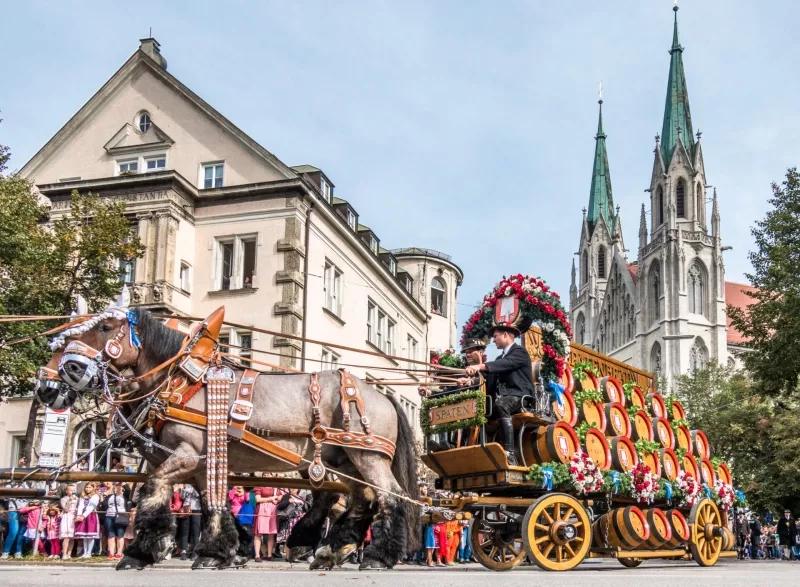
Oktoberfest features two major parades, both with deep historical roots and vibrant displays. The Landlords’ and Breweries’ Parade (Wirtezug) opens the festival on the first Saturday, a tradition dating back to 1887. Visitors see horse-drawn brewery wagons, Munich’s tent owners in historic carriages, and hundreds of participants in costume, all moving through the city to the sound of lively brass bands and flag bearers.
The next day brings the Costume and Marksmen’s Parade (Trachten- und Schützenzug), with over 9,000 people in regional dress, including lederhosen, dirndls, and marksmen’s uniforms. The parade also features folk dance groups, rifle clubs, and floats that showcase Bavarian villages and traditions. Tourists can expect a festive atmosphere with music, dancing, and elaborate costumes. It’s worth arriving early for a good view, especially along Maximilianstraße and Odeonsplatz, where the crowds and photo opportunities are best.
A massive fairground
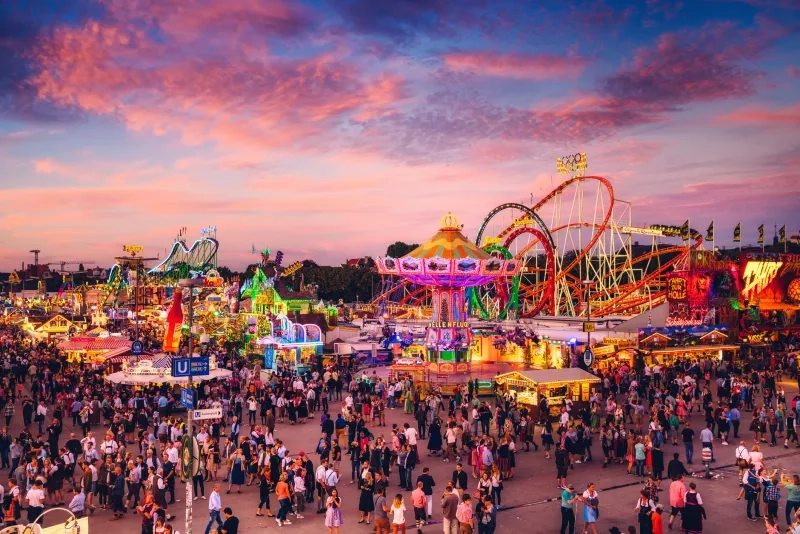
Beyond the tents, Oktoberfest transforms the Theresienwiese into one of the world’s largest temporary fairgrounds, covering over 100 acres. The festival features more than 80 rides and attractions, including five roller coasters, two Ferris wheels, haunted houses, classic carousels, and dozens of carnival games.
There is something for all ages, from gentle rides for children to high-adrenaline thrillers. Each year, the funfair draws families and adventure-seekers alike, with activities running from morning until late evening.
Hearty Bavarian comfort food
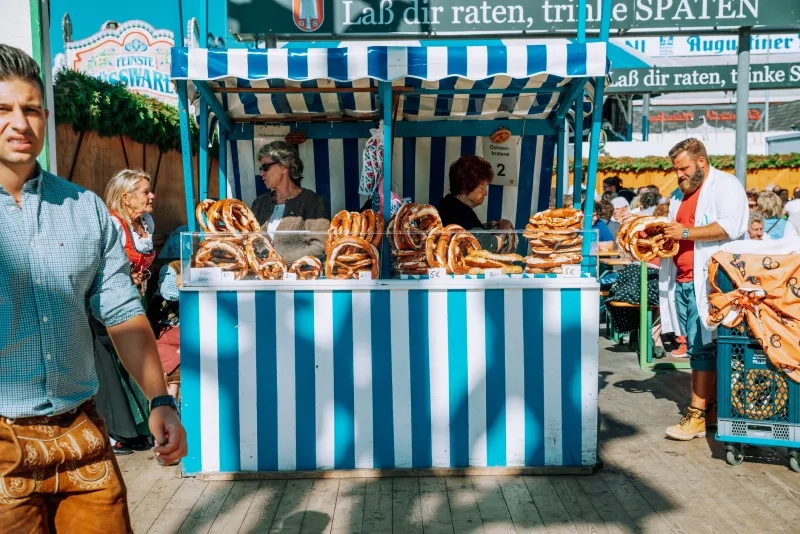
Food is a highlight of Oktoberfest, offering a true taste of Bavaria. Beyond the giant soft pretzels, you’ll find roast chicken (Hendl), pork knuckle (Schweinshaxe), juicy sausages, duck, roast pork, and platters of cold cuts and cheese. Potato dumplings, sauerkraut, and crispy fried potatoes are popular sides. Sweet options include apple strudel, Kaiserschmarrn (fluffy shredded pancakes), and Dampfnudeln (steamed yeast dumplings).
Many tents and stalls offer vegetarian dishes, and you’ll spot stalls selling roasted almonds, gingerbread hearts, and other classic fair treats. Vegetarian options are widely available, and in recent years, more vendors have begun offering vegan meals, as well as allergy-friendly and gluten-free alternatives. If you have specific dietary needs, look out for menus and signs at tents and food stalls, as many make it easy to find suitable dishes.
What to know before you go
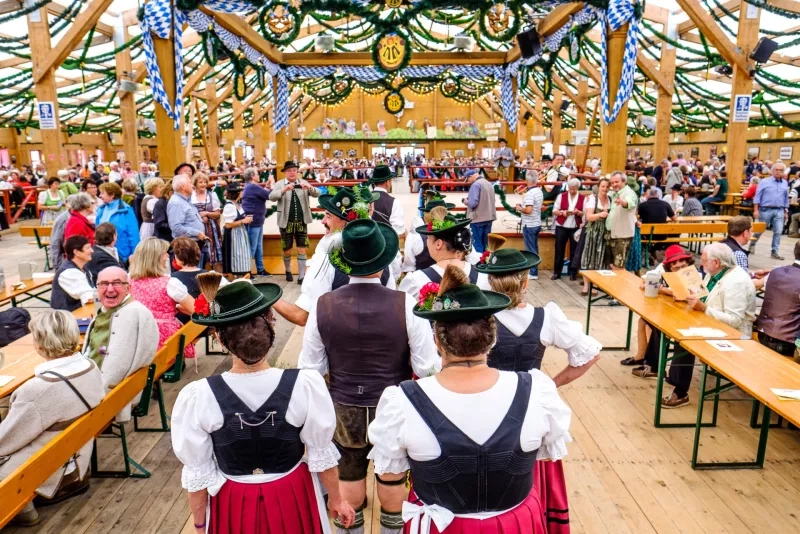
Oktoberfest attracts large crowds, particularly on weekends and in the evenings. Visiting earlier in the day or on a weekday can feel more manageable.
Public transport is the easiest way to reach the grounds, with several subway and train stations within walking distance. The main transit stop for Oktoberfest is Theresienwiese station (on the U4 and U5 subway lines), which brings you directly to the festival grounds. Other nearby options include Goetheplatz (U3, U6), Poccistraße (U3, U6), and Hauptbahnhof (Munich Central Station), all of which are just a short walk away.
Plan your Oktoberfest experience
Book an appointment with a CAA Travel Consultant to start planning.



