

Pedestrians face regular close calls in school zones, CAA study finds
3 Minute Read
Summary
- A new CAA study using AI found an average of 4.5 near misses per intersection across 30 Canadian school zones.
- Risk levels were highest in late afternoon hours and doubled when vehicles exited intersections without clear signage or traffic controls.
- The findings show how improved road design and attentive driving can make school crossings safer for everyone.
Close calls between pedestrians and vehicles near schools are happening more often than many Canadians might expect, according to a study by the Canadian Automobile Association (CAA).
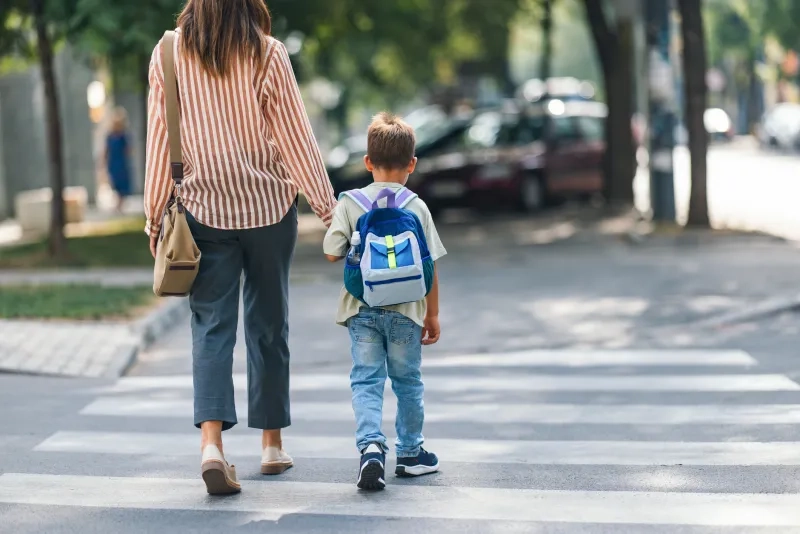
The research, conducted by Miovision and Fireseeds North, used artificial intelligence tools to examine 30 school zones in 11 Canadian cities, including Ottawa. Over five school days, 4.5 near misses per intersection were recorded, with one in every 84 pedestrians involved in a near collision while crossing.
"A trip to school should not involve a close call with a vehicle," said Julie Beun, Managing Director, Communications and Public Relations, CAA North & East Ontario. "Safer school zones require both attentive driving and road design that puts people's safety first."
When are the most high-risk times of day in school zones?
When most people think about school zone traffic, they picture the morning rush or the end-of-day pickup. But the research suggests the risk doesn't disappear when classes end.
The study found the single busiest hour for incidents was 5 p.m. to 6 p.m., when families return for sports leagues or kids return home from after-school extracurriculars.
It's a reminder that schools remain busy long after the final bell. Playgrounds, sports fields, and community spaces continue to draw people into surrounding neighbourhoods throughout the afternoon and evening.
“We want communities to use this evidence to look closely at crossings, signage and when safety measures are in effect," Beun explained. "And we want drivers to bring the same care to every trip: leave distractions behind, watch carefully when turning and make room for people."
Pedestrian–vehicle near misses go beyond school zones
The latest school zone study offers new insight into a broader road safety challenge.
It's also not the first time data has pointed to close calls between vehicles and vulnerable road users.
A 2025 study by CAA and Miovision found that 55 per cent of pedestrians and 50 per cent of cyclists experienced near misses with vehicles at 20 intersections across Canada.
Closer to home, road safety remains a growing concern in Ottawa. Police data shows 33 traffic-related deaths involving all road users in 23 collisions in 2026, highlighting the ongoing challenges facing the city's streets.
Those concerns have been echoed by city leaders. Before the high risk to pedestrians on Hallowe’en, Ottawa Mayor Mark Sutcliffe identified road safety as a priority and urged drivers to slow down, stay alert, and follow the rules of the road.
“The loss of life on Ottawa’s roads is a call to action, a pattern more than a series of one-off events,” says Beun.
The study also identified a common risk point. Near misses were more than twice as likely when vehicles were exiting intersections than when entering them.
What helps make school crossings safer?
Not every crossing faced the same level of risk, and that offers some clues about what makes certain locations safer than others.
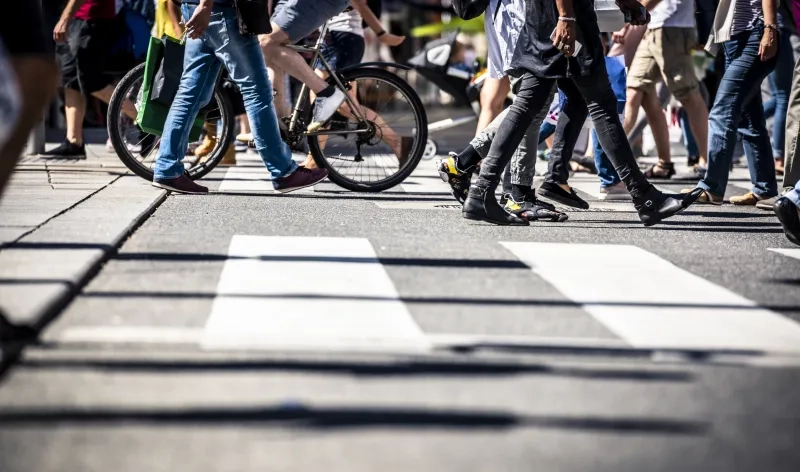
School crossings with traffic signals, stop lights or roundabouts recorded near-miss rates 20 times lower than those without these features.
Locations without school zone or reduced-speed signage experienced a 67 per cent higher conflict rate, while zebra crosswalk marking was linked to 56 per cent fewer turning-related near misses.
In many cases, the differences came down to visibility and design. Clear signage, visible pavement markings, and traffic controls can all help reduce risk by making crossings easier for both drivers and pedestrians to navigate.
Still, road design is only part of the equation.
Through its road safety initiatives, CAA North & East Ontario has encouraged drivers to put away distractions before getting behind the wheel and reminded motorists to slow down and move over for roadside workers and emergency vehicles.
Whether it's a child crossing the street, a cyclist navigating an intersection or a roadside worker assisting a stranded driver, slowing down and staying focused can help make every trip safer.
“For drivers across Northern and Eastern Ontario, the message is simple: slow down, put distractions away and give every crossing your full attention," said Beun.
