

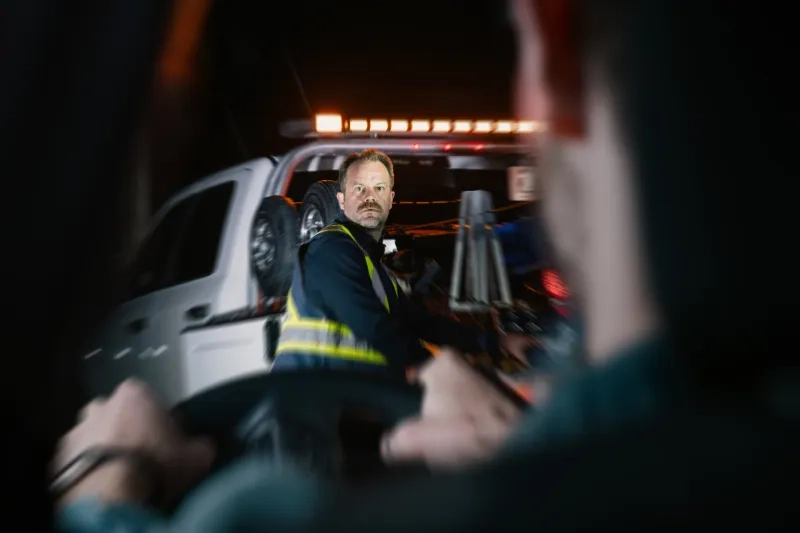
Only 49% of Ontario drivers always slow down and move over for tow trucks, study finds
4 Minute Read
Summary
- Only 49% of Ontario drivers always slow down and move over for tow trucks, despite the law.
- The 2026 Ontario Towing & Tow Zone Study reveals widespread misunderstanding of roadside safety rules and regional awareness gaps.
- Expanding driver education could reduce risk for tow operators and reinforce the roadside as a secure workplace.
Flashing amber lights often signal that someone needs help, whether it’s a driver stranded on the side of the road, a disabled vehicle blocking traffic or the aftermath of a collision.
Yet new findings from the 2026 Ontario Towing & Tow Zone Study conducted for CAA suggest many drivers still don't respond to tow truck operators the same way they do to other roadside responders.
In fact, only 49 per cent of drivers say they always slow down and move over when passing a tow truck.
Released ahead of National Slow Down Move Over Day on Oct. 17, the research highlights a persistent awareness gap that continues to shape driver behaviour across the province.
The issue stems from both driver education and public perception about tow truck operators and their work, notes Julie Beun, managing director of communications and public relations at CAA North & East Ontario.
"Our service vehicle drivers work around the clock, in all weather and in often very challenging conditions. But when they’re on the roadside, the reality is that drivers do not move over as they might when they see police vehicles,” she said. “That is why the Slow Down Move Over law exists in Ontario, to protect those who are protecting stranded motorists and attending roadside situations."
Understanding that disconnect begins with a closer look at what Ontario drivers know about the law and how that knowledge translates into behaviour behind the wheel.
A law many drivers still don't understand
Ontario introduced Slow Down, Move Over legislation in 2003 to protect emergency responders working at the roadside. In 2015, the law was expanded to include tow trucks displaying flashing amber lights. Drivers approaching these vehicles must slow down and proceed with caution.
On roads with two or more lanes travelling in the same direction, drivers must move over one lane when it is safe to do so.
While the phrase "Slow Down, Move Over" is widely recognized, the law itself is less familiar. Among the Ontarians surveyed, 82 per cent said they had heard the phrase, but only 55 per cent knew it applies to tow trucks.
The difference becomes clear when drivers are asked how they respond to different roadside vehicles. Ambulances received the highest consideration at 93 per cent, followed by fire trucks at 92 per cent and police vehicles at 91 per cent. Tow trucks, however, were viewed differently.
The survey points to a simple explanation. Many who said they rarely or never move over either didn't realize it was required by law or didn't view tow trucks as emergency vehicles, even though they regularly respond to collisions, breakdowns, and other incidents on Ontario roads.
The roadside is someone's workplace
Calling for assistance often comes after one of the worst moments in a person's day, whether it's a breakdown, flat tire or collision. On the other end of that call is a tow truck operator heading to the scene.
Most jobs are designed with safety measures in mind, from marked emergency exits to evacuation procedures. The environment tow truck operators face can change by the second, whether they're assisting a stranded motorist on a busy highway, responding to a collision, or working during severe weather.
That reality reinforces the importance of Ontario's Slow Down, Move Over law, Beun said. The legislation is intended to give roadside workers the space they need to assist motorists safely.
"The roadside is the workplace for CAA emergency service drivers police, paramedical services and other emergency workers. But unlike other workplaces, they are dealing with often dangerous conditions that puts their health and safety at risk.”
Construction crews are often protected by barriers, signage, and designated work zones. Tow truck operators rarely have that separation, carrying out their work alongside traffic, travelling at highway speeds.
New drivers need more education
If awareness remains a challenge, teaching younger motorists may be one place to start. The study found that drivers with less than three years behind the wheel were among the least likely to comply with Ontario's Slow Down, Move Over law.
One possible reason is that the legislation is not currently part of Ontario's new driver's education curriculum.
Regional differences also emerged. Recognition of the phrase "Slow Down, Move Over" was lowest in Toronto, where 72 per cent of respondents said they had heard it. That figure was significantly higher in Eastern Ontario (84 per cent) and Northern Ontario (90 per cent).
The numbers point to a clear opportunity to better educate drivers about a law in place for more than a decade.
A simple action that makes a difference
Beun believes the message itself is simple, even if many motorists remain unclear about the law.
“When you see tow truck drivers, emergency services, really anyone on the side of the road, be alert, be aware. Slow down and move over a lane when it is safe to do so,” she said. “It's not just a law for certain types of vehicles; it's the right and safest thing to do."
Whether responding to a breakdown, clearing a collision or assisting a stranded motorist, tow truck operators play an important role in keeping Ontario roads moving.
With National Slow Down Move Over Day on Oct. 17, CAA encourages motorists to turn a familiar phrase into action whenever they see flashing lights at the roadside.
