

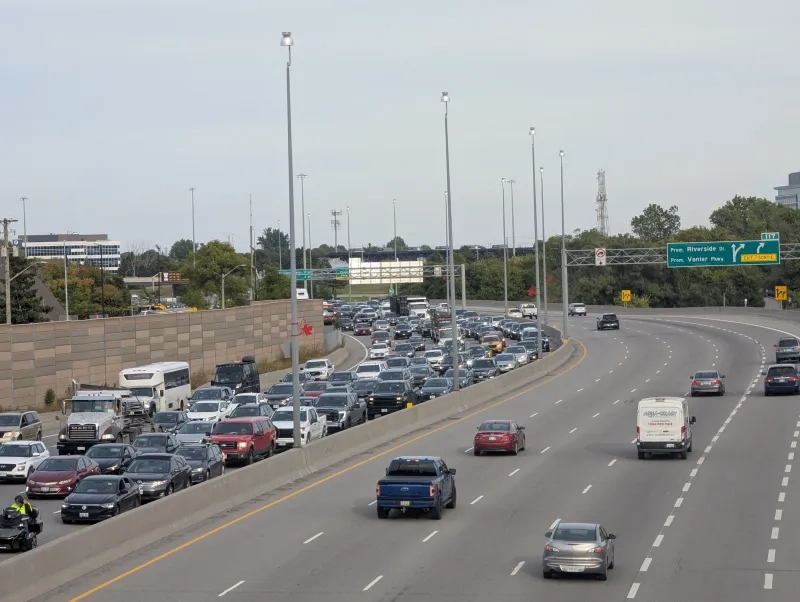
Your commute just got longer—and harder on your car
3 Minute Read
Summary
- Return-to-office mandates are increasing commutes, traffic congestion, and vehicle wear.
- Stop-and-go traffic accelerates brake, transmission, battery, and fuel system strain.
- Service vehicles every 8,000 km or six months to prevent breakdowns.
Have you gone from home office meetings in pyjama pants to driving across the city to your office every day? You're not alone.
With federal, provincial and municipal governments ramping up return-to-office mandates across Canada, employees in Ontario are finding their commutes longer—and harder on their vehicles.
The sudden change in lifestyle and car usage means you should change your maintenance habits, too. Here's how to take care of your car if you have a long daily commute.
The return to office—and how your car is impacted

As of July 6, 2026, federal government employees were required to be onsite four days per week. This echoes an earlier call, effective January 2026, in which both the Ontario and Ottawa municipal governments ordered workers to return to the office five days a week.
For many, this lifestyle change means they are driving their cars more than before. Whether transit is unreliable or you live too far away from your office to take the bus, many commuters are reaching for their keys more frequently.
Whatever your reason, the reality is that there are more drivers on the road during rush hour. That also means more traffic, despite efforts to mitigate congestion—and ultimately, a longer commute.
How stop-and-go traffic and commutes put wear on your car

You've probably realized that increased usage of your vehicle means increased wear and tear, but what you might not know is that stop-and-go commuting is actually harder on your car than long-distance highway driving.
According to most user manuals, frequent short trips and stop-and-go traffic count as "severe driving conditions", the same category that includes extreme temperatures; mountains or steep hills; gravel, sand, salted, or muddy roads; and towing a trailer or camper. Severe driving conditions require you to service your vehicle more frequently.
This is because the constant stopping and starting while waiting at traffic lights or sitting on a backed-up highway can wear down your vehicle components, like brake pads, hoses and rotors. Your transmission is also affected; whether your vehicle is automatic or manual, the constant gear-shifting can break down transmission fluid and strain components like clutches, gears, and bearings.
Increased fuel consumption also puts strain on your fuel pump and injectors, resulting in clogging and stress. Your exhaust system, suspension, and battery can also be affected by long commutes in hot or cold temperatures.
How often to service your car

If you're wondering how many kilometres you can get out of your vehicle before you need to service it, distance doesn't tell the whole story. The reality is that time matters just as much, even if you aren't racking up the kilometres. In severe driving conditions, including stop-and-go traffic, you should service your car approximately every 8,000 kilometres, or every six months—whichever comes first.
The one thing you don't want is to experience a breakdown while commuting to work. Delaying necessary repairs can cause long-term damage to your vehicle and create issues when you have somewhere to be. After all, your engine doesn't care about that big presentation or important client meeting.
Although servicing your car can be costly, addressing problems as they arise will save you money on more expensive repairs and ultimately extend the lifespan of your vehicle.
Get CAA roadside coverage for your commute
Want peace of mind while you drive to work? Join CAA North & East Ontario and start experiencing the benefits of Membership today.
With services like CAA's Mobile Auto Repair, experts can diagnose issues right in your driveway. Whether you've noticed an unusual noise or a warning light, an appointment can help identify the cause, source parts and provide a detailed quote for repairs.
When all else fails, roadside assistance is available to get you back on the road as soon as possible.


