

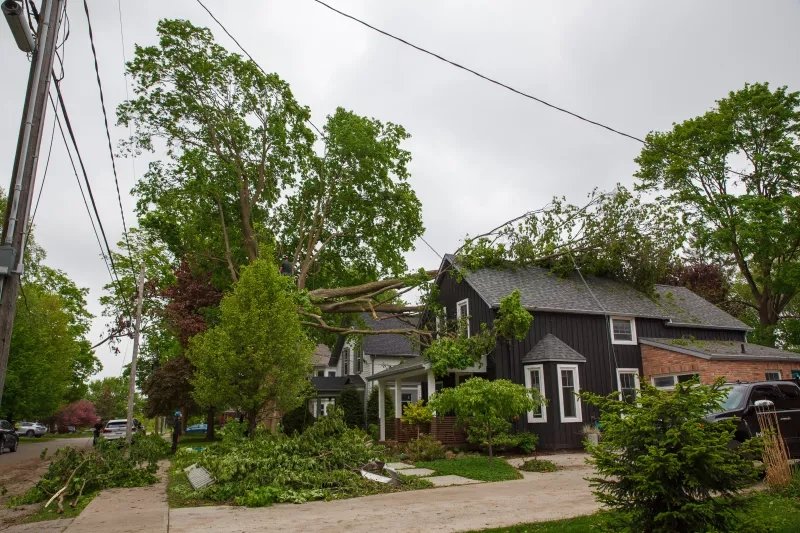
How to protect your home from severe winds in Canada
4 Minute Read
Summary
- Canada records more tornadoes annually than any country except the United States.
- Severe winds include straight-line winds and tornadoes with distinct damage patterns.
- Reinforcing roofs, windows, doors and garage doors reduces the risk of wind damage.
From thunderstorms and tornadoes to hurricanes, extreme winds pose a year-round threat to homes across Canada. High winds can be unpredictable. However, with proper preparation, you can safeguard your property and prevent expensive repairs.
Here is what you need to know about severe winds in Canada and how to fortify your home before the next storm hits.
Straight-line winds vs. tornadoes
Severe winds come in various forms, each presenting unique challenges. Straight-line winds, commonly produced by powerful weather systems such as thunderstorms, hurricanes, or pressure gradients, move in a direct outward path.
According to the Government of Canada (ECCC), a "wind warning" is issued when sustained winds reach 60 to 65 km/h or higher, or when gusts exceed 90 km/h, depending on the region.
Tornadoes, on the other hand, involve violently rotating columns of air that cause concentrated and often catastrophic damage. Unlike the consistent force of straight-line winds, tornadoes are unpredictable, capable of uprooting trees, demolishing buildings, and carving erratic or continuous paths of destruction. Their unpredictable nature makes them particularly challenging to anticipate and prepare for.
Tornado activity in Canada
Canada experiences more tornadoes annually than any other country except the United States. Southwestern Ontario and parts of the Prairie provinces are particularly vulnerable due to unique warm, moist air combinations, frequent thunderstorms, and open landscapes.
Most tornado activity occurs between April and September, peaking in June and July. However, tornadoes are not limited to these months and can happen at any time of the year. For instance, 2024 marked Canada's longest tornado season on record, with 129 confirmed tornadoes occurring over a staggering 240 days.
The Enhanced Fujita (EF) scale measures tornado intensity based on wind speed and the damage caused. According to the Government of Canada, tornadoes with an EF-0 rating have winds ranging from 90 to 130 km/h. An EF-1 tornado has wind speeds from 135 to 175 km/h. The Northern Tornado Project (NTP) finds that EF-0 and EF-1 tornadoes are the most common in Canada, accounting for over 90 per cent of reported tornadoes.
Only 0.5 per cent of tornadoes rank at an EF-4 or higher, says NTP, with wind speeds of at least 270 to 310 km/h. There has been only one reported tornado in Canada, which occurred in Elie, Manitoba, in 2007, with an EF rating indicating wind speeds of 315 km/h or more.
How to protect your home against wind damage
While we cannot control the weather, we can be prepared when it happens. By being proactive and understanding how severe winds affect Canadians, you can take steps to reduce the risk of wind-related damage and disruption to your home.
Fortify your roof
Your roof serves as your home’s first line of defence against powerful winds, making it crucial to take proactive measures to minimize the risk of damage. According to the Institute for Catastrophic Loss Reduction (ICLR), your roof is the most damaged during a tornado or windstorm. As winds encounter your home, they create a lift that puts stress on your roof and can cause shingles, vents, or the entire structure to attempt to lift free from your home.
When redoing your roof, start by choosing shingles and roofing materials specifically designed to withstand high winds. Bracing can further reinforce the roof’s structure, reducing the likelihood of it being lifted during intense storms.
Routine inspections and maintenance are equally important, as they help identify and resolve potential weak points before severe weather strikes. The ICLR recommends checking vents and securing everything before severe weather to minimize damage. Choose vents rated for high winds and wind-driven rain. Be sure that vents are securely installed to withstand high winds.
Secure windows and doors
Windows and doors are often a home's weakest points during windstorms, making their protection essential. During severe winds and tornadoes, your windows are not only under wind stress but also susceptible to damage from airborne debris, says the ICLR.
Installing impact-resistant windows or storm shutters significantly strengthens your home’s defences. Pre-made shutters are available at most home improvement stores, or you can make your own from marine plywood that is at least 15.5 mm thick, cut to fit each window. Homemade shutters are great in an emergency and can be installed as needed.
Check window frames for any cracks or gaps, and seal them to prevent water damage during heavy rains. If you are replacing your windows and doors, opt for impact-rated windows designed to withstand extreme wind conditions.
For entryways, pressure-rated doors with robust hinges and deadbolts provide an added layer of security. Similarly, reinforcing double doors and sliding glass doors with heavy-duty bolts or slide locks further minimizes the risk of damage during severe weather. Small updates, like swapping hinges or deadbolts for heavy-duty options, can make all the difference in high winds.
Strengthen porches and overhangs
Porches, awnings, and other overhangs should be securely anchored to the home's main structure. Proper reinforcement prevents these elements from turning into debris during wind events, protecting your property and neighbouring areas.
Anchor outdoor structures and items
In high winds, outdoor furniture, sheds, and other unsecured structures can become hazardous projectiles. To reduce risks, firmly anchor items like patio furniture, barbecues, and HVAC units to the ground.
Garage doors can be a major weakness in your home’s defence against winds, and they are often forgotten about when storm-proofing a home. Upgrading to a wind-rated garage door that meets impact and pressure standards for your area will help fortify one of a home's weakest entry points.
A properly reinforced garage door can serve as a barrier, safeguarding your home against strong winds, flying debris, and potential water damage. Many manufacturers offer reinforcement kits customized for your garage doors to strengthen the doors and their tracks. Upgrade the support and hinges and add vertical braces to ensure your garage door withstands strong winds. You can also add horizontal bracing to the door panels for more durability.



