

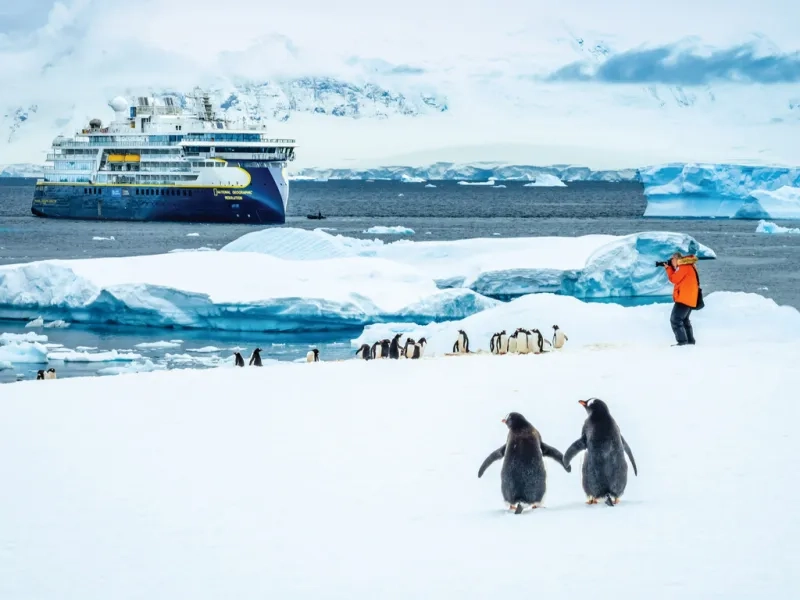
What it’s like aboard a National Geographic–Lindblad Expedition Cruise
3 Minute Read
Summary
- National Geographic-Lindblad Expeditions operates small-ship cruises to remote destinations on all seven continents.
- Trips include expert-led presentations, active wildlife viewing and Zodiac excursions for close-up animal encounters.
- Smaller ships enable faster landings and immersive experiences, with comfort, dining options and accessibility accommodations.
When Katherine Young – a seasoned Travel Consultant at CAA Orleans with over 35 years of experience – named Antarctica and South Georgia Island her all-time favourite destinations, we knew her trip had to be extraordinary.
Aboard the Resolution with National Geographic-Lindblad Expedition Cruises, Young had the chance to walk among penguins and seals. She also travelled alongside scientists, wildlife biologists, historians, and photographers who shared their expertise with guests. We recently caught up with her to learn more about what made her National Geographic-Lindblad Expeditions expedition cruise so memorable.
What are National Geographic-Lindblad Expedition Cruises all about?
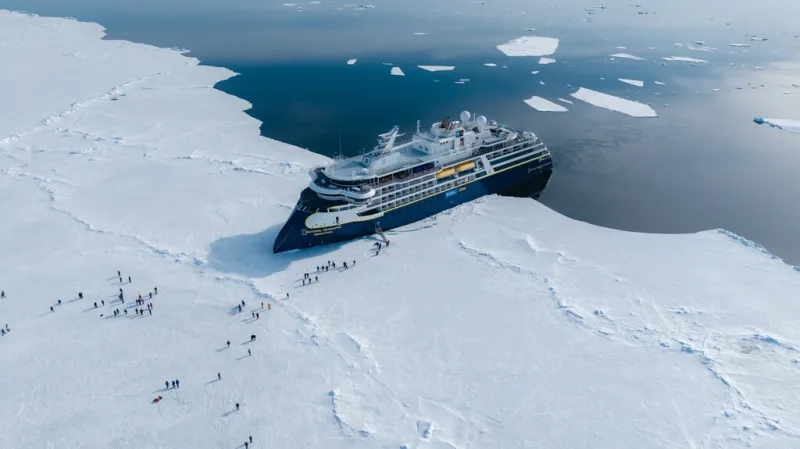
Lindblad Expeditions was founded in the late 70s. Today, in partnership with National Geographic, Lindblad offers expedition cruises to destinations on all seven continents. The National Geographic–Lindblad Expeditions fleet is 24 small expedition ships that sail to the planet's wildest and most captivating places.
Tell me about the unique experiences that define expedition cruises
First of all, you learn so much! There were so many interesting experts aboard the ship, and they gave presentations to the guests. You could go to the lounge and listen, or you could listen from your room. We learned about ice, rocks, and history, and it was all so interesting. We had several ornithologists on board, and they taught us about the diverse birds. One of the historians on board, who works for the BBC, lived in Antarctica for over two years; he gave an excellent presentation.
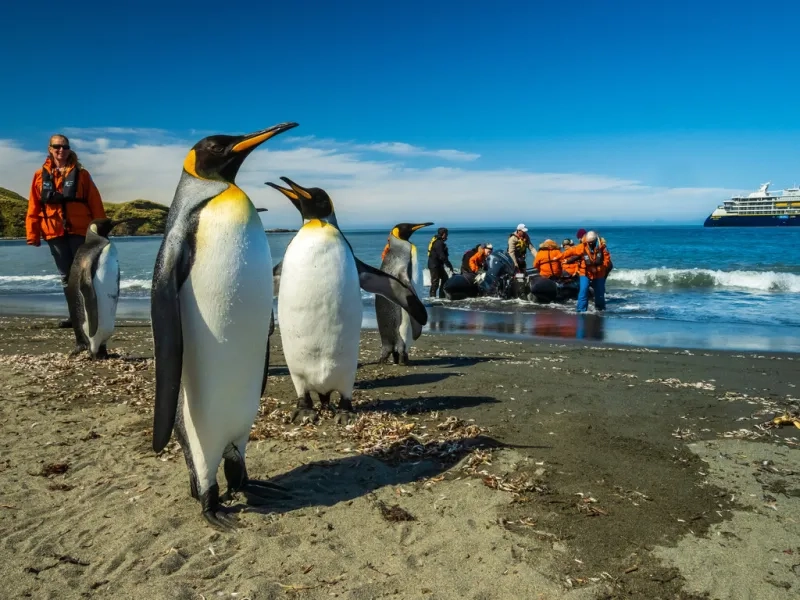
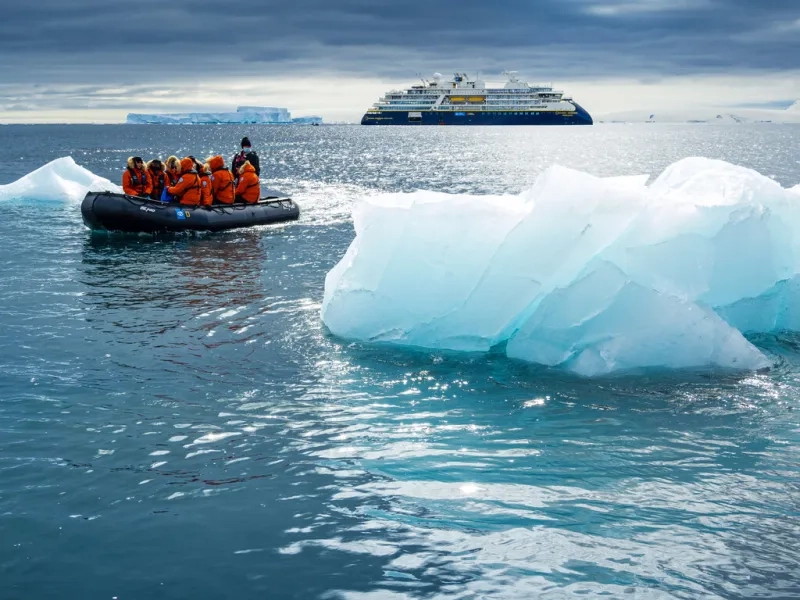
Guests also get to participate in active wildlife viewings. Rather than pulling into standard cruise ports, National Geographic-Lindblad Expedition Cruises carries fleets of Zodiacs, highly durable inflatable boats. On two occasions, when I was out in a Zodiac, I was very fortunate to encounter a leopard seal. I ended up with fabulous photos of the seal because the National Geographic photographer was in my Zodiac!
We took the Zodiacs ashore and would walk among the wildlife. We saw elephant seals, fur seals, crab seals, penguins and birds.
What was the food like on board?
It was absolutely amazing food! Every day, there were two dining options: the restaurant and the lounge, which offered lighter fare. We had a wonderful barbecue one evening. The desserts were spectacular; the pastry chef always prepared special treats themed after the animals we saw, like little marshmallow penguins on a cookie.
Guests also have the opportunity to dine with the crew, so we had lunch and dinner with the captain a couple of times. To minimize waste, they would publish the dinner menu and ask you to pick what you want during the day. You're not held to it, but it gives them an idea of expectations – if you're taking the meat, the pasta, or the vegetarian meal.
What was the demographic of passengers on board?
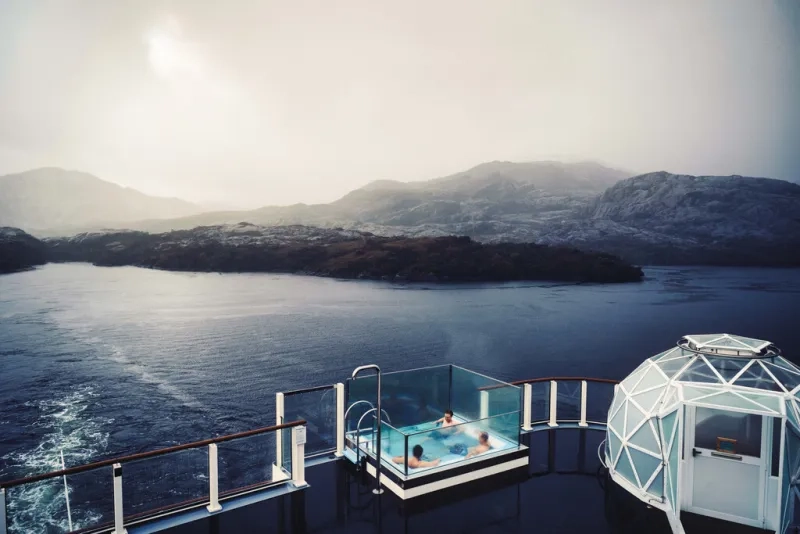
The majority of people were in their 30s, 40s, 50s and 60s, although I think there was one passenger who was 75.
Do they make accommodations for people with mobility issues?
Absolutely. My husband was travelling with me, and he needs two hip replacements; he's very physically challenged. He left the ship once. It was a good ship because it was small enough to get around.
Any tips for travellers planning to book an expedition cruise?
When it comes to polar expeditions, you need to pick a company that embraces the ice– National Geographic-Lindblad Expedition Cruises does that extremely well.
The ship's size is also very important. When you're going to Antarctica, you're limited to 100 people landing at once. If you have a ship with 200 people on board, you're not getting off as often – or as fast – as if you have a smaller ship.
If you can afford to spring for a room with a balcony, it’s well worth it. In the morning, it’s wonderful to open that door and listen to the elephant seals, the penguins and the birds.
Ready to plan the adventure of a lifetime?
Interested in learning more about once-in-a-lifetime adventures with National Geographic-Lindblad Expedition Cruises? Learn more about Member-exclusive benefits and book an appointment with a CAA Travel Consultant.


