


Why travellers who love planning can benefit from a travel agent in a world of AI
4 Minute Read
Summary
- Artificial intelligence helps travellers research destinations quickly, but it can’t fully understand personal preferences, emotions, or the purpose behind a trip.
- Travel agents add human insight, firsthand experience, and judgment to refine plans beyond what algorithms can interpret.
- When plans change, expert support provides reassurance, problem-solving, and continuity that technology alone can’t yet deliver.
In recent years, artificial intelligence has become part of how travellers plan their trips, often without them realizing it. With a few clicks, destinations appear, prices are compared, and itineraries take shape in seconds, replacing hours of manual research.
It’s no surprise that 49 per cent of Canadians now use AI to help them plan their trips, according to the 2026 BlueCross Travel Study, often to find more cost-effective options.
For travellers who enjoy researching and shaping their own itineraries, AI has become a natural starting point. But while these tools are fast and effective, CAA travel experts say a human is still needed to bridge the gap between data and experience.
The limits of artificial intelligence
One of AI’s biggest strengths is speed. In seconds, it can sketch out destinations, activities, accommodations and budgets.
But while AI can help travellers with this research, it has clear limits. “AI can generate hundreds of itineraries, often within seconds, but AI cannot truly understand nuances or emotions related to travel. That is a key difference,” said Rami Al Kinani, a CAA Travel Agent with CAA North & East Ontario
He explains that working with a travel agent can add a layer of understanding that technology cannot replicate. “What I mean is that a travel agent can interpret what a client really wants, as opposed to what they type out in a textbox for a machine to decipher,” he said.
That insight helps travellers figure out what they want from a trip, something that isn't always easy to express through search prompts alone. While AI can generate options, it can’t make judgment calls or read between the lines.
Travel agents also bring firsthand knowledge of destinations they have personally visited, offering context that goes beyond what algorithms can provide. “Would you trust AI over a person who’s actually been to the destination?” Kinani said.
Reassurance when plans change
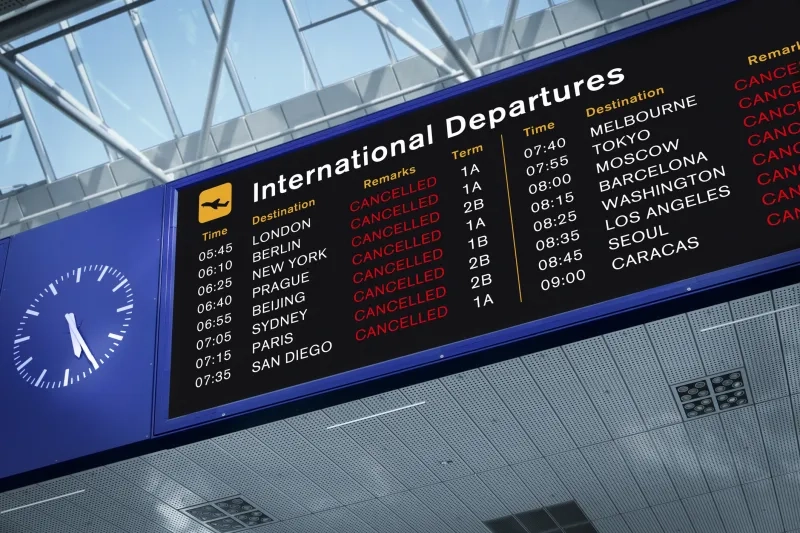
Travel may be mapped out in advance, but it doesn’t always unfold as planned. When disruptions happen, having experienced support can make a meaningful difference. Flight delays, cancellations, and sudden changes can quickly turn stressful, especially when decisions need to be made quickly.
In these moments, the contrast between technology and human support is hard to miss. Submitting a ticket or navigating automated systems can feel frustrating when travellers need quick answers or reassurance, particularly during complex or high-value trips.
“Anyone can click ‘book now,’ but that doesn’t guarantee a caring travel agent will be in their corner when plans change,” said Lia Kupchanko, Director, Retail and Call Centre Sales at CAA North & East Ontario.
Having a trusted advisor means having someone who understands the full trip and can step in when needed. Whether that means rebooking flights, adjusting accommodations or helping manage insurance claims, support that AI cannot provide.
“Our travel agents aren't here to replace technology; they are there to humanize it with passion and real-life experience, something AI can never achieve,” she said.
The future of travel planning isn't one or the other
The rise of artificial intelligence doesn't mean it has no place in travel planning. In fact, experts say AI and travel agents work best when used together.
Technology helps travellers research destinations and compare options, while travel agents use that information to guide decisions, personalize recommendations, and manage the journey from start to finish.
“Our travel agents aren’t here to replace technology. They are there to humanize it with passion and real-life experience,” Kupchanko said.
That balance is especially clear among younger travellers. They are among the most active users of AI tools, with 70 per cent of Gen Z and 63 per cent of Millennials using AI as part of their travel research, according to the Blue Cross study. Even so, many still look for personalization, trust and expert guidance when it comes time to book their trip.
For many travellers, planning a trip is part of the excitement. Seeing an itinerary come together in seconds can build momentum; however, having expert support alongside that process can add confidence and peace of mind.
“AI informs. Travel agent books, manages, and delivers the experience,” said Ola El-Arab, store manager at CAA Ottawa. “While AI is a valuable tool for information, it does not replace the human expertise needed to finalize and manage travel bookings.”
The best way to travel
The best trips are the ones supported by people who understand why travel matters in the first place. To learn more and start planning your dream vacation, visit our CAA Travel hub for trip planning, booking, and expert support, or book an appointment with a CAA Travel Agent.



