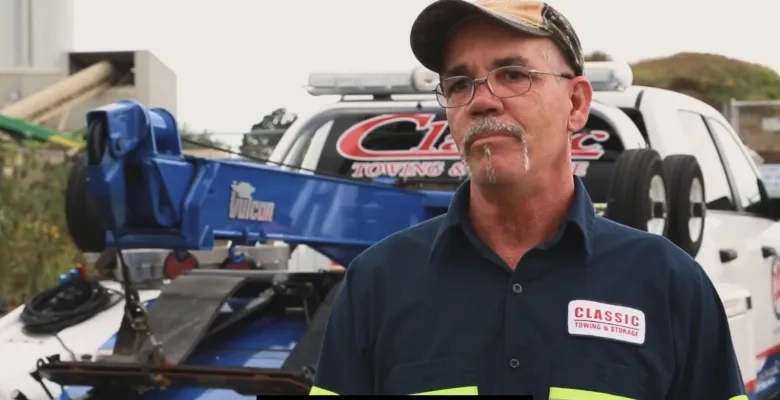

CAA has long advocated for the protection of roadside assistance workers through Slow Down Move Over legislation. Slow Down Move Over Day is held annually on the third Saturday of October to raise awareness of the importance of protecting roadside workers and first responders.
Why slowing down matters
Every day across North America, tow truck drivers risk their lives while helping stranded motorists with flat tires, breakdowns and collisions. CAA urges drivers to make space for tow trucks and other roadside workers stopped on the side of the road.
A 2023 study by AAA, supported by CAA, found that 20 per cent of line-of-duty deaths were tow truck drivers, yet only three per cent of those deaths received media coverage. These workers are more than statistics. They are neighbours, friends and family members.
Quick facts
- 90% of drivers say they slow down or move over, but only 64% do.
- Ottawa Police reported 32 tickets and 67 warnings in the first six months of 2026.
- Slow Down Move Over Day is held annually on the third Saturday of October.

Know the law
Ontario’s Slow Down Move Over Law is outlined in Section 159 (2,3) of Ontario’s Highway Traffic Act and is designed to protect first responders working on our roadsides. Drivers are legally required to slow down to below the posted speed limit and, where safe to do so, move over for emergency vehicles with flashing lights.
- Failure to comply carries serious penalties:
- Fines of $400 to $2,000 for a first offence
- Three demerit points upon conviction
- Possible licence suspension for up to two years
The origins of Slow Down Move Over
Introduced in 2003 following the deaths of officers killed during a traffic stop, the Slow Down Move Over law is a vital safety measure born of necessity. Roadside workers operate feet from high-speed traffic, leaving them vulnerable to the smallest driver errors.
The necessity of this law was underscored by the deaths of two CAA contractors in Ontario, who lost their lives in separate incidents in December 2025 while assisting stranded motorists.


What to do when you see flashing lights
When you see flashing lights or cones set up by emergency vehicles, utility crews, or trucks, it is a clear signal that personnel are working in a hazardous environment. These zones require your full attention and extra caution to protect everyone on the road. Follow these guidelines to ensure you pass through these work areas safely:
- Slow down safely: When you slow down, it alerts drivers behind you to hazards ahead.
- Leave space: Maintain a following gap between your vehicle and the one in front of you.
- Stay alert: Never drive while distracted or using your cell phone.
- Move over if possible: If traffic conditions allow and it is safe to do so, move into a lane away from the work zone to provide workers with extra space.
For more safe driving resources, visit our Safe driving page.
FAQ
If you see a stopped emergency vehicle, tow truck, or utility vehicle, you must slow down and pass with caution. On roads with two or more lanes, you are legally required to move into the lane farthest away from the stopped vehicle, provided it is safe to do so.
If you see an emergency vehicle approaching with its lights or siren activated, you must pull over as far to the right as possible and stop, allowing the emergency vehicle a clear path to pass.
Yes. Tow truck drivers are legally protected when stopped on the roadside with their lights flashing. Drivers are required by law to exercise the same caution and maintain the same distance as they would for any other emergency vehicle.
A 2024 study by AAA, supported by CAA, found that 90 per cent of roadside assistance provider fatalities occurred on roads with high speed limits (88 km/h+), and most occurred in clear or dry conditions and in the dark. Of the drivers who caused these fatalities, 110 of 123 had driving history information available.
If changing lanes is not possible, you must slow down significantly and pass the stopped vehicle with extreme care. This guidance is provided to help protect the emergency responders, tow truck operators, and roadside assistance crews who work daily to keep our roads safe.
Yielding: When approached by an emergency vehicle with lights or sirens, signal, pull to the right edge, and stop.
Moving over: When approaching a stopped emergency vehicle or tow truck, slow down and, if safe, move into another lane to create space.
Slow Down Move Over Day is held annually on the third Saturday of October.
Breaking the Slow Down Move Over law carries fines ranging from $400 to $2,000 for a first offence, three demerit points upon conviction, and a possible driver’s licence suspension of up to two years.
Emergency vehicles consist of:
Police cars
Firetrucks
Ambulances
Tow trucks
Always slow down and pass cautiously when you see flashing lights.