

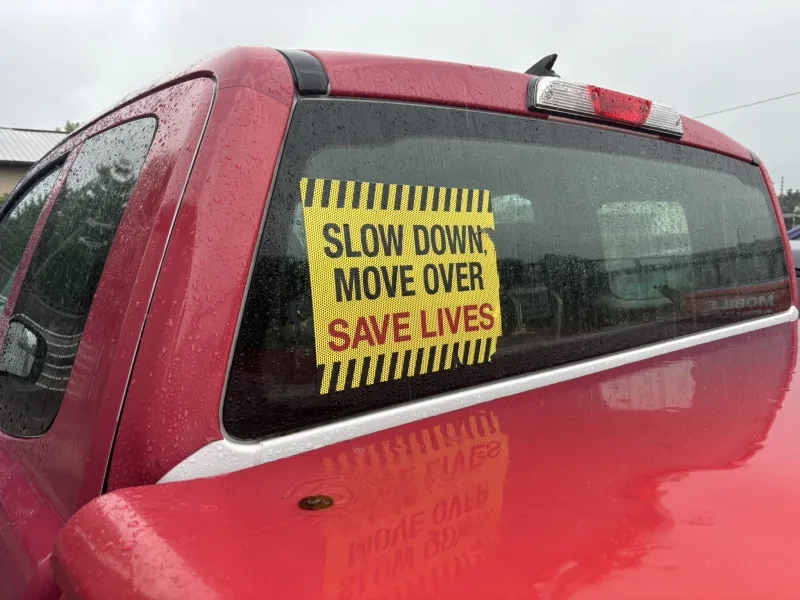
Tow and emergency responders are at risk when drivers fail to slow down and move over
3 Minute Read
Summary
- Ontario’s Slow Down, Move Over law requires drivers to reduce speed and change lanes near flashing lights.
- Tow truck operators and emergency responders face fatal risks from drivers who fail to comply.
- Studies show most drivers claim compliance, but observed behaviour and enforcement data reveal significant gaps.
Most drivers know they should slow down and move over when approaching emergency vehicles or tow trucks stopped on the roadside. But in practice, many often don’t register the flashing lights on the shoulder. They stay in their lane, maintain speed, and keep moving.
Ontario’s Slow Down, Move Over law is designed to protect people working along the roadside. Drivers are expected to slow down and, when safe, move into another lane when approaching emergency vehicles or tow trucks with flashing lights.
How people respond in those moments can have real consequences for tow truck drivers, paramedics, the police and firefighters.
Despite the law, roadside workers remain at risk
On highways, the distance between a moving vehicle and a worker on the shoulder can be the difference between safety and tragedy.
In December 2025, two CAA tow truck drivers in Ontario lost their lives in separate incidents while assisting stranded motorists.
“This past year was a tragic one for CAA,” says Jeff Walker, President and CEO of CAA North & East Ontario. “The deaths of our contractors, the near misses our drivers experience, and the risks faced every day by police, fire services, paramedics and other roadside workers are preventable.”
Daniel Weaver-Rutten, a fleet driver with CAA North & East Ontario, carries that reality with him on every call.
What it feels like at the roadside
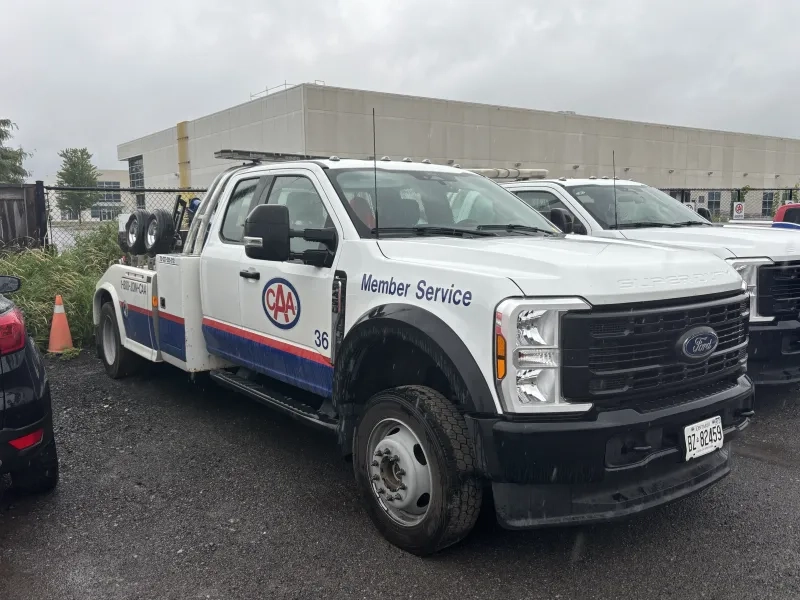
As part of the job, Weaver-Rutten responds to daily calls for help across the region, such as flat tires, dead batteries, lockouts, and stranded drivers in distressing situations.
Much of that work happens just metres from moving traffic.
“Two weeks ago, I was changing a flat tire for a woman on a road with a 60 km/h speed limit, and people were blowing by me, going 80, 100 — not moving over, not slowing down. All it takes is one second of inattention, and somebody could drift over and hit me. I always have to keep an eye over my shoulder to make sure nobody’s coming at me,” he explains.
Even when a call ends safely, the feeling doesn't necessarily end there.
“It’s always there at the back of your mind, especially when it’s a near miss. You’re on the next call, and you’re thinking, ‘What if this time it’s not a near miss?’ So, it’s always something on your mind when you’re working on the side of a busy road,” he says.
A stopped vehicle on the shoulder may seem routine to passing drivers. On the roadside, however, every passing vehicle can feel unpredictable.
A law that still needs attention
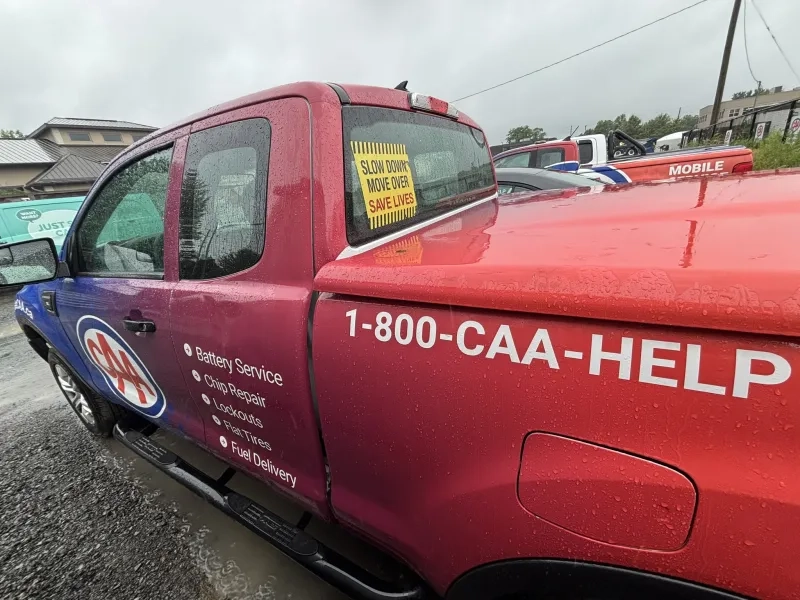
What drivers say they do doesn't always match what happens on the road. A 2025 study by the AAA Foundation for Traffic Safety found that although 90 per cent of drivers reported slowing down or moving over, only 64 per cent were observed doing so.
Ottawa Police also reported 32 tickets and 67 warnings related to Slow Down, Move Over enforcement in the first six months of 2026.
For roadside workers like Weaver-Rutten, those numbers reflect what he sees every day – drivers passing too quickly, too closely or failing to move over entirely.
“I think it needs to be brought up that the Slow Down, Move Over law does not just apply to the police. It applies to tow truck drivers and emergency roadside workers, and there needs to be more awareness, because their lives are just as important,” he says.
A small action with a big impact
Paying attention means watching for indications that there’s an active worksite on the shoulder. These include flashing lights, cones, and stopped vehicles and sometimes flares that signal people are operating in a high‑risk environment.
In Ontario, drivers are expected to move into the lane farthest from a stopped emergency vehicle or tow truck when it is safe to do so. If a lane change is not possible, drivers are still required to slow down significantly and pass with caution.
For Weaver‑Rutten, the work comes with challenges, but also a sense of purpose. It’s the opportunity to help people during stressful situations that keeps him motivated.
CAA continues to advocate for stronger protections for tow truck operators and emergency responders working at the roadside. Slowing down and moving over is a simple action that helps give these workers the space they need to do their jobs safely.


